
Sleep Trackers Compared: Band, Ring, Watch or Mat – What Really Measures
Sleep trackers come as wristbands, smartwatches, rings, under-mattress mats or apps. What they measure, how accurate they are compared with a sleep lab, which type suits whom and what to look for when buying – with studies and an honest assessment.
 Autor:Michael Lohrberg
9 min čitanja
Ovaj članak još nije dostupan na hrvatskom. Prikazuje se na jeziku: English.
Ukratko
A sleep tracker is above all reliable at detecting when and how long you sleep: in lab studies, wristbands, watches, rings and mats identified sleep correctly around 90 percent of the time. They miss wake periods during the night more often, and all devices are clearly off when it comes to individual sleep stages – deep and REM sleep minutes are estimates. A tracker brings the most value when you wear it every night without charging gaps and it shows you trends over weeks: sleep duration, regularity, resting heart rate and HRV. Bands without a display and rings disturb you least at night, mats measure without any body contact, smartwatches often need charging overnight. No consumer tracker replaces a medical assessment if sleep apnoea or persistent insomnia is suspected.
Sadržaj
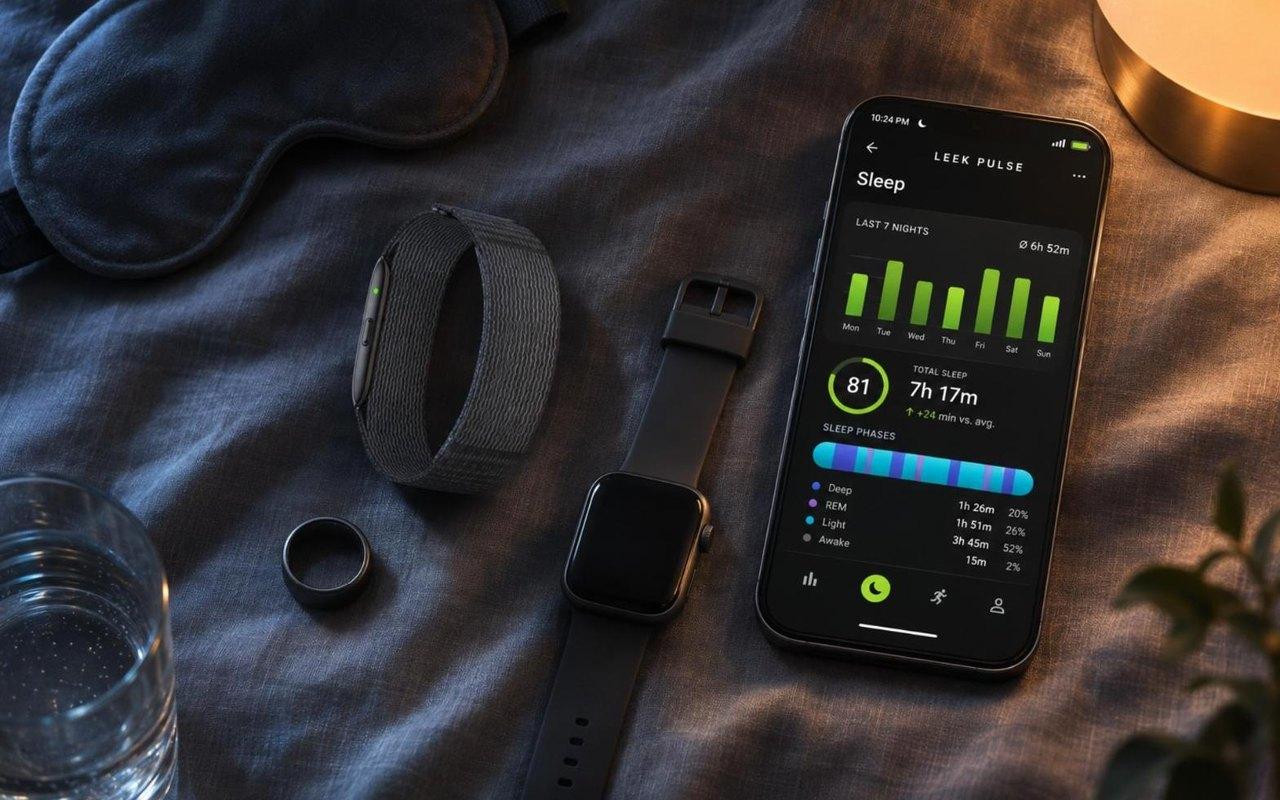
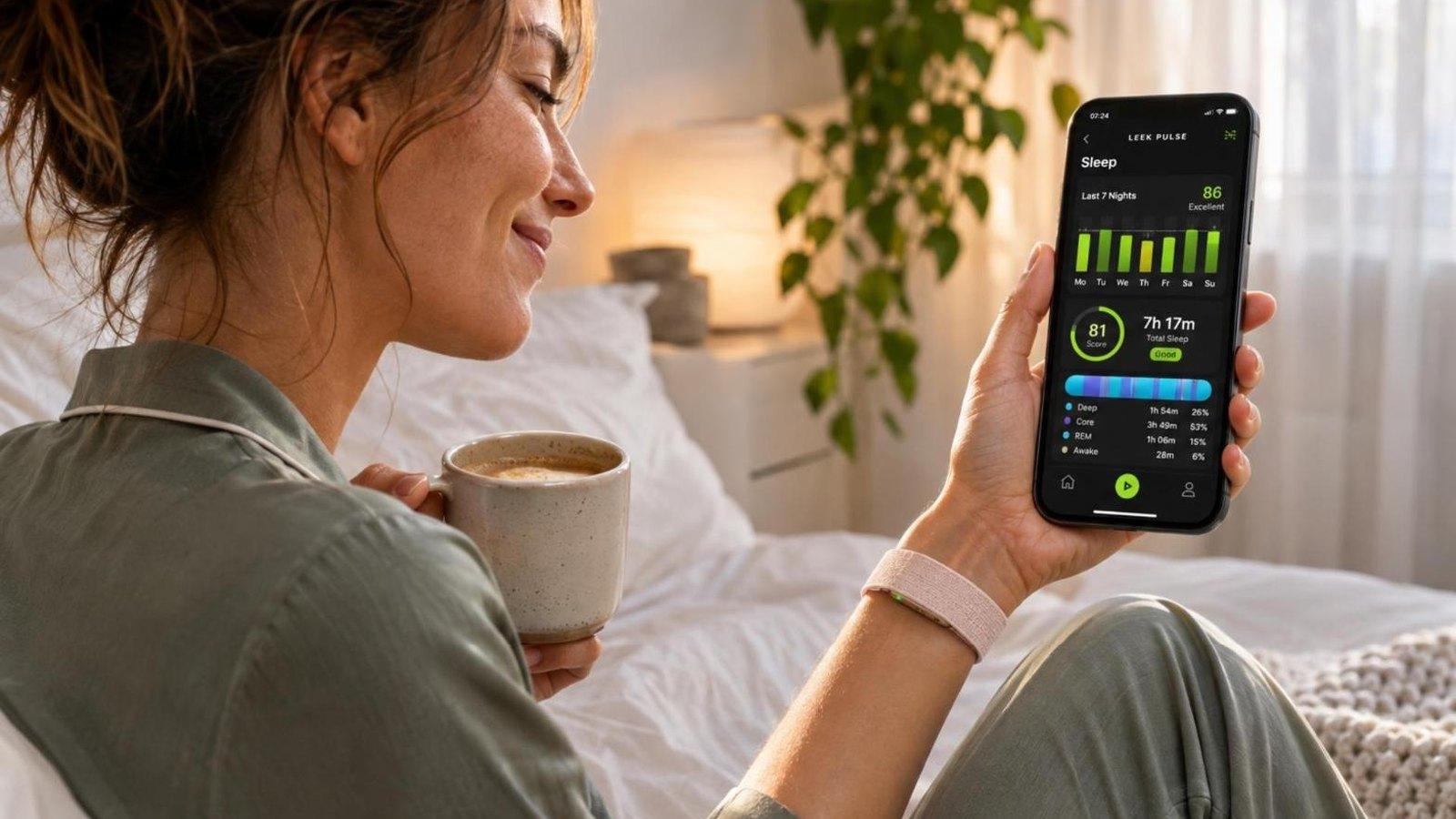
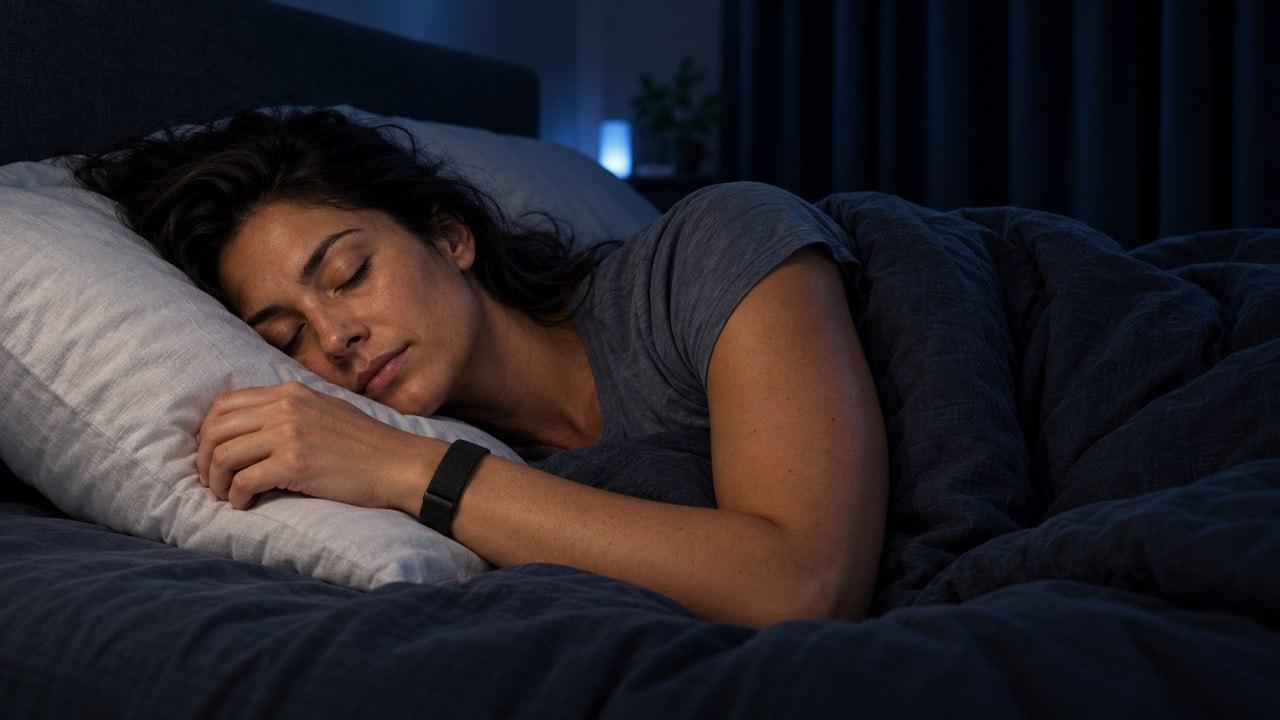
One look at your phone after waking up: 7 hours 12 minutes, 1 hour 24 of it deep sleep, sleep score 81. Sounds precise. But how does a band on your wrist know you were in REM sleep at 3:40 a.m.? And is a sleep tracker worth it at all?
This article shows which types exist, what they actually measure, how accurate they are compared with a sleep lab according to studies – and what to look for when buying one. It is part of the Wearables & Tracking topic.
What a sleep tracker actually measures
No home sleep tracker measures sleep directly. Only polysomnography (PSG) in a sleep lab can do that: it records brain waves (EEG), eye movements and muscle tone and uses them to determine, in 30-second segments, whether you are awake or which sleep stage you are in.
Trackers work with substitute signals and infer sleep from them:
| Signal | Measured with | What it reveals |
|---|---|---|
| Movement | accelerometer | rest or restlessness – the basis for sleep and wake |
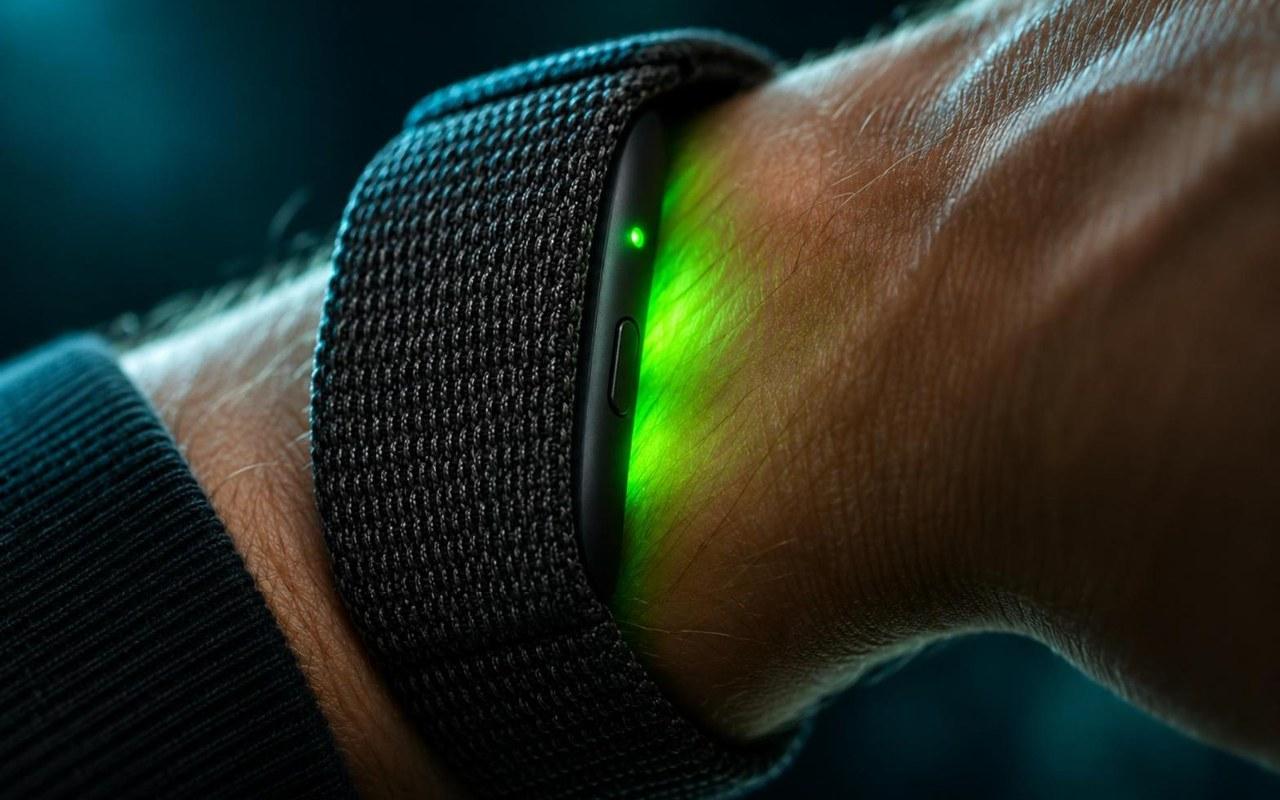
| Heart rate | optical sensor (PPG) | drops in deep sleep, fluctuates in REM sleep |
| Heart rate variability (HRV) | optical sensor | nervous system activity, recovery |
| Breathing rate | derived from pulse or movement | clues to sleep stages |
| Oxygen saturation (SpO2) | red and infrared light | drops during the night, depending on the device |
| Skin temperature | temperature sensor | trend over nights, depending on the device |
From these signals an algorithm calculates sleep onset, wake-up time, wake periods and an estimate of the sleep stages. The more signals a device combines, the better it can guess – but it remains an estimate.
The types at a glance
| Type | Strengths | Weaknesses |
|---|---|---|
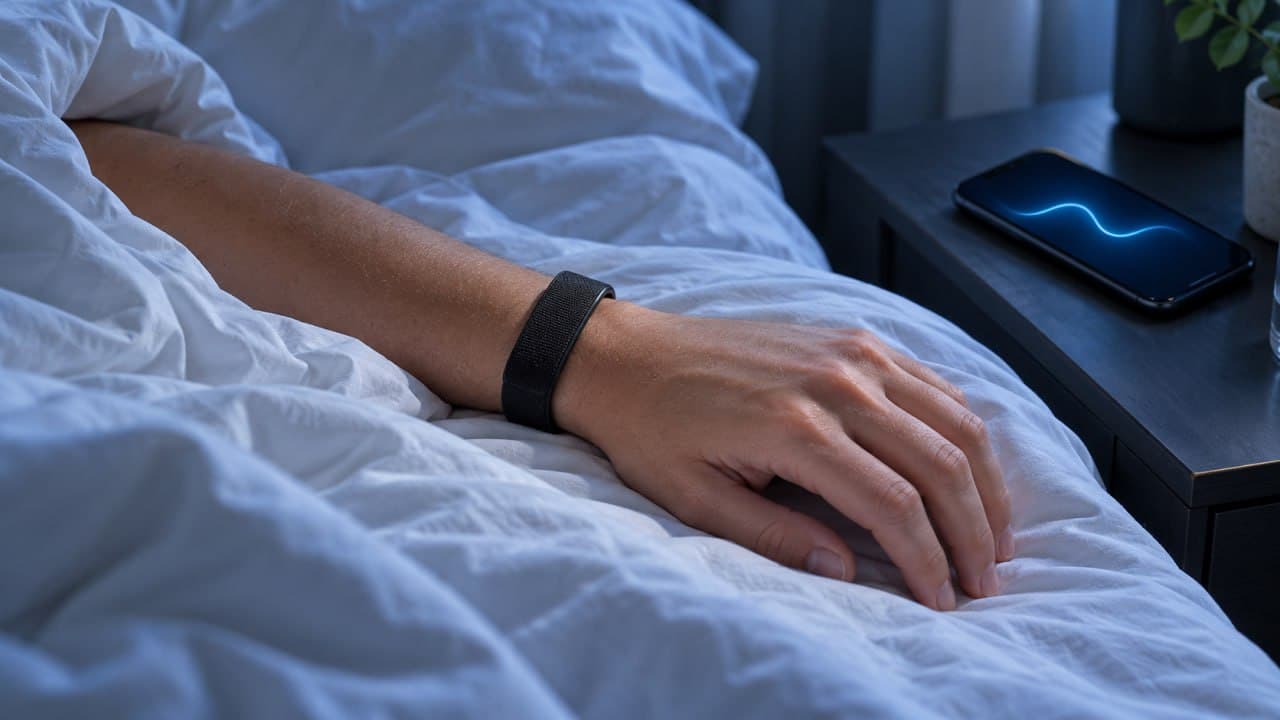
| Band without a display | light, barely noticeable at night, long battery life, pulse and HRV at the wrist | readings only visible in the app |
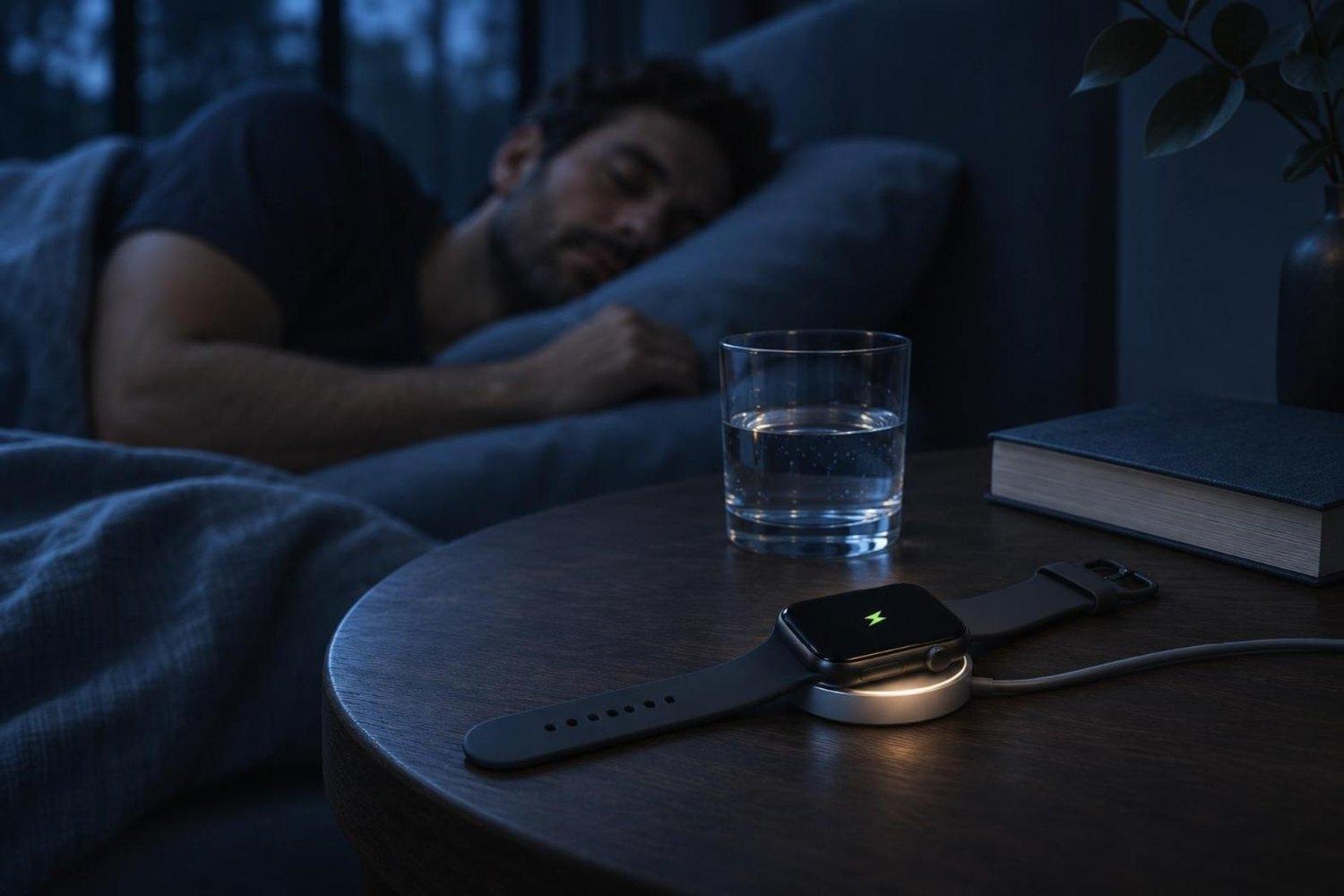
| Smartwatch | many sensors, display, sport and everyday features | often large and hard in bed, battery often lasts only one or two days – if you charge overnight, you don't measure sleep |
| Smart ring | very discreet, good fit on the finger | size must fit exactly, sometimes needs a subscription, gets in the way in strength training |
| Under-mattress mat | no body contact, nothing to wear | only measures in your own bed, partner or pets can interfere, no daytime tracking |
| Smartphone app | free or cheap | detects sleep only via sounds or movement in bed, very inaccurate for stages |
| EEG headband | measures brain waves, closest to the lab | less comfortable, many people can't wear it long term |
The choice depends less on the technology than on what you are happy to wear every night. A device that sits on the charger two nights a week delivers patchy trends.
How accurate are sleep trackers? What the studies show
Several independent studies have compared consumer devices directly with polysomnography. The pattern is remarkably consistent.
Detecting sleep: good. In an Australian lab study, 53 adults wore six devices at the same time for one night – Apple Watch, Garmin, Polar, Oura ring, Whoop and Somfit – plus polysomnography. For the simple question "asleep or awake?", all six were between 86 and 89 percent agreement (Miller et al., Sensors 2022).
Detecting wakefulness at night: weaker. A US study with 34 young adults compared seven devices, including bands, watches and under-mattress mats. All detected sleep correctly at least 93 percent of the time. But wake periods were only detected 18 to 54 percent of the time – trackers tend to mistake lying awake quietly for sleep. On restless nights, all devices became less accurate (Chinoy et al., Sleep 2021).
Sleep stages: rough. When the devices had to distinguish between wake, light, deep and REM sleep, agreement dropped to 50 to 65 percent (Miller et al. 2022). The authors consider all six devices suitable for capturing the timing and duration of sleep – for the individual stages they see room for improvement.
Agreement with the sleep lab
Averages from the study by Miller et al. (2022) with six wearables and 53 adults: how often did the device agree with polysomnography?
- Asleep or awake86–89 %
- Exact sleep stage50–65 %
Prikaži podatke u tablici
| Kategorija | % |
|---|---|
| Asleep or awake | 86–89 % |
| Exact sleep stage | 50–65 % |
What this means for you
| Reading | How reliable? | How to use it |
|---|---|---|
| Sleep duration, bedtime and wake time | good | as your main value for sleep habits |
| Regularity across the week | good | spot variations of more than an hour |
| Resting heart rate and HRV at night | good, as a personal trend | assess recovery and strain |
| Wake periods during the night | rather underestimated | don't be surprised if you remember more waking |
| Deep and REM sleep minutes | rough estimate | only watch long-term trends, not single nights |
| Sleep score | manufacturer-specific | only compare within the same device |
The most valuable result of a sleep tracker is therefore rarely the individual deep sleep figure but the trend over weeks: do you sleep less on training days? Does your resting heart rate rise after late meals or alcohol? Does your heart rate variability drop in stressful weeks?
What's measured well, moderately and poorly
| Metric | Reliability | Usefulness |
|---|---|---|
| Total sleep duration | good, rather slightly overestimated | very high – the most important sleep metric |
| Bed and wake times | good to moderate | high – makes regularity visible |
| Night-time resting heart rate | good | high – recovery, infections, alcohol |
| Heart rate variability (at night) | good as a trend | high – recovery and load |
| Wake periods during the night | rather poor | medium |
| Sleep stages (deep, REM, light) | approximation | medium – only as a trend |
| Sleep score | depends on the manufacturer | orientation, not comparable |
Typical measurement errors
- Lying awake quietly is counted as sleep.
- A loose fit of the device worsens heart rate measurement.
- Reading or watching TV in bed can be counted as falling asleep early.
- Sleeping on your arm disturbs the optical measurement.
- Naps aren't reliably detected by every device.
What's behind the sleep score
Almost every app sums up the night in a single number, usually between 0 and 100 – called "sleep score", "sleep quality" or something similar depending on the manufacturer. This number typically combines several measurements: how long you slept, how often and how long you were awake, how regular your bedtimes are, resting heart rate and HRV during the night and, on many devices, the estimated sleep stages.
Three things are worth knowing:
- Every manufacturer calculates differently. Providers generally don't publish the exact formula. A score of 80 on a ring is therefore not the same as 80 on a wristband.
- The score inherits the uncertainty of the stages. If deep and REM sleep minutes agree with the sleep lab only 50 to 65 percent of the time, the same applies to any score built on them.
- The trend is what counts. The useful comparison is with your own nights: if the score stays lower than usual for weeks, look at sleep duration, bedtimes, alcohol or evening training.
If your sleep score and how you feel disagree, go by how you feel – more on this in the section on orthosomnia below.
What to look for when buying
- Comfort at night. A flat, soft band or a ring is less disruptive than a large watch. Check whether you feel anything when lying on your side.
- Battery life. The less often you need to charge, the fewer gaps there are. A device that lasts several weeks measures practically every night.
- Readings. For recovery, resting heart rate and HRV matter more than the stage breakdown. Oxygen saturation and skin temperature are a plus.
- Analysis rather than number overload. Good apps show weekly trends, regularity and connections – not just a score.
- Cost over three years. Purchase price plus any subscription. Some devices are cheap but only unlock key analysis with a membership.
- Privacy. Sleep data is health data. Check whether it ends up in the manufacturer's cloud and whether you can export and delete it.
- Platform. Does the app run on your smartphone? Some devices are iOS-only or Android-only.
Which sleep tracker suits whom?
| You want … | Suitable type |
|---|---|
| to see sleep, recovery and training together | band with long battery life or ring |
| to wear nothing at all at night | under-mattress mat |
| messages, GPS and a display during the day | smartwatch – and plan a fixed charging time during the day |
| to be as discreet as possible at the office | ring or slim band without a display |
| to just give it a try | smartphone app, with realistic expectations |
More on the basic difference between watch and band is in Smartwatch or fitness tracker?; how accurately heart rate is measured at the wrist is explained in How accurately do fitness trackers measure heart rate?.
Where the LEEK Pulse Pro fits in
The LEEK Pulse Pro is a fitness band without a display, deliberately built to be worn around the clock: it measures heart rate, HRV, oxygen saturation, sleep stages and activity and, according to the manufacturer, lasts up to 30 days on one charge. Analysis runs in the free LEEK app without a subscription, and the data stays on your smartphone. The limits: the app is currently only available for Android, and as with all wrist devices, sleep stages are estimates. All the details are in LEEK Pulse Pro in detail.
The flip side: when tracking disturbs sleep
In 2017, sleep researchers in the US coined a term for a phenomenon they observed in their clinic: orthosomnia – the pursuit of perfect sleep data that itself leads to tension and worse sleep (Baron et al., Journal of Clinical Sleep Medicine 2017). If you nervously check your score every morning and feel tired after a "bad" number even though you woke up rested, it's time to change your perspective.
Three rules help:
- Feeling before figures: if you feel well rested, the night was good – whatever the score says.
- Weeks, not nights: individual outliers are normal. Only react to trends over several days.
- Breaks are allowed: if the numbers stress you, leave the band in the drawer for a few days.
When to see a doctor
A sleep tracker is not a medical device and does not replace a diagnosis. You should have the following checked by a doctor in particular:
- loud snoring with observed breathing pauses,
- severe daytime sleepiness despite sufficient sleep,
- persistent problems falling or staying asleep over several weeks,
- noticeably frequent drops in oxygen saturation at night in the app.
For a diagnosis, sleep labs and ambulatory polygraphy devices are available, which your doctor can prescribe.
Conclusion: a good tool for habits, not a sleep lab
A sleep tracker reliably tells you how long and how regularly you sleep and how your resting heart rate and HRV develop. That's enough to improve habits and better align training and recovery. How much deep sleep you had on a particular night, on the other hand, it only knows approximately. Choose the device you are happy to wear every night, pay attention to battery, cost and privacy – and don't let the numbers rob you of sleep. Practical strategies for better nights can be found in Sleep as a performance booster.
Sources:
- Miller DJ et al. (2022): A Validation of Six Wearable Devices for Estimating Sleep, Heart Rate and Heart Rate Variability in Healthy Adults. Sensors 22(16):6317.
- Chinoy ED et al. (2021): Performance of seven consumer sleep-tracking devices compared with polysomnography. Sleep 44(5):zsaa291.
- Baron KG et al. (2017): Orthosomnia: Are Some Patients Taking the Quantified Self Too Far? Journal of Clinical Sleep Medicine 13(2):351–354.
Česta pitanja
What does a tracker's sleep score tell you?
The sleep score combines several measurements such as sleep duration, time awake, regularity, night-time heart rate and HRV and estimated sleep stages into one number. Every manufacturer calculates it differently, so scores from different devices are not comparable. What is meaningful is the trend over weeks compared with your own nights.
How accurate are sleep trackers?
Good devices are surprisingly close to a sleep lab at detecting sleep: in a study with 53 adults, six wearables agreed with polysomnography 86 to 89 percent of the time when it was only about sleep versus wake. For individual sleep stages, agreement was only 50 to 65 percent. So you can track duration and rhythm well, while deep and REM sleep minutes are rough estimates.
Which sleep tracker is the best?
There is no single best one. What matters is that you are happy to wear the device every night and that there are no gaps due to charging. If you don't like anything on your wrist, choose a ring or an under-mattress mat. If you want to analyse sleep, recovery and training together, a band with long battery life is a good choice.
Do I need a subscription for a sleep tracker?
It depends on the manufacturer. Some rings and bands only unlock detailed analysis with a membership, others include all features in the purchase price. Always calculate the cost over two to three years before you decide.
Can a sleep tracker detect sleep apnoea?
A regular fitness or sleep tracker is not a medical device and cannot diagnose sleep apnoea. Unusual readings such as frequently low oxygen saturation can be a reason to talk to your GP. Loud snoring with breathing pauses and severe daytime sleepiness should always be checked by a doctor.
Can sleep tracking make sleep worse?
Yes, for some people. Experts speak of orthosomnia when the pursuit of perfect sleep scores itself leads to tension and worse sleep. So look at weekly trends rather than every single night, and go by how you feel when it contradicts the numbers.
Oznake
- Sleep tracker
- Sleep tracking
- Fitness band
- Smart ring
- Sleep stages
- Wearables
O autoru
Michael Lohrberg· Osnivač tvrtke Syrax
Michael Lohrberg osnovao je Syrax 2026. Vojna služba s misijom u inozemstvu, u industriji od 2010., rad u smjenama i dva posla istodobno – LEEK Pulse Pro nastao je iz pitanja koliko oporavka zapravo ostaje u svakodnevici. U magazinu piše o treningu, snu i regeneraciji – praktično i utemeljeno na istraživanjima.
Više o MichaeluOvaj članak služi općem informiranju i ne zamjenjuje liječnički savjet. Ako imaš bolesti, bolove ili nedoumice, razgovaraj s liječnikom prije promjene treninga ili prehrane.
Syrax Magazin
Čitaj dalje
 Veliki vodič
Oporavak i HRV
Understanding HRV: What Heart Rate Variability Reveals About Your Recovery
HRV is probably the most valuable metric a wearable can provide – and the most often misunderstood. What it measures, which values are normal, how to measure it properly and how to guide your training with it.
13 min čitanjaEnglish
Oporavak i HRV
Sleep as a Performance Booster: 7 Strategies for Better Recovery
Sleep is the most effective and cheapest recovery tool there is. Why it matters so much for strength, endurance and muscle growth – and seven strategies to fall asleep faster, sleep deeper and train better recovered.
5 min čitanjaEnglish
Nosivi uređaji i praćenje
How Accurately Do Fitness Trackers Measure Heart Rate?
How optical heart rate measurement on the wrist works, where it is reliable and where it isn't – at rest, running, during intervals and in strength training – which factors disrupt it and how to get more accurate readings.
5 min čitanjaEnglish