
Protein Shake After Training: When It's Worth It – Including After Cardio and Running
Do you need a protein shake straight after training? Werner Ludmann explains what's left of the anabolic window, when a shake after strength training, running, cardio and endurance sport really makes sense, how much protein and carbohydrate belong in it and which situations don't need a shake – with a decision table and three recipes.
 AvWerner Ludmann
8 min lesing

Denne artikkelen finnes ennå ikke på norsk. Den vises på: English.
Kort fortalt
A protein shake straight after training is practical, but rarely necessary. For muscle building and recovery, what matters most is how much protein you eat across the day – about 1.2 to 2.0 g per kilogram of body weight, spread across three to four meals. The so-called anabolic window is several hours wide. A shake after training is worthwhile mainly if your last protein-rich meal was more than three to four hours ago, if you trained fasted or if your next meal is still a long way off. About 0.3 g of protein per kilogram of body weight makes sense, i.e. 20 to 30 g for most people. The same applies after cardio and running: after half an hour of easy running, your next normal meal is enough. After long or hard sessions, especially if the next one follows soon, carbohydrates belong with the protein, for example milk and a banana. The shake does not replace a meal and does not inhibit fat burning after cardio.
Innhold
After training, many people reach for the shaker in the changing room before they've even taken their shoes off. Behind it lies the fear of otherwise missing the "anabolic window". I understand that – but in recent years research has opened that window considerably wider. A shake after training is a practical tool, not a mandatory appointment.
This article is about when a protein shake after sport is really worthwhile, how much belongs in it and why partly different rules apply after running and cardio than after strength training. At the end you'll find a table that lets you decide for every session in ten seconds.
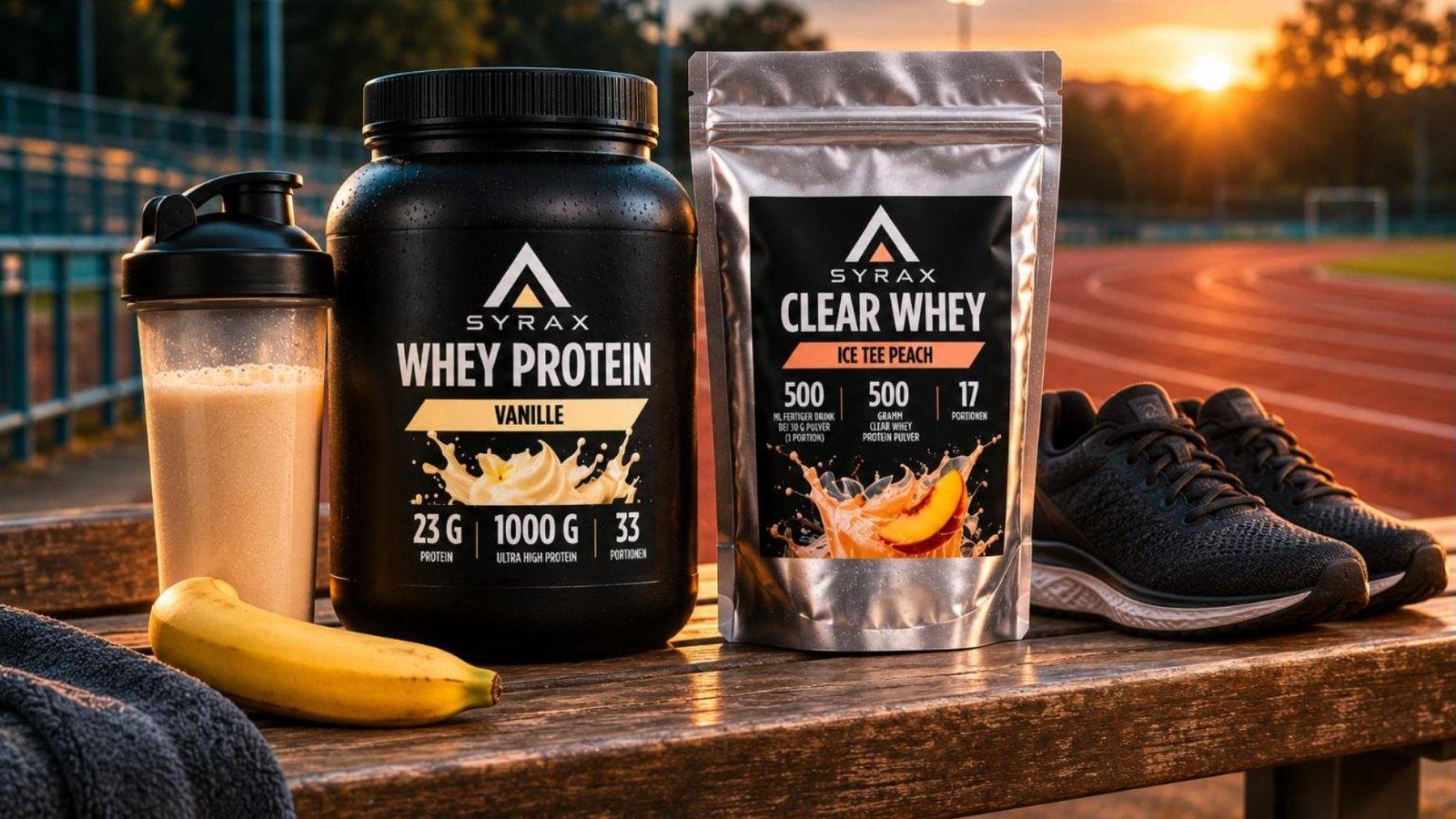
The short answer
- After strength training: a shake makes sense if your last protein-rich meal was more than three to four hours ago or your next one is still far away.
- After easy running or cardio: usually no shake needed – your next normal meal is enough.
- After long or hard endurance sessions: protein plus carbohydrates, especially before another session on the same or next day.
- Amount: about 0.3 g of protein per kg of body weight, 20 to 30 g for most people.
What's left of the "anabolic window"
For a long time the rule was: protein must get into your body within 30 to 45 minutes of training, otherwise the opportunity is lost. That idea is outdated.
- A meta-analysis on protein timing found that the timing of protein intake plays hardly any role for strength and muscle growth if the total amount over the day is right (Schoenfeld et al., 2013).
- The authors of a well-known review describe the window as several hours wide and dependent on when you ate before training (Aragon and Schoenfeld, 2013).
- The German Nutrition Society (DGE) also considers optimal timing unresolved.
This results in a simple rule of thumb that I use myself:
After strength training
This is where the shake is seen most often, and where it is most likely to make sense. After training, the muscles are particularly sensitive to protein, and a shake delivers it quickly and without cooking.
How much? The position paper of the American and Canadian dietetics associations together with the American College of Sports Medicine cites about 0.3 g of protein per kilogram of body weight after training (Thomas et al., 2016). For most adults that's 20 to 30 g – one serving of whey.
What? Quickly digested protein with plenty of leucine. Whey is the obvious choice here: one serving of Syrax Premium Whey provides 23.4 g of protein and about 2 g of leucine. If you'd rather eat: 250 g of low-fat quark or skyr do the same.
When not? If you had a proper meal two hours before training and dinner is on the table an hour afterwards, you can skip the shake.
Over 50: Older muscles respond a little more sluggishly to protein. Here 30 to 40 g per meal make more sense – mixed with milk instead of water, you get there easily.
After cardio and running
Endurance training has a different focus from strength training. Alongside protein to repair the muscles, it's about the carbohydrate stores that are emptied during running. And about how soon the next session comes.
Easy run up to about 45 minutes
No shake needed. The stores are only partly emptied; your next normal meal makes up for it. If you want to lose weight, you save the extra calories here.
Long or hard runs from about 60 to 90 minutes
Here a combination of protein and carbohydrates within about one to two hours is worthwhile. Protein supports repair, carbohydrates refill the stores. A shake with milk and a banana covers both, as does a meal such as pasta with chicken.
Two sessions in one day or training the next morning
Then recovery becomes time-critical. The position paper by Thomas et al. (2016) recommends 1.0 to 1.2 g of carbohydrates per kilogram of body weight per hour for the first four hours for rapid refuelling, plus protein. A shake is the easiest start, followed by a carbohydrate-rich meal.
Does a shake after cardio inhibit fat burning?
No, that's one of the most persistent myths. Whether you lose body fat is decided by your energy balance over days and weeks, not the hour after your run. A shake with water has about 105 to 120 kcal. In a calorie deficit, enough protein even helps preserve muscle mass – more in Lose fat, keep muscle. The only thing that matters: the shake has to fit into your calorie budget instead of coming on top.
Tennis, football, team sports
Matches and club training are often in the evening. The routine is the same for many: a quick bite after work, two hours on court, home at half past nine, hungry but no desire to cook. This is exactly where a shake makes sense, because the last meal was a long time ago and a big dinner late in the evening can disturb sleep.
My recommendation for the evening after a match: a shake with milk or 250 g of quark with fruit – protein plus some carbohydrates, light on the stomach. What helps you fall asleep after a late match is collected in Sleep after the evening match.
During training: only in long sessions
A protein shake during training brings nothing in normal sessions of up to 60 minutes. In very long efforts of over 90 minutes, at tournaments or on long bike rides, something light makes more sense:
- Carbohydrates and electrolytes for performance and fluids – see Electrolytes in sport.
- An EAA drink, if you want amino acids without a full stomach – see BCAA, EAA or whey?.
Decision table: shake or no shake?
| Session | Shake? | What exactly |
|---|---|---|
| Strength training in the evening, dinner within 1–2 h | not necessary | dinner with 25–40 g of protein |
| Strength training in the evening, only a snack afterwards | yes | 30 g of whey, ideally with milk |
| Strength training in the morning, fasted | yes, promptly | 30 g of whey, then breakfast |
| Easy run up to 45 min | no | next normal meal |
| Long run 60–90 min or more | yes, with carbohydrates | whey + milk + banana or a proper meal |
| Two sessions a day | yes, quickly | protein + plenty of carbohydrates |
| Tennis or football in the evening | yes | shake with milk or quark with fruit |
| HIIT 20 min | mostly no | next meal |
| Losing weight with cardio | optional | whey with water if it fits the calorie budget |

Three shakes for three situations
After strength training 30 g vanilla whey, 300 ml low-fat milk, a handful of frozen berries. About 34 g of protein, 24 g of carbohydrates, 300 kcal.
After the long run 30 g vanilla whey, 300 ml low-fat milk, a banana, 30 g fine oats. About 39 g of protein, 57 g of carbohydrates, 475 kcal. The carbohydrates help refill the stores.
Light after cardio or in summer 30 g Clear Whey Iced Tea Peach, 500 ml cold water. 24.7 g of protein, 105 kcal. Refreshing instead of creamy – ideal when you can't face a milkshake after sport.
More ideas: Protein shake recipes that don't taste of powder.
What belongs in the shake – and what doesn't
| Ingredient | Good? | Why |
|---|---|---|
| Whey (concentrate or isolate) | yes | quickly digested, plenty of leucine |
| Milk | yes | extra protein, carbohydrates, creamier |
| Banana, oats | yes after endurance | refill the carbohydrate stores |
| Creatine | yes, if you take it | practical moment, see Creatine and protein |
| Peanut butter, nuts | when bulking | lots of calories, not ideal after a run when dieting |
| Caffeinated "recovery" shakes | rather not | disturb sleep in the evening |
| Extra BCAAs | no | already contained in whey |
Common mistakes
- Shake instead of a meal. It provides protein but hardly any fibre, vitamins or minerals.
- A shake after every easy run. For short, light sessions your next meal is enough.
- Too few carbohydrates after long sessions. Protein alone doesn't refill the stores.
- Panic about 30 minutes. The window is several hours wide.
- Shake on top of a snack when dieting. Then it comes on top instead of replacing something.
Conclusion: a bridge, not an obligation
The protein shake after training is a bridge to the next meal – no more and no less. If the bridge is short, you don't need it. If it's long, because you train fasted, get home late from the court or train twice a day, a shake is the simplest and cheapest solution.
What's in a good whey and how much you need overall is explained by Eduard in the whey protein guide. If you'd rather eat than drink, you'll find ideas in What to eat after training?.
Sources: Schoenfeld et al.: The effect of protein timing on muscle strength and hypertrophy – meta-analysis (2013) · Aragon and Schoenfeld: Nutrient timing revisited – is there a post-exercise anabolic window? (2013) · Thomas et al.: Nutrition and Athletic Performance – joint position statement AND, DC and ACSM (2016) · DGE Sports Nutrition Working Group: Protein intake in sport (summary, PTAheute 2020) · Jäger et al.: ISSN Position Stand – Protein and Exercise (2017) · Labels of Syrax Premium Whey and Syrax Clear Whey (as of November 2026)
Vanlige spørsmål
Do I have to drink a protein shake straight after training?
No. The time span in which protein is used well after training is several hours wide. If you ate a protein-rich meal one to two hours before training, your next meal is enough. If your last meal was longer ago or you trained fasted, a shake within about one to two hours makes sense.
Is a protein shake after running useful?
After an easy run of up to about 45 minutes it's usually not necessary; a normal meal is enough. After long or hard runs, a combination of protein and carbohydrates helps, for example a shake with milk and a banana, especially if the next session follows within a day.
Does a protein shake after cardio inhibit fat burning?
No. Whether you lose fat is decided by your energy balance over days and weeks, not by the hour after training. A shake with water provides around 105 to 120 kcal and helps preserve muscle mass in a calorie deficit.
How much protein belongs in the shake after training?
About 0.3 g per kilogram of body weight, i.e. 20 to 30 g of protein for most adults. That's about one 30 g serving of whey powder. Older people tend to benefit from a little more, around 30 to 40 g.
Protein shake before or after training?
Both work. If you train fasted, for example early in the morning, a shake before or straight after can make sense. If you ate shortly before training, the shake afterwards or your next meal is enough. More important than timing is your protein intake across the day.
Can I drink a protein shake during training?
In normal sessions of up to 60 minutes it brings nothing. In very long sessions of over 90 minutes or on tournament days, a light drink makes more sense than a heavy shake, for example a carbohydrate-electrolyte drink or an EAA drink.
Does a protein shake replace eating after training?
No. A shake provides protein but hardly any fibre, vitamins or minerals. It bridges the time until the next meal or complements a low-protein meal.
Stikkord
- Protein shake
- Whey protein
- Recovery
- Running
- Cardio
- Post-workout nutrition
Om forfatteren
Werner Ludmann· Skribent om trening, klubbidrett og kosttilskudd i praksis
Werner Ludmann er en lidenskapelig tennisspiller og har vært aktiv i klubbidretten i mange år. Også i løping finner han sin sportslige balanse. I Syrax Magasin deler han erfaringene sine og begeistringen for bevegelse, fitness og en aktiv livsstil – med utøverens blikk: hva gir et kosttilskudd egentlig i den virkelige treningshverdagen?
Mer om WernerArtikkelen er generell informasjon og erstatter ikke medisinsk rådgivning. Har du sykdommer, smerter eller er i tvil, snakk med legen din før du endrer trening eller kosthold.
Syrax Magasin
Les videre

Kosttilskudd
Whey Protein: What It Is, What It Does and How Much You Really Need
Eduard Boehm's complete whey guide: what whey protein is, the difference between protein and whey, nutrition and calories, effects, the right amount, water or milk, side effects and whether too much whey is harmful – with label values, cost per 25 g of protein and clear decision aids.
14 min lesingEnglish

Kosttilskudd
Creatine and Protein: Which Matters More – and Can Both Go in One Shake?
Creatine or protein? Werner Ludmann explains what really separates the two, whether you can mix creatine into your protein shake, what research says about the combination, what it costs per day and why creatine changes the creatinine value in your blood test.
9 min lesingEnglish
 Stor guide
Kosttilskudd
How to Assess Supplements: Reading the Label, Dose, Upper Limits and Lab Report
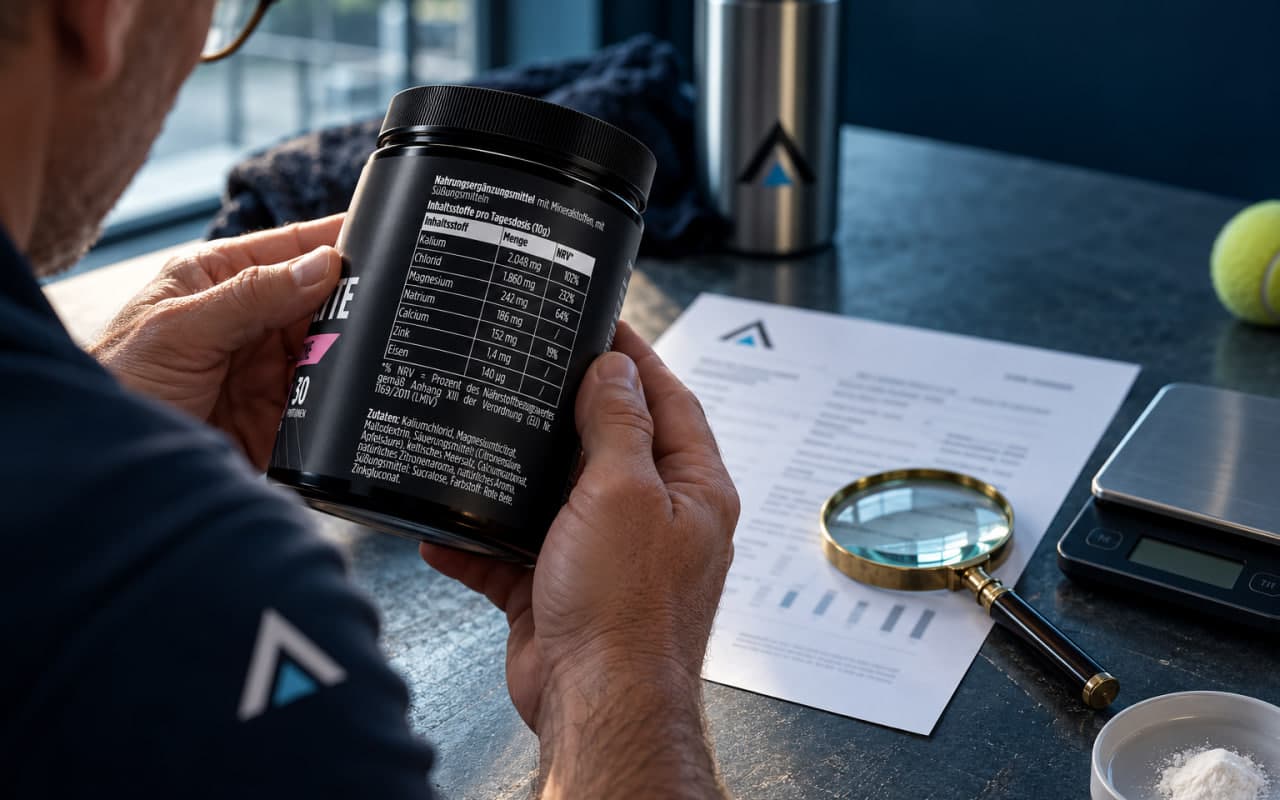
How good is a dietary supplement really? Eduard Boehm shows step by step how to read labels, check the dose against reference values and BfR maximum levels, understand lab reports, assess additives and calculate the price per effective serving – explained using real labels and analyses of Syrax products.
14 min lesingEnglish