
Step Counter Wristband with Heart Rate: What Really Matters
A step counter wristband counts steps, measures heart rate and motivates you to move more. How accurately bands capture steps and pulse, when they miscount, how many steps a day make sense and which criteria really matter when buying.
 AvMichael Lohrberg
7 min lesing

Denne artikkelen finnes ennå ikke på norsk. Den vises på: English.
Kort fortalt
A step counter wristband detects steps via an accelerometer and measures heart rate optically at the wrist. At normal and brisk walking speeds good bands are fairly accurate; at slow speeds they miscount much more often – in one study the deviations ranged from 0 to 26 percent depending on device and pace. Pushing a pram or holding on to a shopping trolley shows fewer steps, while gesturing or driving can add too many. For health, trends matter more than the exact number: according to a large meta-analysis, the risk of death falls with more steps per day, with the benefit levelling off at about 6,000 to 8,000 steps in people over 60 and about 8,000 to 10,000 in younger adults. When buying, comfort, battery life, an understandable app, running costs and privacy count for more than any extra feature.
Innhold
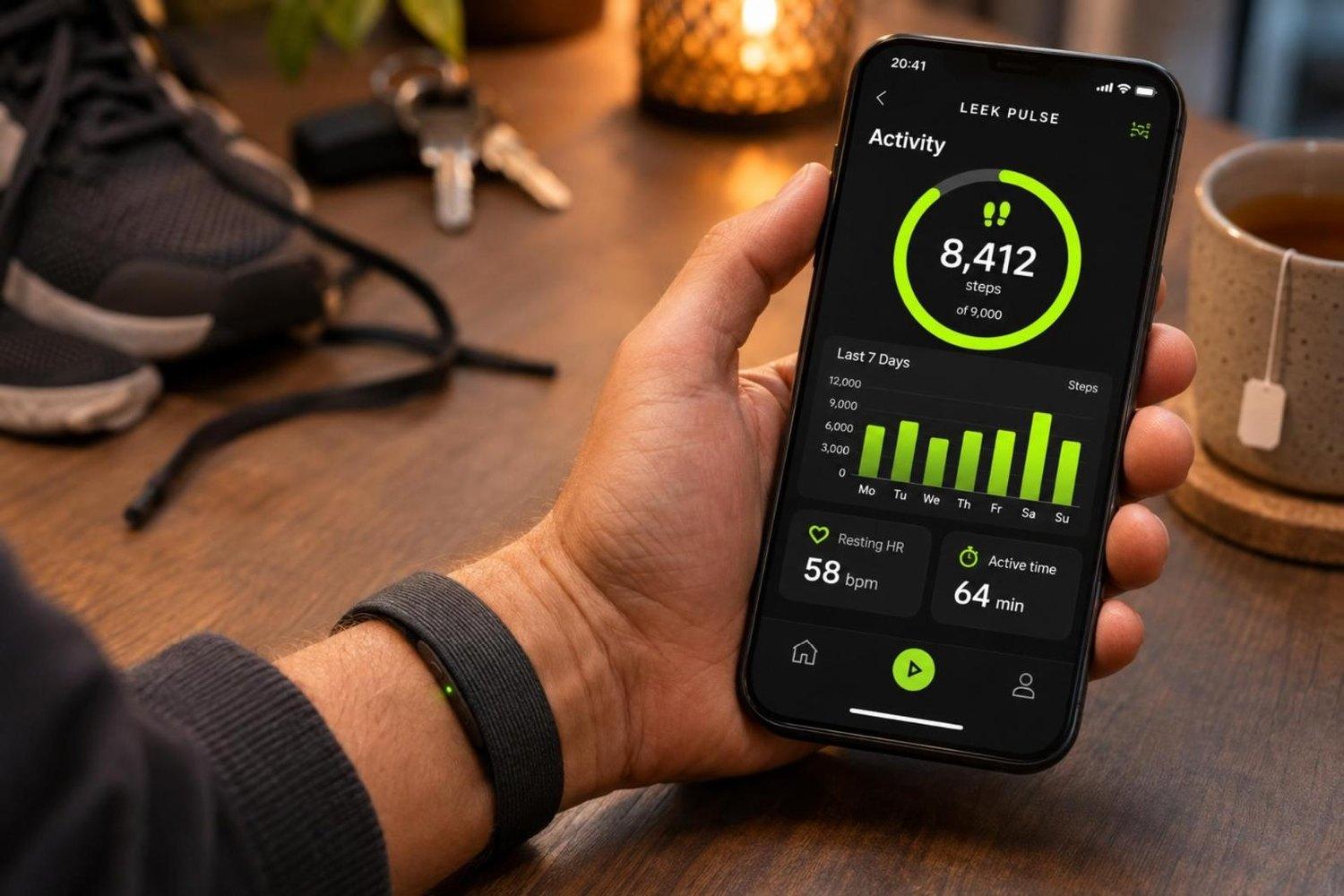
A band on your wrist, a look at the app in the evening: 8,412 steps, resting heart rate 58. For many people, a step counter wristband is the easiest way into tracking – and often the most effective. Because people who see their steps demonstrably move more: in a systematic review, participants with a pedometer walked around 2,000 more steps a day on average than without one (Bravata et al., JAMA 2007).
But how accurately does such a band count? Why are there so few steps in the app after a walk with the pram? And do you need heart rate, a display or GPS? This article answers the key questions before you buy. It is part of the Wearables & Tracking topic.
How a band counts your steps
Inside the band is an accelerometer, often combined with a gyroscope. It constantly measures how your wrist moves in three directions. Walking produces a typical rhythmic pattern – each arm swing corresponds to a step. An algorithm recognises this pattern and counts along.
The problem: the band sits on your arm, not your foot. It only sees your steps indirectly, via your arm swing. This leads to typical errors in both directions.
| Situation | Typical effect | Why |
|---|---|---|
| Brisk walking, jogging | fairly accurate | clear, rhythmic signal |
| Slow walking, strolling | too few steps | weak arm swing, pattern hard to recognise |
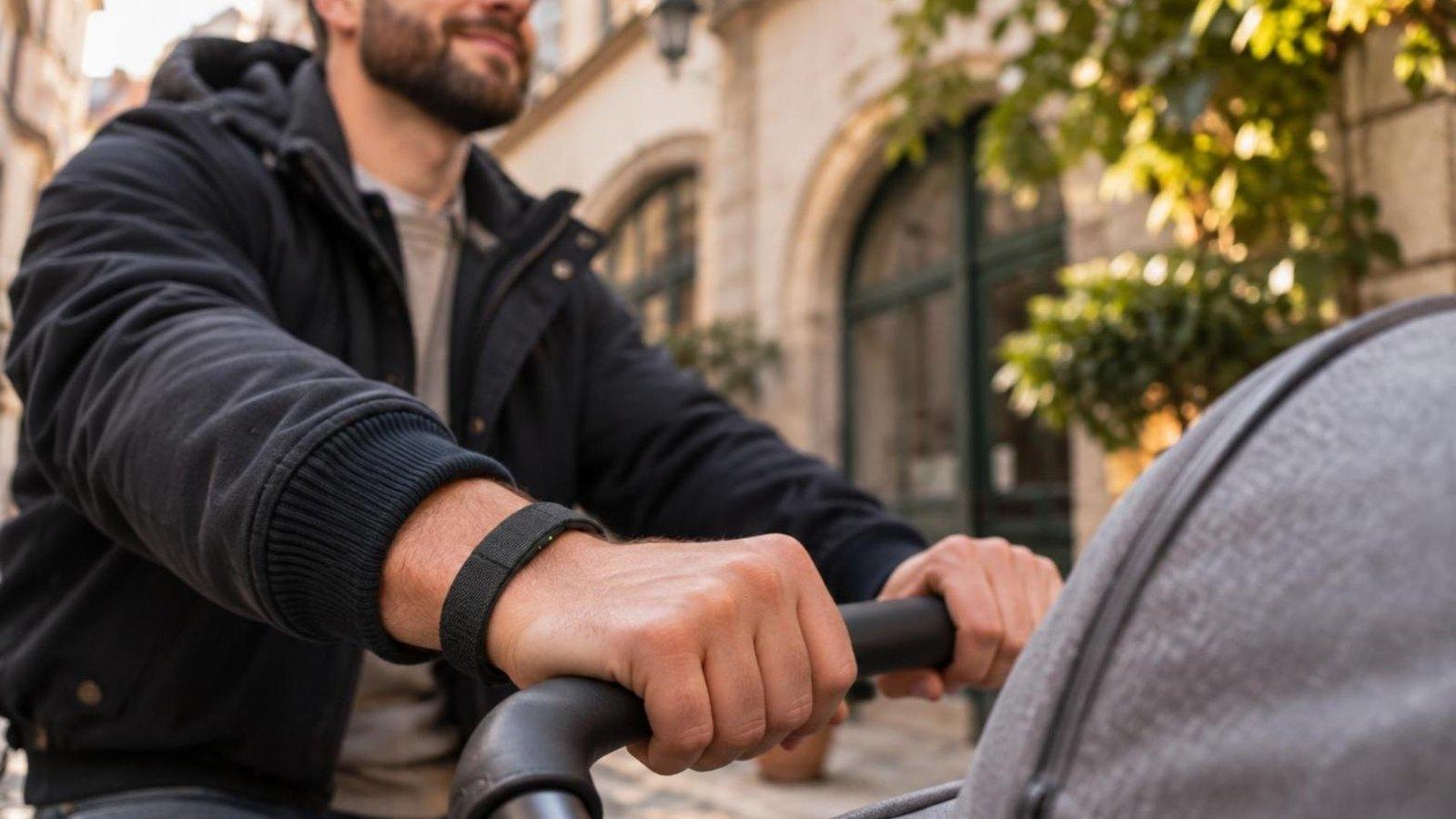
| Pram, walker, shopping trolley | clearly too few | the hand is fixed, the arm doesn't swing |
| Gesturing, washing up, clapping | too many steps | arm movements resemble steps |
| Bumpy car or bus ride | sometimes too many | vibrations are counted as steps |
| Cycling | hardly any steps | arms rest on the handlebars – start a separate activity |
How accurate are bands? What studies show
A Dutch study had 31 adults walk on a treadmill at three speeds – slow (3.2 km/h), average (4.8 km/h) and brisk (6.4 km/h) – and compared ten trackers with steps counted by hand. Depending on device and pace, the deviations ranged from 0 to 26.4 percent. At average and brisk speeds most devices performed clearly better than at slow walking (Fokkema et al., Medicine & Science in Sports & Exercise 2017).
A systematic review of 65 studies on wrist trackers came to a similar picture: steps and heart rate are captured comparatively well. Energy expenditure, on the other hand, was estimated by all brands examined with a mean error of over 30 percent – poor enough not to base a diet on it (Germini et al., Journal of Medical Internet Research 2022).
Heart rate at the wrist: what it does
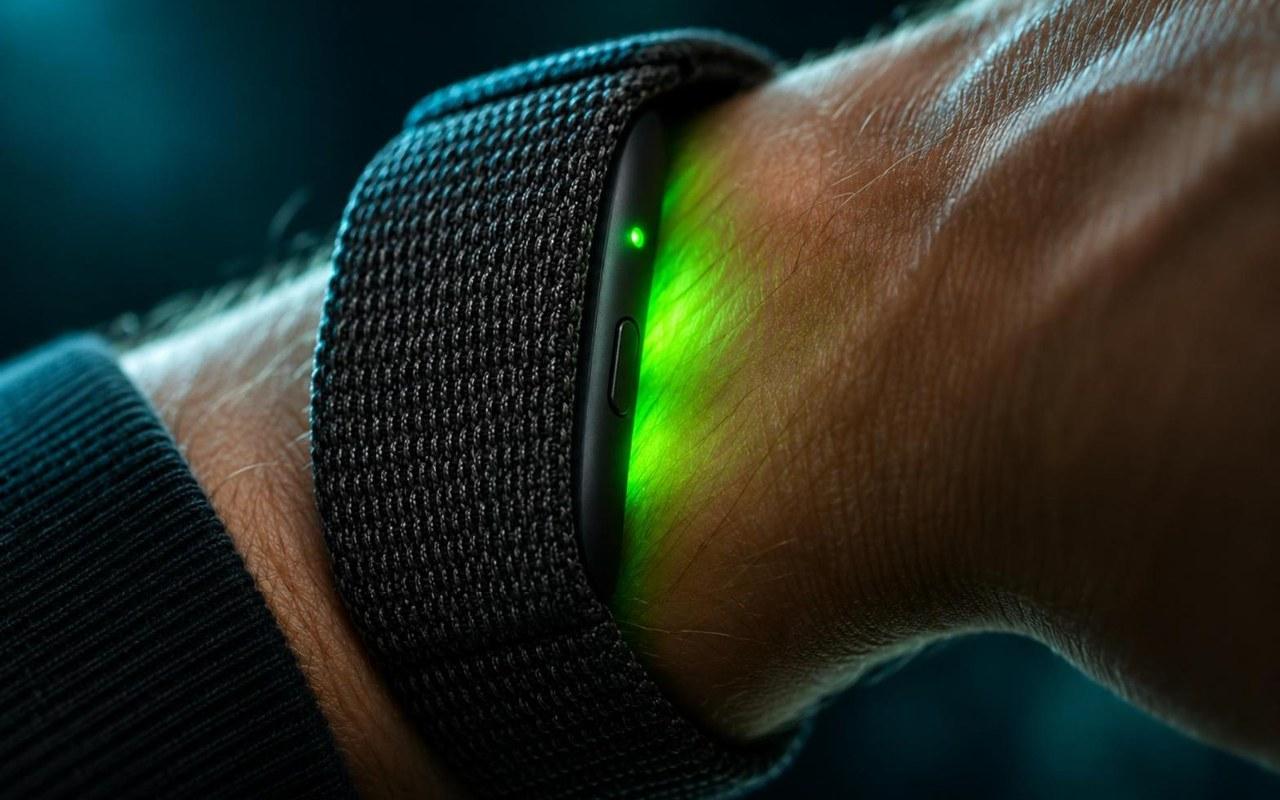
Almost all step counter bands today also measure heart rate – optically, with green light that shines into the skin and is reflected to varying degrees by the blood. This method is called photoplethysmography (PPG). As a wristband heart rate monitor, such a device is usually reliable at rest, during sleep and during steady movement such as walking or easy jogging. During intervals, sprints and strength training it lags behind and deviates more. The details are explained in How accurately do fitness trackers measure heart rate?.
What heart rate gives you:
- Resting heart rate as a fitness trend: if it falls over weeks, your cardiovascular system is becoming more efficient.
- Intensity when walking: brisk walking does more when your heart rate rises noticeably. If you want to train specifically in the easy range, Zone 2 training has the right values.
- Recovery: an unusually high resting heart rate in the morning can point to lack of sleep, stress or an oncoming cold.
How many steps a day make sense?
The 10,000 steps originally came from a Japanese advertising campaign in the 1960s, not from research. By now, however, there is good data: a meta-analysis of 15 studies with around 47,000 adults found that the risk of death falls with more steps per day. In people aged 60 and over, the additional benefit levelled off at about 6,000 to 8,000 steps; in younger people at about 8,000 to 10,000 steps (Paluch et al., The Lancet Public Health 2022).
In other words: if you currently walk 3,000 steps a day, you already benefit from every additional thousand. The band mainly helps you know your own baseline and increase it realistically.
How to use the band to move more
- Just observe for a week: wear the band as usual and note your average.
- Set a target just above it: about 1,000 to 2,000 steps more than your baseline.
- Create fixed opportunities: ten minutes after lunch, get off one stop earlier, take phone calls while walking.
- Weekly average instead of daily figure: a rainy day without hitting the target is not a setback if the week is right.
- Readjust after four weeks: raise the target if it's easy, or keep it if it fits.
Buying criteria: what really matters
| Criterion | What to look for |
|---|---|
| Comfort | light, soft, skin-friendly; does the band size fit your wrist? |
| Battery life | the longer, the fewer gaps – especially if you want to wear it at night too |
| Display | handy for a quick glance but costs battery; without a display, everything is in the app |
| App | understandable, with weekly trends; does it run on your smartphone? |
| Running costs | calculate purchase price plus any subscription over two to three years |
| Water resistance | check the protection rating for showering and swimming |
| Privacy | where does the data end up – on the phone or in a cloud? Can it be deleted? |
| Extra features | GPS, notifications, payments only if you really use them |
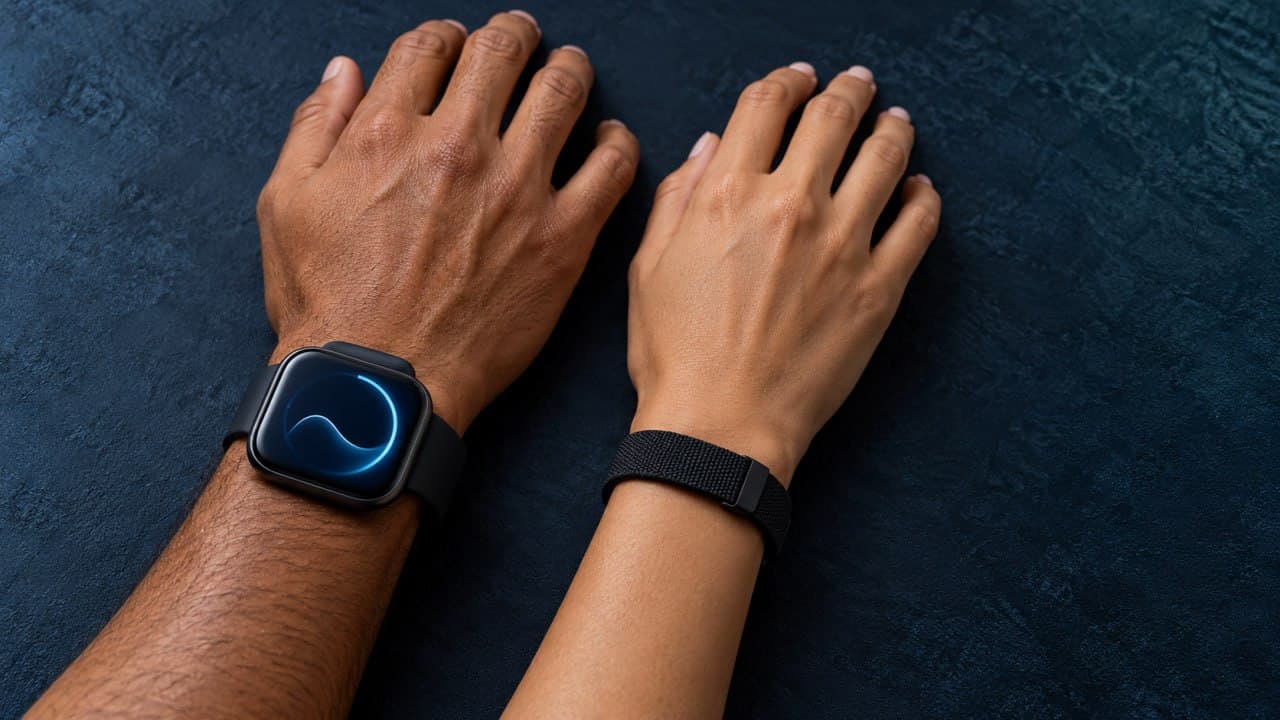
For many beginners, the most important question is not accuracy but whether they are happy to wear the band every day. A device lying in a drawer doesn't count any steps. Whether a smartwatch or a simple band suits you better is covered in Smartwatch or fitness tracker?.
Where the LEEK Pulse Pro fits in
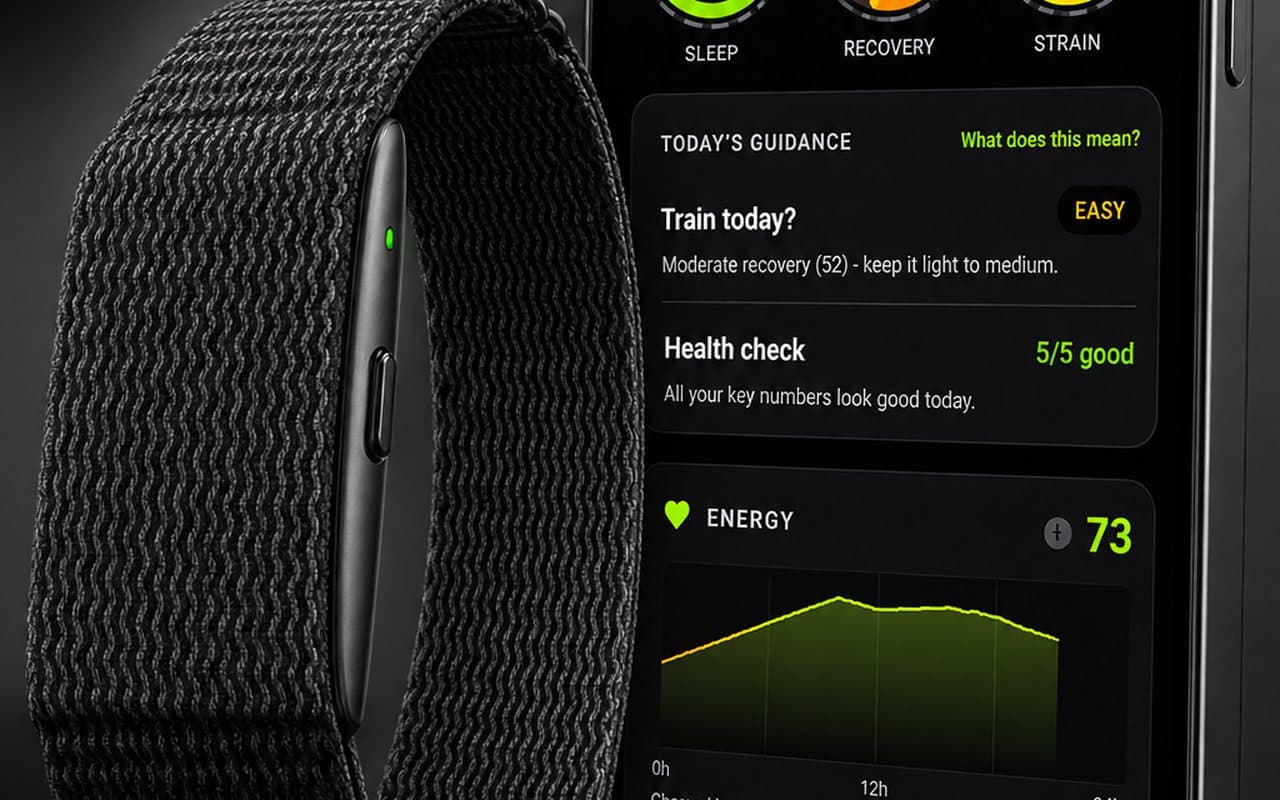
The LEEK Pulse Pro is a fitness band without a display: it counts steps, measures heart rate, heart rate variability, oxygen saturation and sleep and, according to the manufacturer, lasts up to 30 days on one charge. You see all values in the free LEEK app – without a subscription, and the data stays on your smartphone. To be honest: without a display you don't see your steps on your wrist, only in the app, and the app is currently only available for Android. All the details are in LEEK Pulse Pro in detail.
Conclusion: a simple tool with a big effect
A step counter wristband doesn't have to count every single step to work. It's enough if it shows you where you stand and whether you're improving. With heart rate measurement, resting heart rate is added as a second gauge of your fitness. When buying, make sure you enjoy wearing the band, the battery lasts a long time and there are no running costs – then the gadget becomes a habit.
Sources:
- Bravata DM et al. (2007): Using Pedometers to Increase Physical Activity and Improve Health: A Systematic Review. JAMA 298(19):2296–2304.
- Fokkema T et al. (2017): Reliability and Validity of Ten Consumer Activity Trackers Depend on Walking Speed. Medicine & Science in Sports & Exercise 49(4):793–800.
- Germini F et al. (2022): Accuracy and Acceptability of Wrist-Wearable Activity-Tracking Devices: Systematic Review of the Literature. Journal of Medical Internet Research 24(1):e30791.
- Paluch AE et al. (2022): Daily steps and all-cause mortality: a meta-analysis of 15 international cohorts. The Lancet Public Health 7(3):e219–e228.
Vanlige spørsmål
How accurately does a step counter wristband count?
At normal and brisk walking speeds, good bands are usually close to the actual step count. When walking slowly, with a pram, walker or shopping trolley, they often count too few; when gesturing, clapping or on bumpy car journeys, steps can be added. In a lab study with ten devices, the deviations ranged from 0 to 26 percent depending on device and pace.
Is a wristband heart rate monitor accurate?
Optical heart rate sensors at the wrist are usually reliable at rest, during sleep and during steady movement. During intervals and strength training they lag behind and deviate more. If you need exact values in training, use a chest strap.
How many steps a day are healthy?
A meta-analysis of around 47,000 adults found that more steps are associated with a lower risk of death. In people aged 60 and over, the benefit levelled off at about 6,000 to 8,000 steps; in younger people at about 8,000 to 10,000. So 10,000 steps is a good but not a magic target – every increase from a low baseline counts.
Do I need a band with a display?
No. A display shows steps instantly but costs battery life and can be distracting. Bands without a display often last much longer and show all values in the app. If you like glancing at your wrist in between, a display suits you better.
Can a fitness band measure blood pressure?
Some bands show blood pressure values without a cuff. Professional societies such as the European Society of Hypertension do not yet recommend such cuffless devices for diagnosis and treatment. For reliable values, a validated upper-arm blood pressure monitor is the better choice.
Stikkord
- Step counter wristband
- Heart rate monitor band
- Fitness band
- Steps
- Heart rate
- Wearables
Om forfatteren
Michael Lohrberg· Grunnlegger av Syrax
Michael Lohrberg grunnla Syrax i 2026. Militærtjeneste med utenlandsoppdrag, i industrien siden 2010, skiftarbeid og to jobber parallelt – LEEK Pulse Pro vokste ut av spørsmålet om hvor mye restitusjon som egentlig er igjen i hverdagen. I magasinet skriver han om trening, søvn og restitusjon – praktisk og forankret i forskningen.
Mer om MichaelArtikkelen er generell informasjon og erstatter ikke medisinsk rådgivning. Har du sykdommer, smerter eller er i tvil, snakk med legen din før du endrer trening eller kosthold.
Syrax Magasin
Les videre
Wearables og sporing
How Accurately Do Fitness Trackers Measure Heart Rate?
How optical heart rate measurement on the wrist works, where it is reliable and where it isn't – at rest, running, during intervals and in strength training – which factors disrupt it and how to get more accurate readings.
5 min lesingEnglish
 Stor guide
Wearables og sporing
Smartwatch or Fitness Tracker? What Matters for Training
Smartwatch, GPS sports watch or slim fitness band: which device class suits your training, what the sensors can really do, how important battery, subscription and privacy are – with a decision guide for every profile.
8 min lesingEnglish
Wearables og sporingSyrax
LEEK Pulse Pro in Detail: The Fitness Tracker Without a Display or Subscription
No screen, no cloud, no subscription, up to 30 days of battery: the LEEK Pulse Pro deliberately takes a different path from smartwatches. What the band measures, how the analysis works, where its limits are – and who it is worth it for.
13 min lesingEnglish