
Building Muscle Without Weights: Does It Really Work?
Can you build muscle without dumbbells and machines? What research says about training with light loads, how to make bodyweight exercises progressively harder, which muscle groups are difficult and a sample plan for three days a week.
 Yazar:Michael Lohrberg
5 dk okuma
Bu yazı henüz Türkçe olarak mevcut değil. Şu dilde gösteriliyor: English.
Kısaca
Yes, building muscle without weights works. What matters for muscle growth isn't the weight but that sets go close to muscular failure – which is possible with bodyweight too, as long as you make exercises progressively harder: through harder variations, slower tempo, pauses in the movement, single-leg or single-arm execution and more reps. That's easiest for chest, shoulders, triceps and core, harder for the back (without a bar) and for the legs of strong trainees. With three full-body sessions per week, enough protein and a slight calorie surplus, good progress is possible.
İçindekiler
No gym nearby, no space for dumbbells, no time for the trip to the gym – and yet you want to build muscle. The most common question is: does it even work without weights? The short answer: yes – with a few important limitations and one clear principle.
This article explains why bodyweight training works, how to create progress and where the limits lie. It belongs to the Home Workout & Calisthenics topic. Exercises and ready-made workouts are in the pillar article Home workout without equipment.
Why it works: your muscle doesn't know weight
Your muscle doesn't know whether it's working against a dumbbell or your body weight. It senses mechanical tension. And the key insight of recent years is: for muscle growth, how heavy the load is matters less than how close a set goes to muscular failure.
Studies comparing heavy and light loads found similar muscle growth for sets taken close to failure – across a wide range of about 6 to 30 reps. Heavy loads are superior for maximum strength, but not strictly necessary for building muscle.
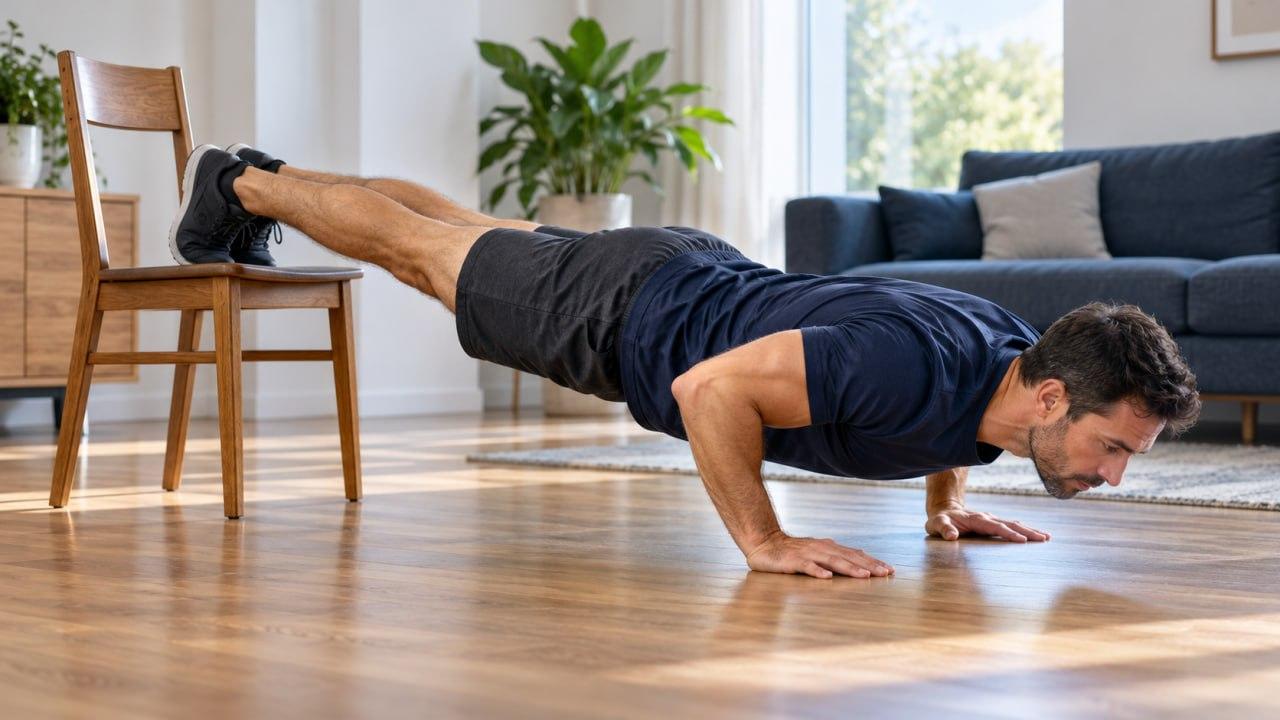
What that means for you: 50 easy push-ups do little. 15 push-ups with your feet elevated, where the sixteenth would no longer be possible, do a lot.
The problem: progression
With dumbbells, progress is simple: more weight. Without weights you have to be more creative. Otherwise the exercise eventually becomes so easy that you need 40 reps to get close to failure – which is inefficient and tiring.
Make bodyweight exercises harder in 5 steps
- 1
Adım 1
Increase the reps
Work your way up to about 15–20 clean reps on an exercise before switching variation.
- 2
Adım 2
Slow the tempo
Lower your body over three to four seconds. That increases time under tension and makes every rep harder.
- 3
Adım 3
Add pauses
Hold for one to two seconds at the hardest point of the movement, for example just above the floor in a push-up.
- 4
Adım 4
Change the leverage
Switch to harder variations: feet elevated, close grip, single-leg or single-arm.
- 5
Adım 5
Adjust the volume
Gradually increase the number of hard sets per muscle group to about 10–20 per week.
Progression levels of the key exercises
| Muscle group | Easy | Medium | Hard |
|---|---|---|---|
| Chest/triceps | incline push-up (hands on table) | push-up | feet-elevated push-up, archer push-up |
| Shoulders | pike push-up | pike with feet elevated | wall handstand push-up |
| Back | table row, knees bent | table row, legs straight | pull-up (with doorway bar) |
| Legs (quads) | squat | Bulgarian split squat | pistol squat, shrimp squat |
| Legs (posterior chain) | glute bridge | single-leg glute bridge | Nordic curl (assisted) |
| Core | forearm plank | hollow hold | dragon flag, L-sit |
The path to the single-leg squat is described in Learning the pistol squat; the ultimate back skill is shown in Front lever.
The limits, honestly
Back without a bar. Without a pull-up bar or rings, a real vertical pulling movement is missing. Rows under a sturdy table help, but a doorway bar for about €30 to €50 is the best investment for any home workout.
Strong legs. If your legs are already very strong, you need very demanding single-leg exercises to get close enough to failure. The effort per set increases.
Maximum strength. If you want to lift the heaviest weights possible, there's no way around dumbbells and barbells. For muscle mass and functional strength, however, they aren't necessary.
Measurability. Progress is harder to compare than "5 kilos more". A training log with variation, tempo and reps solves the problem.
A sample plan: 3 days a week
Three full-body sessions, for example Monday, Wednesday and Friday. Each exercise 3 sets with 1–2 reps in reserve, 60–90 seconds rest.
| Exercise | Reps |
|---|---|
| Bulgarian split squat (per side) | 8–15 |
| Push-up (suitable variation) | 8–20 |
| Table row or pull-up | 6–15 |
| Single-leg glute bridge (per side) | 10–20 |
| Pike push-up | 6–15 |
| Hollow hold | 20–40 seconds |
When you reach the top of the range in all sets, switch to the next variation. What "in reserve" means is explained in RIR and RPE explained. An equipment-based beginner plan for comparison is in Beginner workout plan.
Nutrition: it doesn't work without it
The best training achieves little without the building blocks for new muscle:
- Protein: about 1.6 to 2.2 g per kilogram of body weight per day.
- Calories: a slight surplus of about 200 to 300 kcal speeds up building.
- Sleep: seven to nine hours for recovery.
How much protein you actually need is shown in How much protein do you really need?.
How quickly can you expect results?
Beginners can build noticeable muscle in the first months – often even faster than expected because the training stimulus is new. Visible changes usually show after eight to twelve weeks of consistent training. With growing training experience the pace slows – that's true with and without weights alike. What matters is that you continuously master harder variations. To do so, note the variation, reps and tempo after every session – that way you can see in black and white that you're getting stronger, even without weight plates.
Common mistakes
Variations that are too easy. If you stick at 40 push-ups instead of switching variation, you're training endurance more than anything.
No plan. Random workouts from the internet rarely create progression.
Neglecting legs. Normal squats quickly become too easy – single-leg exercises are a must.
Too little rest. For muscle building, 60 to 120 seconds of rest between hard sets makes sense – not non-stop circuit training.
Who building muscle without equipment suits
Bodyweight training is ideal for beginners, for anyone with little space and budget, when travelling and for people who want to train flexibly. If you later switch to a gym, you'll benefit from the good body control calisthenics builds. A structured start is offered by Calisthenics for beginners.
Conclusion: the principle counts, not the equipment
Muscles grow through hard, progressively increasing load – not through iron. If you systematically make bodyweight exercises harder, train close to failure and eat enough, you'll visibly build muscle even without equipment. The biggest hurdle isn't equipment but consistency. Ready-made workouts to get started right away are in Home workout without equipment.
Sık sorulan sorular
Can you build muscle without equipment?
Yes. Studies show that training with light loads and high reps also triggers muscle growth, provided the sets go close to muscular failure. Bodyweight training works on the same principle.
How many reps make sense without weights?
For muscle building, sets of up to about 30 reps are effective if they go close to muscular failure. If you can do considerably more, choose a harder variation to keep training efficient.
Which muscles are hard to train without equipment?
The back is hard to load without a pull-up bar or rings, and for strong legs, normal squats quickly stop being enough. Single-leg exercises, rows under a sturdy table and an inexpensive doorway bar help.
How often should I train without equipment?
Three full-body sessions per week are a good start. Advanced trainees can increase to four sessions with upper- and lower-body days.
Do I need a calorie surplus to build muscle without equipment?
A slight surplus of about 200 to 300 kcal and enough protein make building muscle easier. Beginners can, however, also build muscle at maintenance or in a slight deficit.
Etiketler
- Muscle building
- No equipment
- Bodyweight
- Calisthenics
- Home workout
- Progression
Yazar hakkında
Michael Lohrberg· Syrax'ın kurucusu
Michael Lohrberg, Syrax'ı 2026'da kurdu. Yurt dışı görevli askerlik, 2010'dan beri sanayide, vardiyalı çalışma ve aynı anda iki iş – LEEK Pulse Pro, günlük hayatta gerçekte ne kadar toparlanma kaldığı sorusundan doğdu. Dergide antrenman, uyku ve rejenerasyon üzerine pratik ve bilimsel temelli yazıyor.
Michael hakkında daha fazlasıBu yazı genel bilgilendirme amaçlıdır ve tıbbi tavsiyenin yerini tutmaz. Rahatsızlığın, ağrın veya şüphen varsa antrenmanını ya da beslenmeni değiştirmeden önce doktoruna danış.
Syrax Dergi
Okumaya devam et
 Büyük rehber
Evde antrenman ve kalistenik
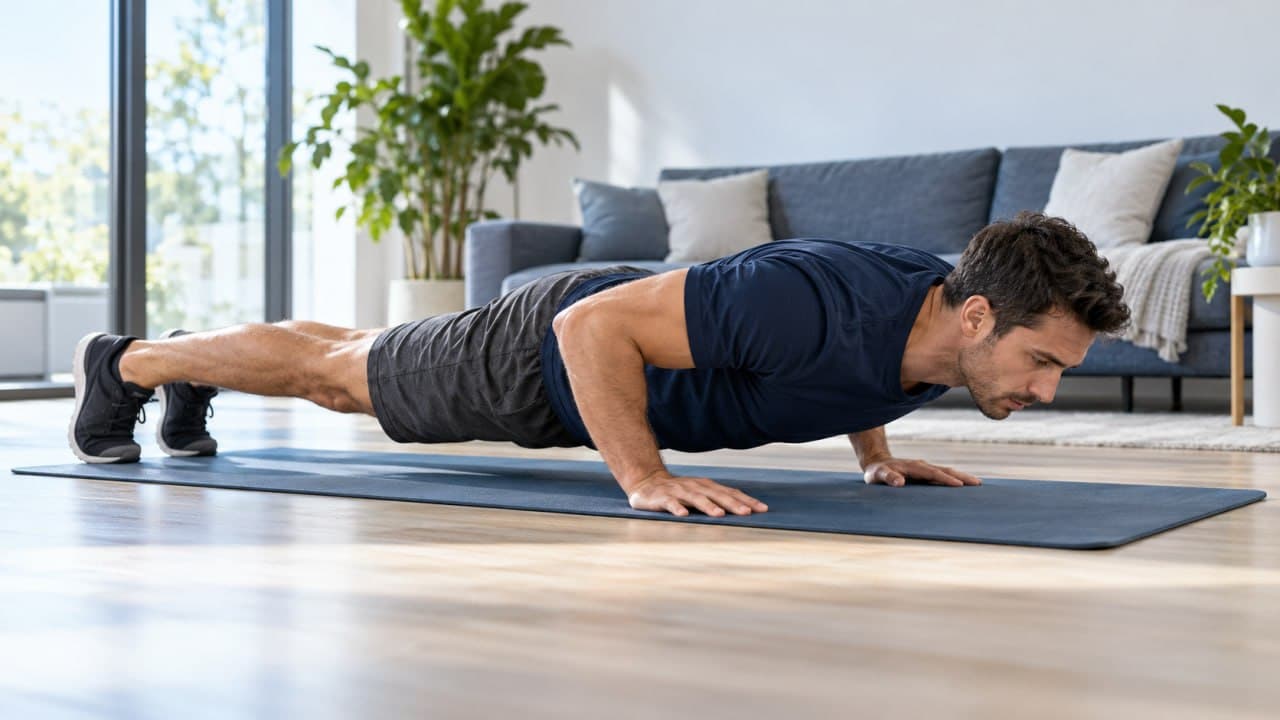
Home Workout Without Equipment: The Complete Full-Body Plan
Build muscle and get fit without a gym, without dumbbells, without excuses. The complete bodyweight plan for beginners and intermediates – with exercise progressions, a weekly schedule and the tricks that make even bodyweight really hard.
13 dk okumaEnglish
Evde antrenman ve kalistenik
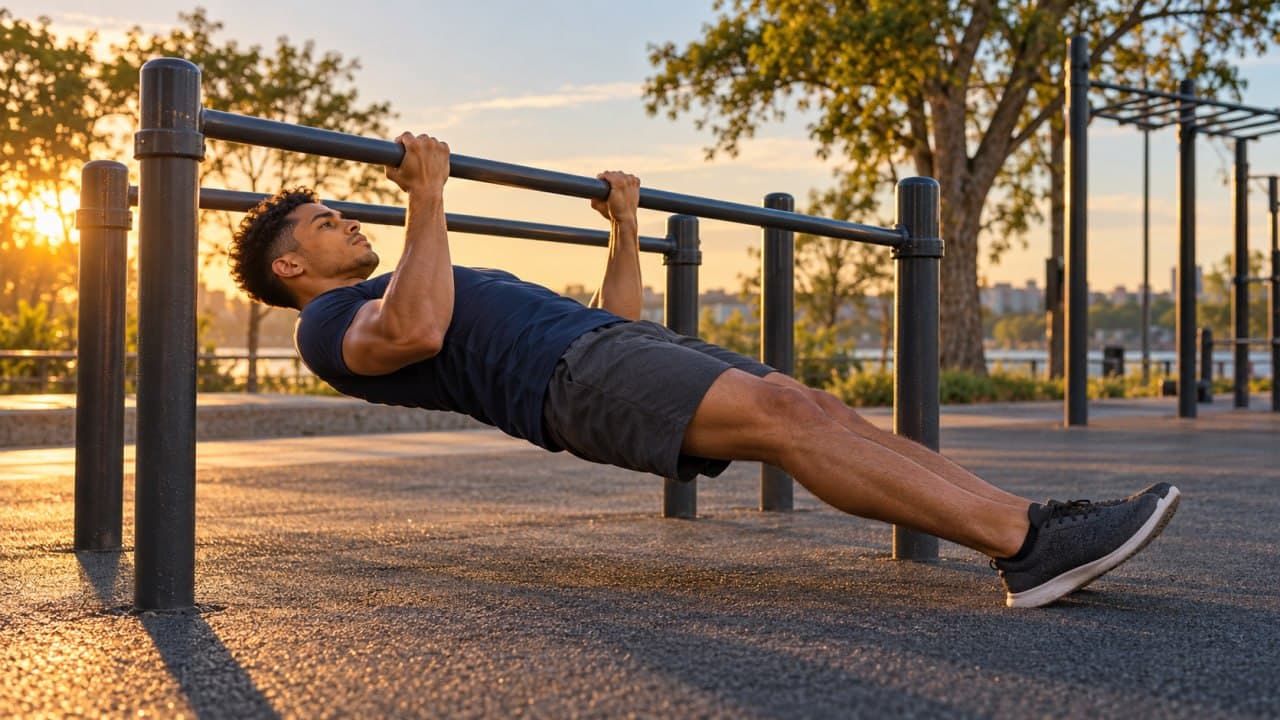
Calisthenics for Beginners: Getting Started with Bodyweight Training
Calisthenics from zero: the basic exercises, progressions from the easiest to the hardest variation, a three-day beginner plan, the right equipment and how to get stronger without weights.
5 dk okumaEnglish
 Büyük rehber
Antrenman programları
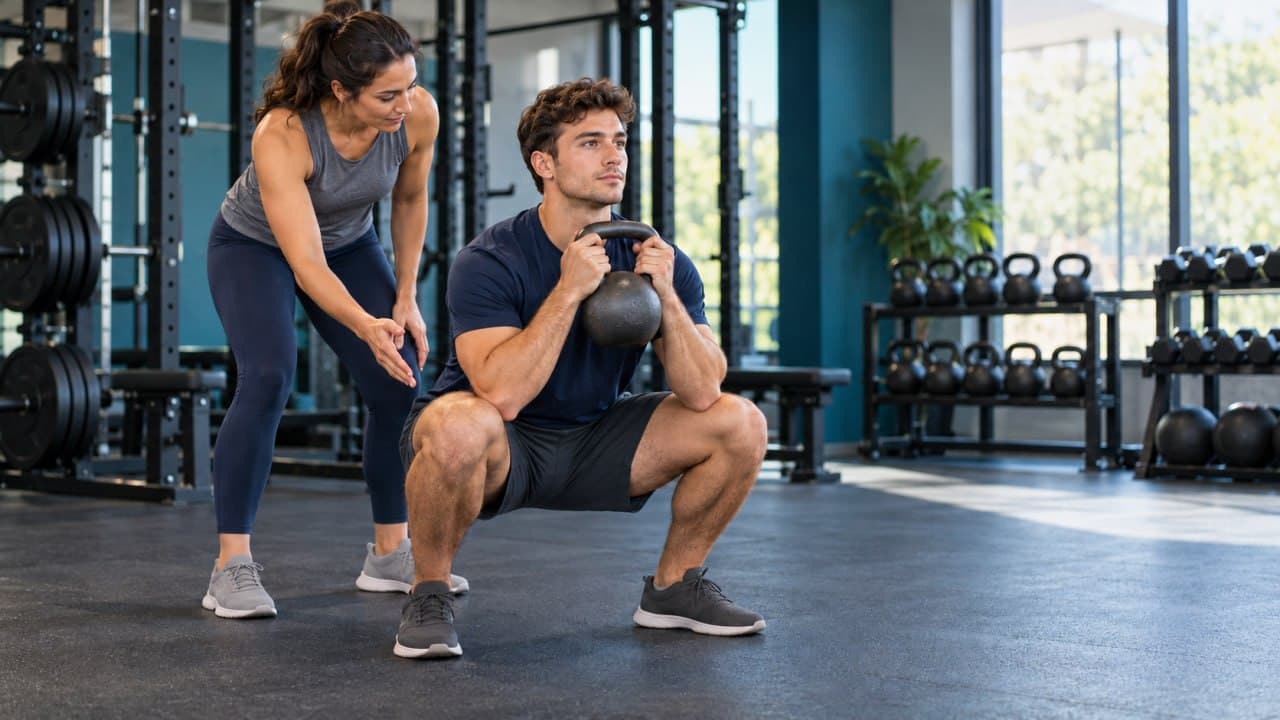
Muscle Building for Beginners: The 3-Day Full-Body Plan
The training plan for your first 12 weeks in the gym: three full-body sessions a week, six compound exercises, clear rules for weight, sets and rest – and when to switch to a split.
9 dk okumaEnglish