
Blood Tests for Athletes: The Values You Should Know
Which blood values are meaningful for athletes – from ferritin and vitamin D to HbA1c and blood lipids – how training can skew lab results and how to prepare properly for a blood test.
 作者:Michael Lohrberg
閱讀時間 5 分鐘
本文尚未提供繁體中文版,目前以 English 顯示。
重點摘要
For athletes, the most meaningful values are a basic blood count, ferritin (iron stores), vitamin D, vitamin B12, HbA1c (long-term blood sugar), blood lipids, kidney and liver values and, for men with symptoms, testosterone. Intense training can skew lab results: CK and liver enzymes often rise significantly after hard sessions, and creatine raises creatinine. The rule: measure in the morning while fasted, no hard training for 48 to 72 hours beforehand, and tell your doctor about your training and supplements. Once a year is usually enough for healthy athletes.
目錄
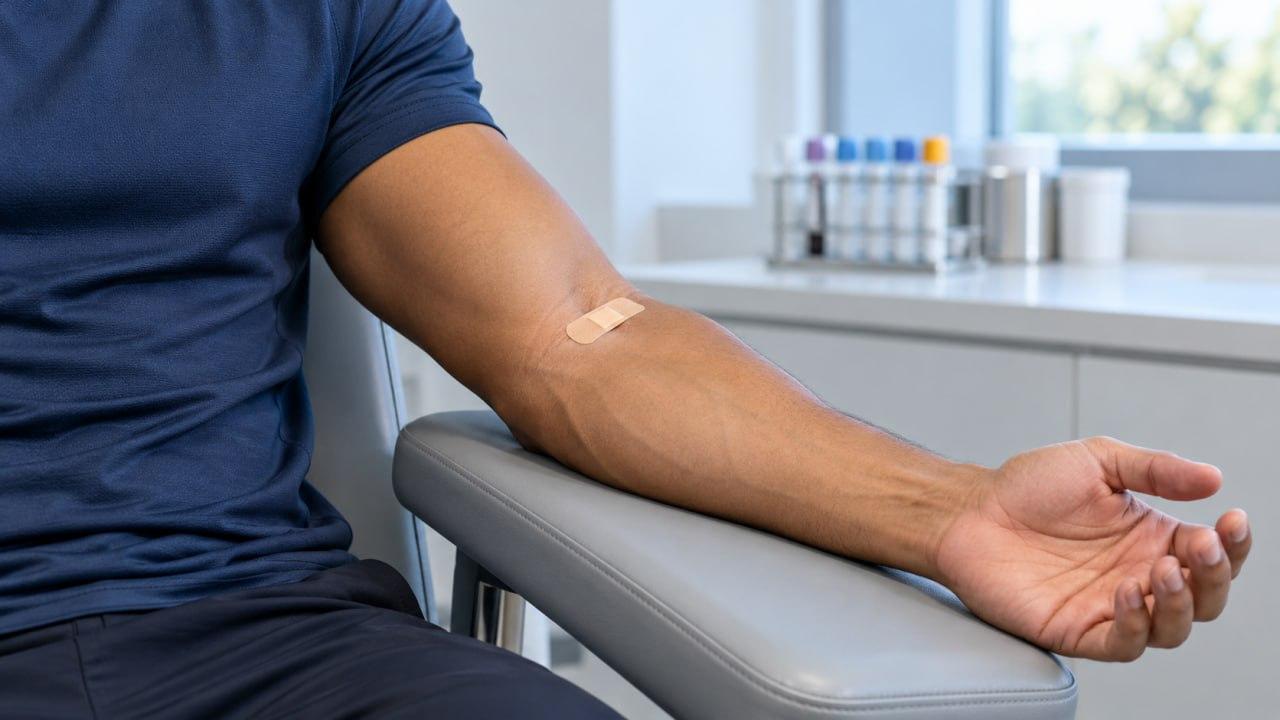
You measure your weights, your sleep duration and perhaps your resting heart rate. But some of the most important health values remain invisible until you have them measured in a lab. Iron deficiency can disguise itself as "poor form" for months, rising long-term blood sugar goes unnoticed, and high blood lipids don't hurt.
This article explains which blood values are meaningful for athletes, how training can skew them and how to prepare properly. It belongs to the Men's Health topic but applies to everyone who trains.
The key values at a glance
| Value | What it shows | Relevance for athletes |
|---|---|---|
| Basic blood count (Hb, haematocrit, red cells) | oxygen transport | performance, sign of anaemia |
| Ferritin | iron stores | fatigue, performance drop, especially in endurance athletes and menstruating women |
| Vitamin D (25-OH-D) | vitamin D status | bones, muscles, immune system; often low in winter |
| Vitamin B12 | blood formation, nerves | especially important on a vegan diet |
| HbA1c | average blood sugar over the last 2–3 months | early detection of diabetes |
| Blood lipids (LDL, HDL, triglycerides) | cardiovascular risk | prevention |
| Creatinine, eGFR | kidney function | interpret carefully with creatine use and high muscle mass |
| AST, ALT, GGT | liver | rise after hard training |
| CK (creatine kinase) | muscle cell damage | often strongly elevated after training |
| TSH | thyroid | fatigue, weight changes |
| Testosterone (men with symptoms) | hormone status | libido, energy, muscle mass |

Iron and ferritin: the hidden performance killer
Iron is central to oxygen transport. Empty iron stores often show up long before actual anaemia as fatigue, poorer recovery and declining endurance performance. Particularly affected are:
- endurance athletes with high volumes
- people who menstruate
- vegetarians and vegans
- blood donors
Important: ferritin rises with inflammation and infections and can then mask a deficiency. Never take iron "just in case" – too much is harmful too. Measure first, then decide with your doctor.
Vitamin D: almost always an issue in winter
In Central Europe, the sun between October and March is hardly enough for the body to produce sufficient vitamin D. Many people therefore have low levels in winter. The test measures 25-OH vitamin D. Values below about 20 ng/ml (50 nmol/l) are often considered insufficient and below about 12 ng/ml (30 nmol/l) a clear deficiency – the exact thresholds differ between professional bodies. More in Vitamin D deficiency.
Blood sugar and lipids: prevention for heart and vessels
Exercise significantly lowers the risk of type 2 diabetes and cardiovascular disease – but doesn't protect completely. Genes, diet and body fat play a role. HbA1c shows average blood sugar over recent months and is well suited to early detection. LDL cholesterol is the most important lipid value for cardiovascular risk. How training and nutrition improve the values is explained in Heart health and training and Lowering cholesterol.
How training skews lab results
Active people in particular often get surprises in their lab report. The most common distortions:
| Value | Effect of training | What to do |
|---|---|---|
| CK | can rise many times over after hard or unfamiliar training | check 3–7 days after intense training |
| AST, ALT | rise after strength training because they also occur in muscle | 2–3 days' rest, add GGT if needed |
| Creatinine | higher with high muscle mass and creatine use | mention creatine; ask about cystatin C if needed |
| Haemoglobin | slightly diluted in endurance athletes due to higher plasma volume | interpret together with ferritin |
| Inflammatory markers (CRP, white cells) | elevated after very long or hard efforts | don't measure right after competitions |
If you take creatine, always say so – more in Creatine: effects and myths.
Preparing properly for a blood test
- 1
步驟 1
Plan your training
Avoid hard or unfamiliar training for 48 to 72 hours before the blood test, especially heavy strength training or long endurance sessions.
- 2
步驟 2
Arrive fasted
Don't eat for eight to twelve hours beforehand. Water and unsweetened tea are fine.
- 3
步驟 3
Get measured in the morning
Many values such as testosterone and cortisol fluctuate over the day. An appointment between 7 and 10 am makes measurements comparable.
- 4
步驟 4
Bring information
Note your supplements (for example creatine, vitamin D, iron), medications and training load and share them with your doctor.
- 5
步驟 5
Compare results
Ask for your values and compare them with earlier measurements – trends are often more meaningful than a single value.
Testosterone and hormones
For men with typical symptoms such as loss of libido, persistent fatigue or muscle loss despite training, testosterone can be worth measuring – always in the morning and fasted, and repeated if abnormal. What affects the level and how to support it naturally is explained in How to increase testosterone naturally. Without symptoms, routine hormone testing is usually not necessary.
Blood values and everyday data
Lab values are snapshots. Wearables, in contrast, provide continuous data such as resting heart rate, heart rate variability and sleep. The two complement each other: a resting heart rate rising over weeks and falling HRV can, for example, be a reason to have iron levels or the thyroid checked. How to read this everyday data is explained in Understanding HRV.
Three typical findings in athletes
"My liver values are elevated." Often after a hard strength session in the days before. AST and ALT then come from the muscles. A follow-up after a few days' rest – supplemented by the more liver-specific value GGT – brings clarity.
"My creatinine is too high." Often harmless with high muscle mass and creatine use. Your doctor can assess kidney function more precisely with a second marker such as cystatin C.
"I'm always tired, but my blood count is normal." Normal haemoglobin doesn't rule out empty iron stores. Only ferritin shows how full the stores are – and it should always be interpreted together with an inflammatory marker.
What a blood test can't do
- It doesn't replace a physical examination or a conversation with your doctor.
- A single value outside the range is not automatically pathological – context and repetition decide.
- "Optimal" values from the internet are often stricter than medical reference ranges and lead to unnecessary worry or supplementation.
How often to measure?
- Healthy recreational athletes: a basic check once a year.
- High-volume endurance athletes, vegetarians, vegans: ferritin and B12 more often if needed.
- During longer diets or intense training blocks: interim checks after consulting your doctor.
- From about age 35–40: keep an eye on blood sugar and lipids regularly; many health systems offer a routine check-up from this age.
Conclusion: measure, understand, act deliberately
An annual look at your lab values is as much part of an athlete's planning as the training log. Properly prepared and medically interpreted, blood values often reveal problems long before they slow your performance – and stop you taking supplements you don't need. How to lower blood pressure with training is covered in Lowering blood pressure through exercise.
常見問題
Which blood values should athletes check regularly?
Useful values are a basic blood count, ferritin, vitamin D (25-OH-D), vitamin B12, HbA1c or fasting glucose, blood lipids (LDL, HDL, triglycerides), kidney and liver values and the thyroid (TSH). For men with symptoms, testosterone can be added. Which values matter in an individual case is best discussed with a doctor.
Does strength training skew blood values?
Yes. After intense training, creatine kinase (CK) and liver enzymes such as AST and ALT can be significantly elevated without any disease. Inflammatory markers and creatinine can also rise. That's why you shouldn't train hard for two to three days before a blood test.
Does creatine raise creatinine?
Yes. Creatine is broken down into creatinine in the body, so the lab value can be slightly elevated while taking it, without the kidneys working any worse. It's important to tell your doctor that you take it.
How often should athletes have their blood tested?
For healthy recreational athletes, one check a year is usually enough. With abnormal values, symptoms, intense training phases or a diet, more frequent checks can make sense.
Are blood tests covered by health insurance?
That depends on your country and insurance. With symptoms or a specific suspicion, medically necessary lab tests are usually covered. Purely preventive checks without a reason are often offered as self-pay services. It's best to clarify this with your practice beforehand.
標籤
- Blood tests
- Blood count
- Ferritin
- Vitamin D
- Health check
- Prevention
Syrax 雜誌
延伸閱讀
 完整指南
男性健康
How to Increase Testosterone Naturally: What Really Works
Sleep, body fat, training, nutrition, alcohol: which factors demonstrably affect testosterone levels, which boosters do nothing and when to see a doctor – evidence-based and free of myths.
閱讀時間 8 分鐘English
 完整指南
補充品
Creatine: Effects, Dosage and Myths Fact-Checked
Creatine is the most thoroughly researched sports supplement in the world – and still surrounded by myths. What it really does, how to dose it correctly, whether you need a loading phase and what is true about hair loss, kidney damage and water retention.
閱讀時間 13 分鐘English