
穿戴裝置與追蹤完整指南
Smartwatch or Fitness Tracker? What Matters for Training
Smartwatch, GPS sports watch or slim fitness band: which device class suits your training, what the sensors can really do, how important battery, subscription and privacy are – with a decision guide for every profile.
 作者:Michael Lohrberg
閱讀時間 7 分鐘
本文尚未提供繁體中文版,目前以 English 顯示。
重點摘要
A smartwatch is an everyday computer on your wrist with apps, notifications and usually GPS – ideal if you want one device for everything, but with a short battery life of often one to two days. A GPS sports watch specialises in training, especially running and cycling. A fitness tracker or recovery band is lighter, lasts much longer and is best for sleep, recovery and everyday activity. For strength training and managing recovery, complete overnight data matters more than a big display; for runners, GPS is the most important criterion.
目錄
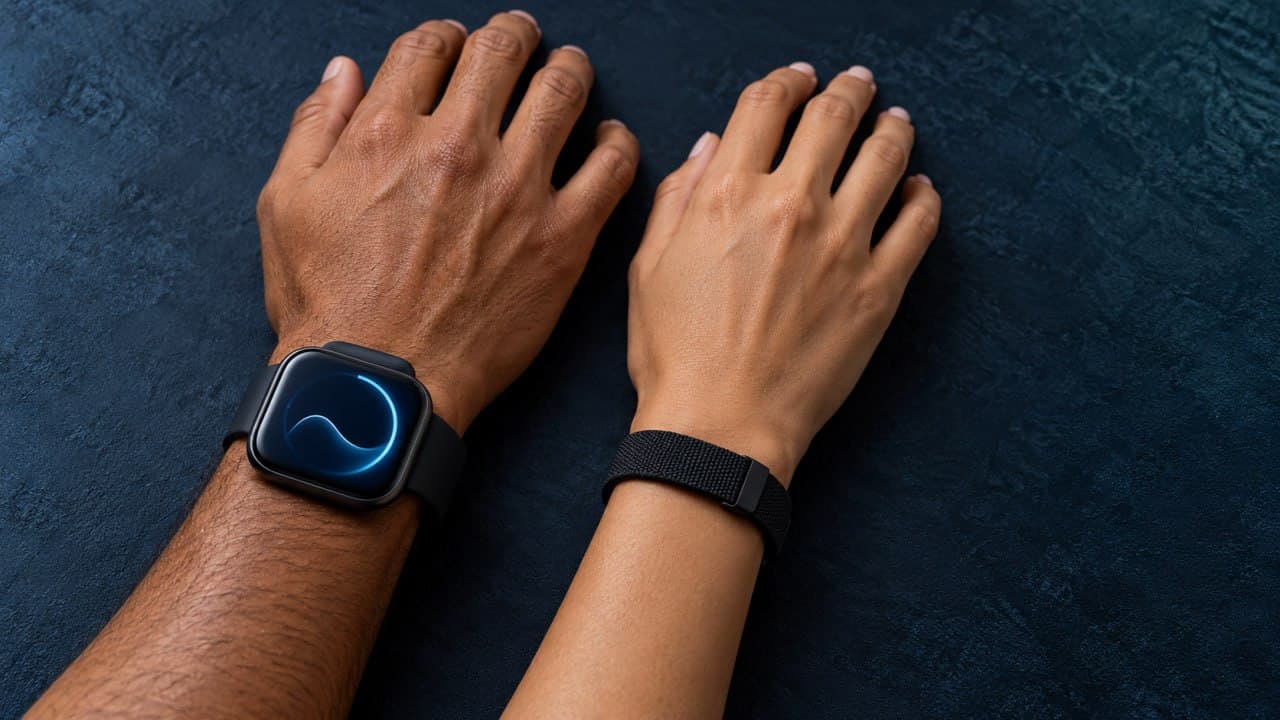
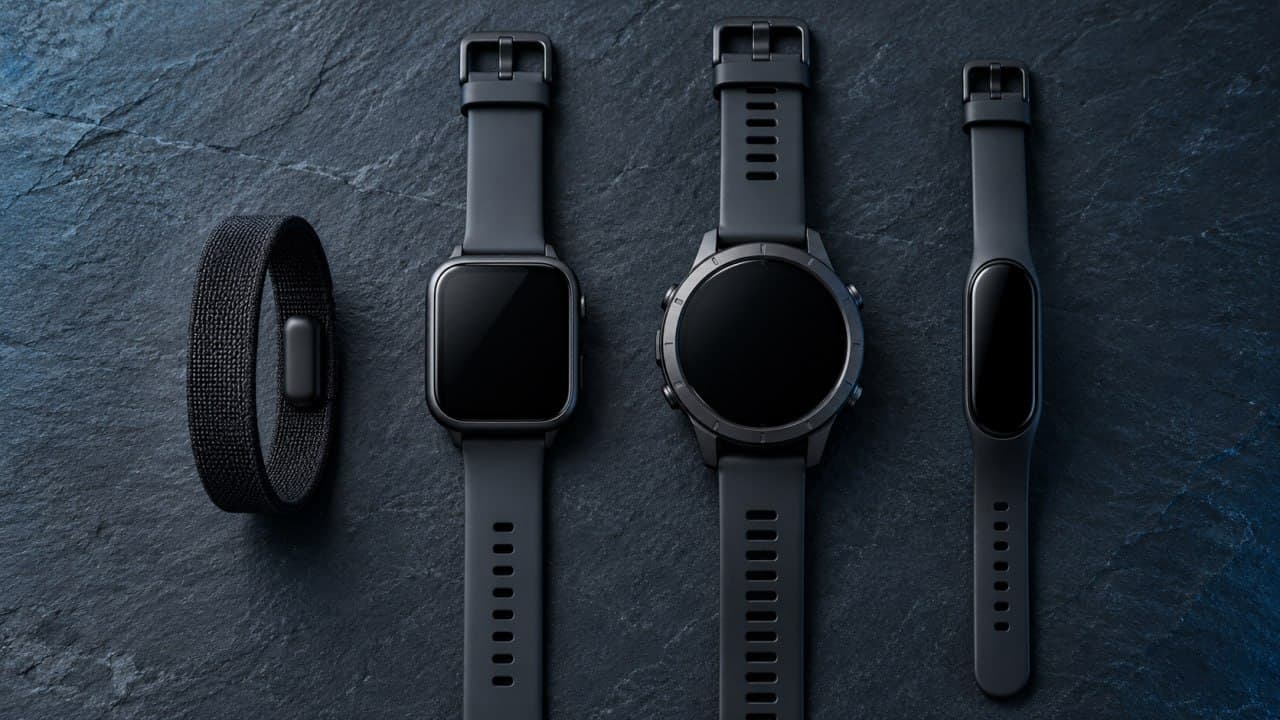
Anyone looking for a wearable for training today faces a choice that was unthinkable ten years ago: smartwatches with ECG, sports watches with map navigation, rings, bands without a display, chest straps. The most important decision is not between brands but between device classes – because each is built for a different purpose.
This guide explains the differences, gives an honest assessment of the sensors and helps you find the right device for your goal. It is the pillar article of our Wearables & Tracking topic.
The four device classes at a glance
| Class | Typical strengths | Typical weaknesses | Battery (typical) |
|---|---|---|---|
| Smartwatch | display, apps, notifications, GPS, payments | short battery life, often tied to one smartphone system | 1–2 days |
| GPS sports watch | precise GPS, training analysis, robust | large, more expensive, many features unnecessary for casual athletes | 1–3 weeks (without GPS) |
| Fitness tracker with display | affordable, light, steps and heart rate at a glance | smaller displays, some analyses require a subscription | 5–10 days |
| Recovery band without display | light, discreet, long battery life, focus on sleep and recovery | no live values on the wrist, usually no GPS | 1–4 weeks |
There are also smart rings, which, like recovery bands, mainly measure sleep and recovery, and chest straps, which provide the most accurate heart rate values during training. When a chest strap makes sense is explained in Chest strap or wrist?.
What the sensors can really do
Almost all wearables measure with the same basic sensors. The differences lie in quality, software and how long the device is worn.
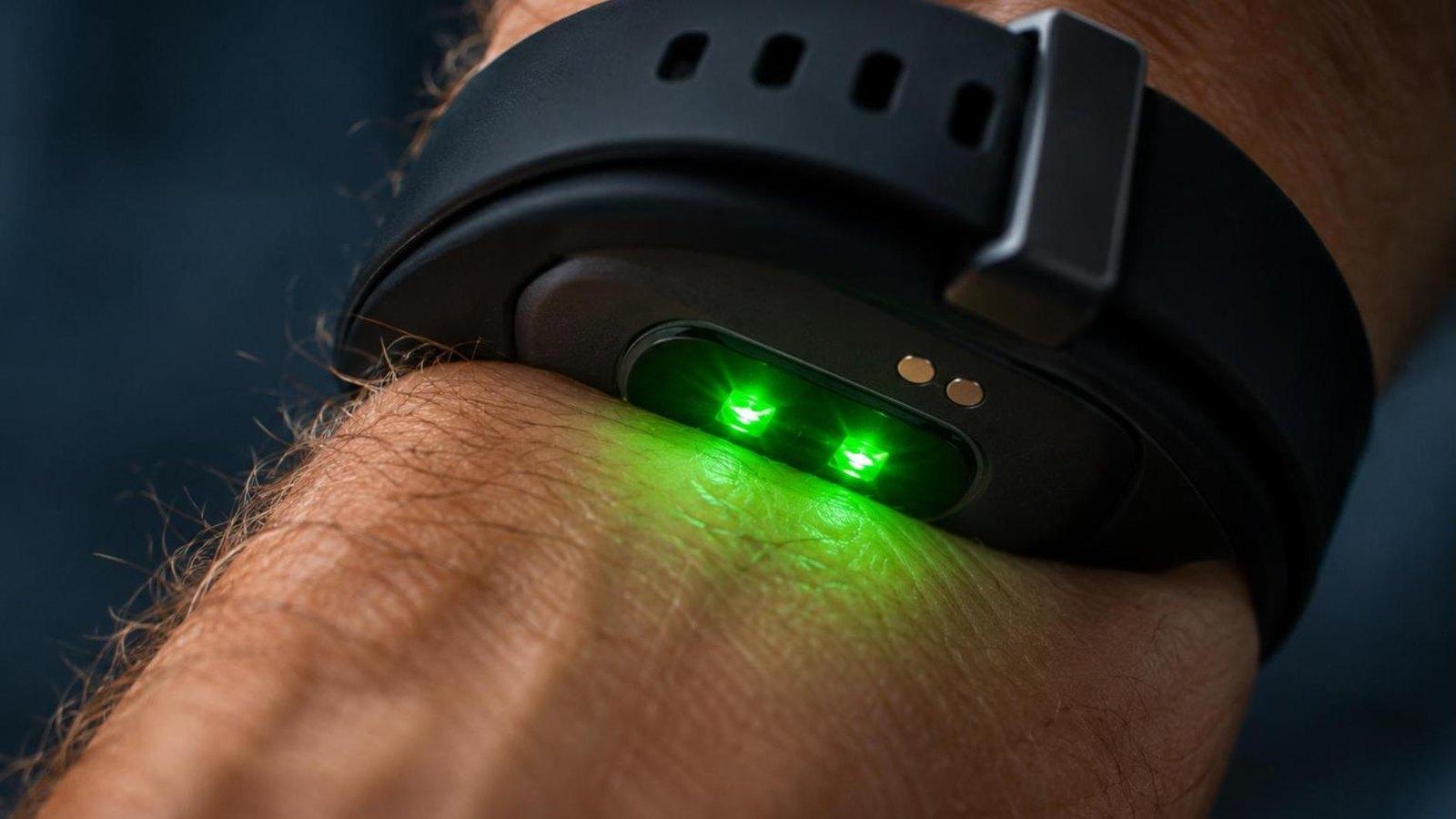
Optical heart rate sensor (PPG). Green LEDs shine into the skin and a photodetector measures the change in light caused by blood flow. At rest and under steady load, this is good enough for trends. With rapid changes in intensity and strength exercises involving strong wrist flexion, it becomes less accurate. Details in How accurately do fitness trackers measure heart rate?.
Heart rate variability (HRV). Usually calculated at night from the intervals between heartbeats. It is one of the most valuable recovery values – but only meaningful if the device is worn at night. Basics in Understanding HRV.
Blood oxygen (SpO₂). Also estimated optically, usually during sleep. Useful as a trend, not as a medical measurement.
Accelerometer and gyroscope. Record steps, movement and – combined with heart rate – sleep stages.
GPS. Only in smartwatches, sports watches and some trackers with a display. It uses a lot of energy – one of the main reasons for short battery life.
The six decision questions
1. What is your main training?
- Running, cycling, triathlon: GPS is a must. A sports watch or smartwatch is the right choice.
- Strength training: GPS is unnecessary. Recovery data and a device that doesn't get in the way during training matter more.
- General fitness and health: steps, sleep, resting heart rate – a tracker or band is enough.
2. Do you want one device for everything?
If you want to read messages on your wrist, pay contactlessly and control music, there is hardly any way around a smartwatch. The price is the short battery life.
3. Do you want to measure sleep and recovery?
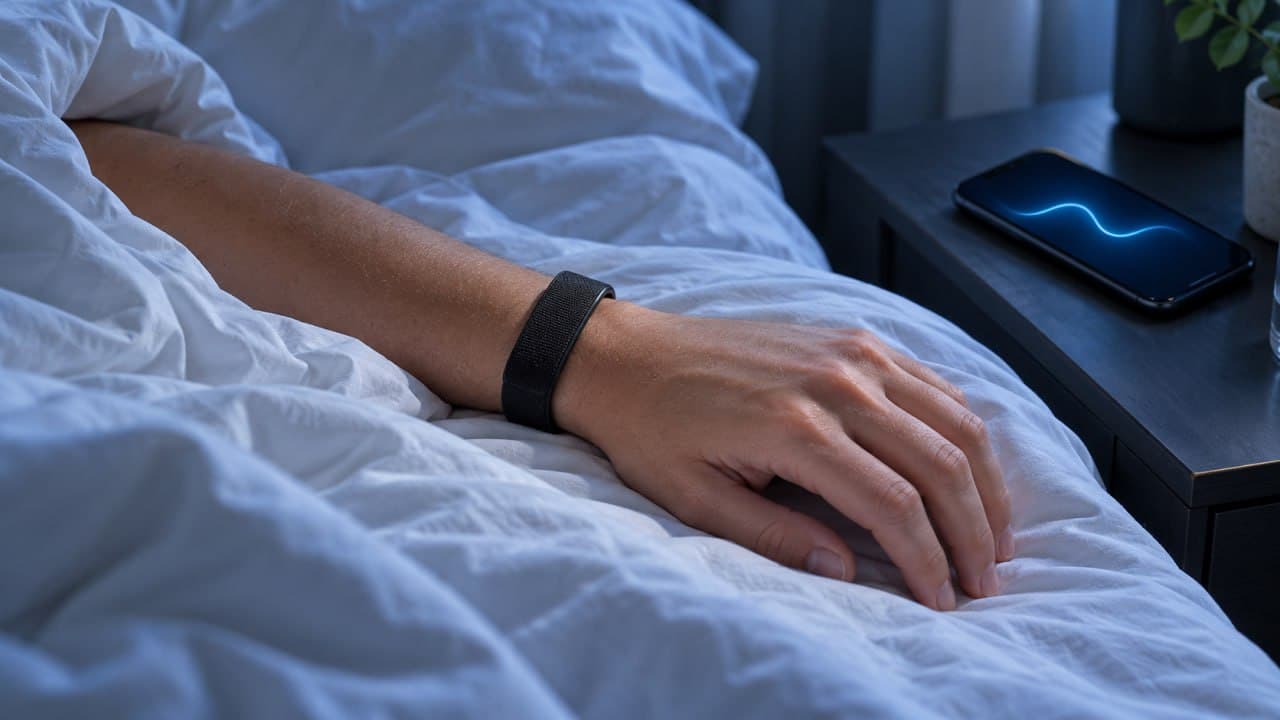
Then battery life is the most important criterion. Every night on the charger is a night without data – and recovery values depend on complete trends. Comfort matters too: large watches bother some people in bed.
4. How important is a display to you?
A display shows time, heart rate and pace live. Without a display, a band is more discreet, lighter and uses less power. If you look at your data on your smartphone in the morning anyway, you often won't miss the display.
5. Subscription or one-off purchase?
Assume two to three years of use. A mandatory subscription can multiply the total cost. Optional subscriptions are fair as long as the basic features remain free. More in Fitness trackers without a subscription.
6. Where should your health data be stored?
The range goes from purely local storage on the smartphone to a full cloud with an account at the manufacturer. Health data is particularly sensitive. What to look out for is explained in Privacy and fitness trackers.
Decision guide by profile
| Profile | Recommendation | Why |
|---|---|---|
| Runner with race goals | GPS sports watch | pace, distance, running metrics, long battery life |
| Everyday user who wants one device for everything | smartwatch | apps, communication, solid health features |
| Strength athlete focused on recovery | recovery band without display | complete overnight data, doesn't get in the way when lifting |
| Beginner on a small budget | tracker with display | affordable, steps and heart rate at a glance |
| Hybrid athlete | sports watch for training + band for 24/7 recovery | GPS when running, recovery around the clock |
| Shift worker | band with long battery life | reliably records sleep at changing times |
The combination of a sports watch and a band sounds like a luxury but is common among ambitious athletes: the watch only goes on the wrist for training, while the light band stays on around the clock.
The "more features = better" misconception
A smartwatch with 100 features is not automatically the better training tool. In the end, progress in training depends on a few data points that you collect reliably and turn into decisions:
- Sleep duration and quality
- Resting heart rate and HRV as recovery signals
- Load over the day and the week
- Training performance – for strength training, best recorded in a training log
How to turn this data into concrete training decisions is shown in Analysing training data.
How reliable are the measurements?
Not every value on the display is equally robust. The following assessment applies to most wrist-worn devices – regardless of class:
| Measurement | Reliability on the wrist | Useful for |
|---|---|---|
| Resting heart rate (at night) | high | recovery, training progress, signs of illness |
| HRV (at night) | good as a personal trend | recovery and stress load |
| Heart rate during steady endurance training | good | heart rate zones, keeping easy sessions easy |
| Heart rate during intervals and strength training | limited | rough guide only, a chest strap is better |
| Steps | good | everyday activity |
| Sleep duration | good | improving sleep habits |
| Sleep stages | estimate | trends, not a diagnosis |
| SpO₂ | estimate | spotting anomalies, get them checked by a doctor |
| Calorie burn | rough estimate | trend, not for exact planning |
| VO2max | estimate | tracking development over months |
The rule of thumb: trends over days and weeks are reliable, individual values are not. A device that reliably stays with you 24 hours a day therefore often provides more useful data than a more accurate device that is frequently on the charger.
Comfort: the underrated criterion
The best device is useless if it sits in a drawer. Many people take off their wearable after a few weeks because it bothers them in bed, presses during the bench press or itches. So pay attention to:
- Weight and height – large watches get in the way when sleeping and doing push-ups.
- Strap – soft textile or silicone straps are more comfortable at night than metal.
- Water resistance – if you don't have to take it off to shower or swim, you wear it more consistently.
- Skin compatibility – cleaning the strap regularly and shifting its position now and then prevents irritation.
The right fit also matters for measurement: about one to two finger-widths above the wrist bone, snug enough that no light gets under the sensor, but without pressure marks.
Costs over three years: a sample calculation
Looking only at the purchase price is comparing apples with oranges. Calculate the total cost over the typical period of use:
| Model (example) | Purchase price | Subscription per year | Cost after 3 years |
|---|---|---|---|
| Device A without subscription | €180 | €0 | €180 |
| Device B with optional subscription, not used | €150 | €0 | €150 |
| Device B with optional subscription, used | €150 | €80 | €390 |
| Device C membership only | €0 | €200 | €600 |
Total cost over three years (worked example)
Values from the table above: purchase price in year 0, then annual subscription costs. A mandatory subscription overtakes the purchase price of a subscription-free device within the first year.
- Device A without subscription
- Device B with subscription used
- Device C membership only
以表格顯示資料
| Year | Device A without subscription | Device B with subscription used | Device C membership only |
|---|---|---|---|
| 0 | 180 € | 150 € | 0 € |
| 1 | 180 € | 230 € | 200 € |
| 2 | 180 € | 310 € | 400 € |
| 3 | 180 € | 390 € | 600 € |
The figures are rounded example values, not specific products. But the principle always applies: mandatory subscriptions shift costs into the future – and make the device worthless as soon as you cancel.
Where our own band fits in
The LEEK Pulse Pro from Syrax belongs to the class of recovery bands without a display: up to 30 days of battery, no subscription, no cloud, focused on sleep, recovery and strain. It deliberately has no GPS and no display and is therefore not suitable as a running watch. The app currently runs on Android. All details in LEEK Pulse Pro in detail.
Common buying mistakes
Buying by display and design. A beautiful display helps little if the device is on the charger every night.
Overrating calorie values. No wearable measures energy expenditure exactly. More in Measuring calorie burn.
Forgetting the smartphone. Some devices only work with a specific operating system. Check compatibility before buying.
Overlooking follow-up costs. A cheap device with a mandatory subscription can cost more over three years than a more expensive one without.
Conclusion: the goal determines the device
The question "smartwatch or fitness tracker?" has no universal answer, but a clear logic: if you want one device for everyday life, take a smartwatch. If you run, a GPS sports watch. If you want to manage recovery and sleep, a light band with long battery life. With the six decision questions, you can find out in minutes which class suits you – and which brands within that class are worth considering is shown in our fitness tracker buying guide.
常見問題
What is the difference between a smartwatch and a fitness tracker?
A smartwatch is a versatile mini computer with a large display, apps, notifications and often payment and phone features. A fitness tracker focuses on health and activity data, is usually smaller and lighter and lasts much longer on one charge.
Which is better for strength training?
For strength training, recovery data such as sleep, resting heart rate and heart rate variability are the most useful, because optical sensors measure heart rate during heavy sets only with limited accuracy. A light band with long battery life that is also worn at night often provides better data for this than a smartwatch.
Do I need GPS in my tracker?
You only need GPS if you want to record distance, pace and route directly from your wrist, for example when running, cycling or hiking without a smartphone. For strength training, sleep and recovery, GPS is not necessary.
How important is battery life?
Very important if you want to measure sleep and recovery. A device that needs charging every day is often missing exactly at night or during training. Longer battery life means more complete data and therefore more reliable trends.
Do I need a subscription for a fitness tracker?
That depends on the manufacturer. Some devices only work with a membership, others offer an optional subscription for extra features, and others include all features in the purchase price. Over two to three years, that makes a big difference in cost.
標籤
- Smartwatch
- Fitness tracker
- Wearables
- Buying guide
- Sports watch
- Recovery
Syrax 雜誌
延伸閱讀
穿戴裝置與追蹤Syrax
LEEK Pulse Pro vs. Apple Watch, Garmin, Whoop and Fitbit: The Big Comparison
Five concepts, five philosophies: smartwatch, sports watch, recovery band with membership, fitness tracker with display – and the LEEK Pulse Pro without display, cloud or subscription. Which tracker suits whom? A fair comparison with all strengths and weaknesses.
閱讀時間 13 分鐘English
 完整指南
恢復與 HRV
Understanding HRV: What Heart Rate Variability Reveals About Your Recovery
HRV is probably the most valuable metric a wearable can provide – and the most often misunderstood. What it measures, which values are normal, how to measure it properly and how to guide your training with it.
閱讀時間 13 分鐘English
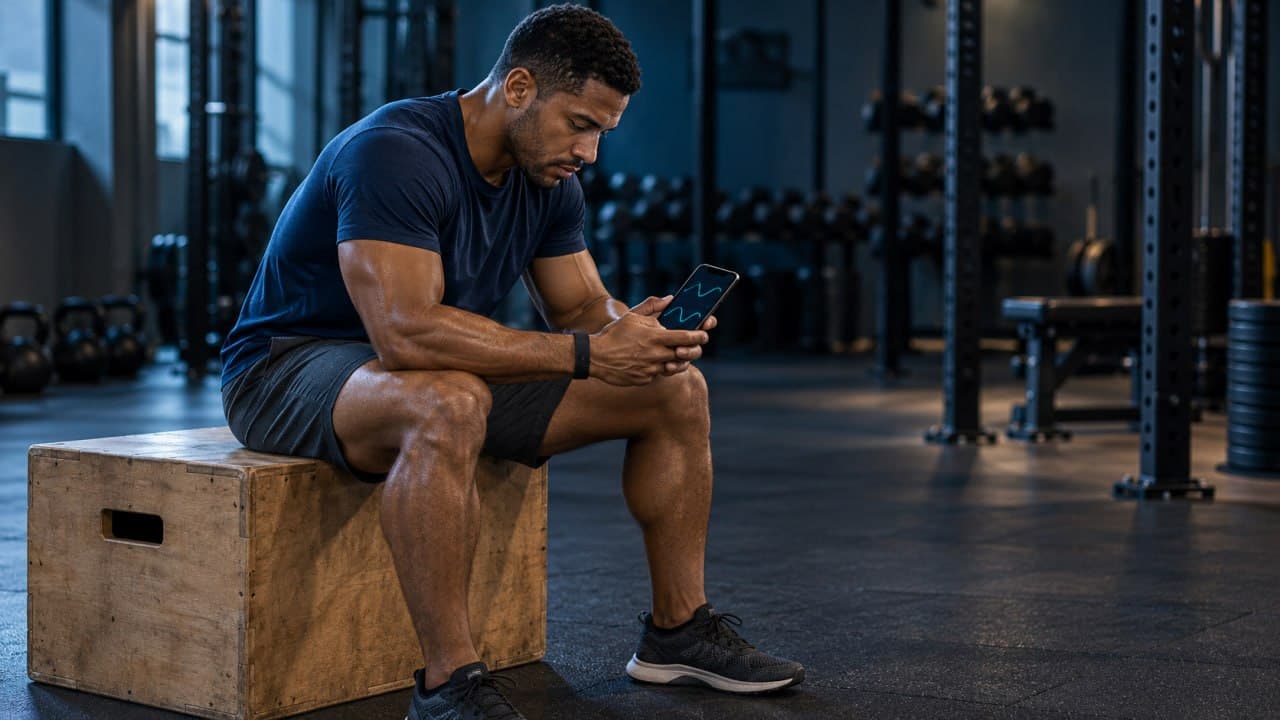
穿戴裝置與追蹤Syrax
Training with Data: How to Get More Out of Every Workout with the LEEK Pulse Pro
A tracker doesn't make you fitter – the decisions you make from its data do. How to translate the LEEK Pulse Pro's sleep, recovery and strain into your training plan: daily routine, weekly review, sample plans and the most common thinking errors.
閱讀時間 13 分鐘English