
耐力與跑步Selina 的運動精選 · 第 3 篇,共 9 篇
Training Outdoors in Winter: Layering, the Hat Question and No Cotton Drama
Dressed right for training in the cold: Selina Karl explains the layering principle, which materials keep you warm and which cool you down, why head, hands and feet decide everything, what to wear for warming up and the way home – plus a temperature table for running and outdoor training. Part 3 of Selina's Sport Edit.
 作者:Selina Karl
閱讀時間 6 分鐘
本文尚未提供繁體中文版,目前以 English 顯示。
重點摘要
For training in the cold, the layering principle applies: a performance layer directly on the skin that wicks sweat outwards, a warming mid-layer if needed and a light, wind- and water-repellent outer layer. Cotton on the skin cools you down as soon as it gets wet. In the cold you lose heat quickly through your head, hands and feet – a hat and gloves make a big difference. Dress so that you feel slightly cold when you set off, because you'll warm up after a few minutes. For warming up, breaks and the way home, pack a dry, warm layer such as a hoodie. In ice, darkness or with a cold: better to train indoors.
目錄
There are two kinds of people in November: those who say "I'm not going out in this weather", and those who come back with rosy cheeks and a cloud of breath and feel outrageously good for the rest of the day. For a long time I was type one. Since I've needed my running kilometres in winter too for HYROX training, I'm – mostly – type two.
The trick isn't willpower, it's the right clothing. The most common mistake isn't too little fabric but the wrong kind: too thick, too much cotton, nothing for your head and hands. Welcome to part 3 of Selina's Sport Edit. Last week was about vitamin D3 + K2 for the dark season – today we make sure you actually catch the daylight outdoors.
The layering principle: three layers
1. Performance layer (base): sits directly on the skin and wicks sweat outwards. Polyester, polyamide or merino wool are ideal. Cotton is a no-go here – when wet it cools you down quickly, and then every gust of wind feels like a personal insult.
2. Warm layer (middle): retains heat when it's really cold. Thin fleece or a warmer long-sleeved shirt. In mild temperatures you can leave it out.
3. Protective layer (outer): light, wind- and water-repellent, as breathable as possible. It protects against wind, drizzle and snow.
The advantage: several thin layers keep you warmer than one thick one, and you can take off a layer depending on effort or tie it round your waist. Layering is basically data analysis for your wardrobe: instead of betting everything on one option, you respond flexibly to new values.
Head, hands, feet: this is where heat is lost
Head and ears: A thin hat or headband over the ears makes an enormous difference in the cold. For intense runs, a thin, stretchy hat made of performance fabric is suitable; for easy sessions and the way to the gym, a cotton knit hat. And yes, your hair will suffer. Your ears will thank you anyway.
Hands: Thin running gloves are usually enough. In sub-zero temperatures, mittens or a second pair underneath help. My experience: cold fingers are the most common reason a run turns out "a bit shorter today".
Feet: Synthetic socks with cushioning stay drier than pure cotton. Wet feet cool down quickly – avoid puddles if your shoes aren't waterproof.
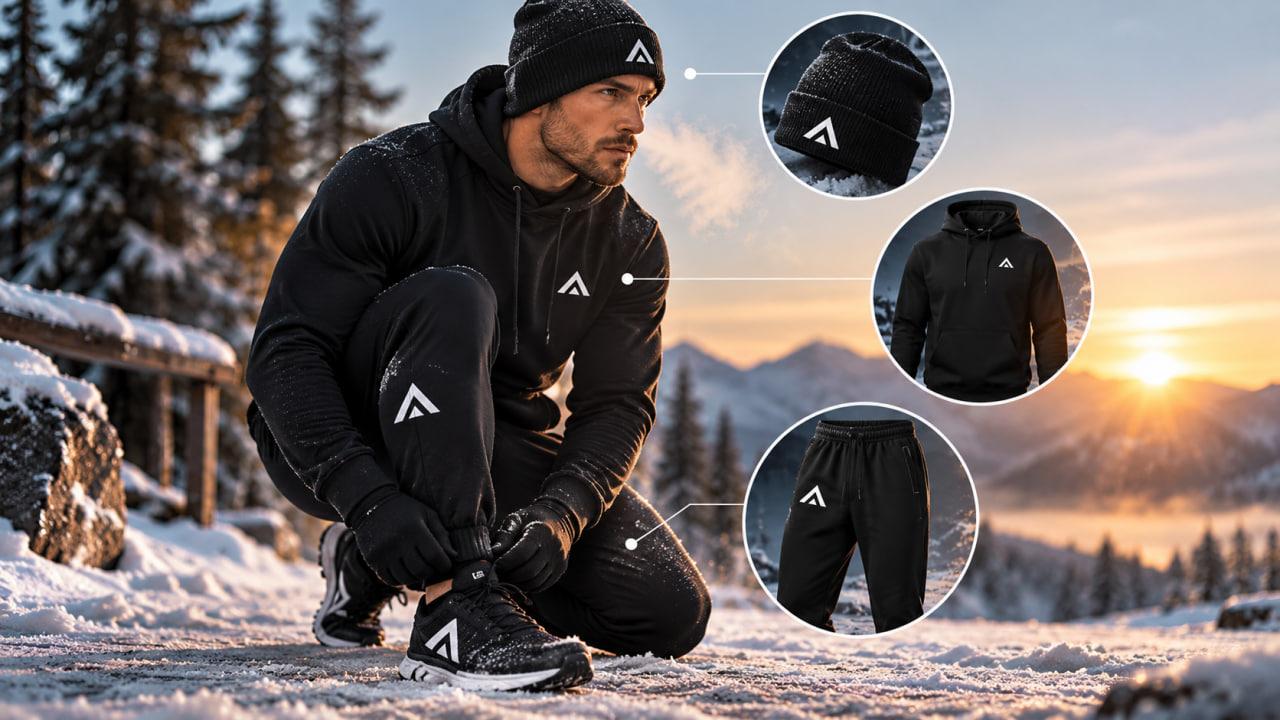
Our Beanie (polyester with elastane, double-layered) fits snugly and is suitable for runs and outdoor training. The Organic Ribbed Beanie made of 100 percent organic cotton with an embroidered logo is my pick for calm sessions, the way to training and everyday life – it goes surprisingly well with a winter coat.
Temperature table for running and outdoor training
| Temperature | Top | Bottom | Extras |
|---|---|---|---|
| above 10 °C | short- or long-sleeved performance shirt | shorts | visor or cap in the sun |
| 5 to 10 °C | long-sleeved performance shirt, maybe a light vest | shorts or tights | headband |
| 0 to 5 °C | long-sleeved shirt plus light wind jacket | long trousers or tights | hat, thin gloves |
| −5 to 0 °C | performance shirt, thin fleece, wind jacket | tights, maybe windproof trousers over them | hat, gloves, neck gaiter |
| below −5 °C | three layers | warm tights plus windproof trousers | hat, mittens, neck gaiter over mouth and nose |
The table is a starting point, not a law. Wind, humidity and intensity change how warm you feel considerably – during intervals you'll be warmer than on a slow zone 2 run. And every woman knows: personal cold sensitivity is a variable with a wide spread. Adapt the table to you, not the other way round.
One last point: performance clothing only keeps you warm as long as it can work dry towards the outside. Too many layers lead to more sweat – and therefore, in the end, to more cold.
Warming up, breaks and the way home
The critical moments in winter training aren't the sessions themselves but the time before and after.
Before training: Warm up indoors before you go out – a few minutes of mobilisation and easy movement. That way you don't start with cold muscles and a cold head.
During breaks: With intervals or strength training outdoors, the body cools down quickly during breaks. A warm layer to pull on helps.
After training: Get out of wet clothing as quickly as possible. A dry hoodie over a fresh shirt keeps you warm until you're home.
Our Unisex Hoodie with embroidered logos (cotton with a polyester share, kangaroo pocket, three-panel hood) is made for exactly that: warming up, the way home and the sofa afterwards. It runs small – order one size up. I like it a bit oversized anyway. The Unisex Track Pants are light, water-repellent and mesh-lined, with elastic ankle cuffs and zip pockets – ideal as overtrousers for the way there and for easy sessions.
Materials at a glance
Polyester and polyamide: light, quick-drying, good at wicking sweat – the standard choice for the base layer and running clothing.
Merino wool: stays warm even when damp, doesn't smell as quickly and feels pleasant on the skin. Somewhat more expensive and more delicate to care for.
Fleece: a light, warming mid-layer that breathes even when you move.
Cotton: comfortable in everyday life, but unsuitable for sweaty training in the cold because it cools you down when wet. Perfectly fine – worn dry – for the way to training and afterwards.
Wind- and water-repellent fabrics: keep out wind and drizzle. Fully waterproof jackets are often too warm for running because they let less vapour through.
For strength training outdoors, for example at a calisthenics park, the same principle applies – but with more warmth, because you stand still between sets. Gloves with grip protect your hands on cold bars.
Safety in winter
Darkness: Light-coloured or reflective clothing and a headlamp make you visible. If you run alone in the evening, stick to familiar, lit routes and share your location with a friend.
Ice: In icy conditions, better to train indoors or switch to cleared paths.
Cold air: In hard frost, intense training can irritate the airways. Keep the intensity moderate and breathe through a neck gaiter.
Colds: With a fever or symptoms below the neck, it's time for a break.
Conclusion: there's no such thing as bad weather
… only the wrong clothing – and excuses that sound especially convincing in the cold. With the layering principle, a hat and a dry layer for afterwards, training in winter can even be fun: clear air, empty paths and the good feeling of having got yourself out there. And when it's really too unpleasant outside, the training stays indoors. If you're just starting to run, you'll find the right plan in Running for beginners.
Next Friday in part 4 we're back at the supplement shelf: Magnesium compounds compared – bisglycinate, citrate and co. without the marketing fog.
常見問題
What should I wear for running at 0 degrees?
A long-sleeved performance shirt, a light windproof jacket over it, long running trousers or tights, a hat or headband, thin gloves and performance socks. If you get cold easily, add a thin fleece layer.
What is the layering principle?
Several thin layers instead of one thick one: a performance layer on the skin that wicks away sweat, a warming mid-layer and an outer layer against wind and wet. That way you can take off or add a layer depending on temperature and effort.
Is exercising in the cold healthy?
For healthy people, yes, if they're dressed appropriately and adjust the intensity. In very cold air, intense training can irritate the airways. People with cardiovascular or respiratory conditions should discuss training in the cold with their doctor.
Why is a hat so important for winter sports?
The head and ears have good blood flow and little insulation. In cold and wind you lose heat there quickly, and the ears cool down especially easily. A thin hat or headband over the ears noticeably improves how warm you feel.
What should I wear after training in winter?
A dry, warm layer straight away – ideally a hoodie or jacket over a fresh shirt. Sweaty clothing cools down quickly in the cold. If you cycle or walk home, bring dry clothes to change into.
標籤
- Winter
- Winter running
- Layering
- Sportswear
- Beanie
- Selina's Sport Edit
Syrax 雜誌
延伸閱讀
 完整指南
耐力與跑步
Zone 2 Training: The Guide to Better Endurance and a Healthier Heart
Run slow to get faster? Zone 2 training is the foundation of all good endurance – and one of the strongest levers for heart health and longevity. What's behind it, how to find your zone and how to fit it into a strength-training routine.
閱讀時間 13 分鐘English

補充品
Vitamin D3 + K2 Drops: What I Wanted to Know About Dosage and the Combination
Since the clocks went back it's dark by five – time for the vitamin D question. Selina Karl explains why D3 and K2 are often combined, what 1,000 IU per drop means, which maximum amounts the BfR and EFSA state and who should ask a doctor first. Part 2 of Selina's Sport Edit.
閱讀時間 6 分鐘English

耐力與跑步
Running for Beginners: 5 Kilometres in 8 Weeks
From the sofa to five kilometres non-stop – without side stitches, knee pain or frustration. The complete beginner's plan with walk-run intervals, technique, shoes, heart rate guidance and the mistakes most beginners make.
閱讀時間 13 分鐘English