
Collagen for Joints and Tendons: Powder, Capsules or Shots? Dose, Studies and Cost Compared
How much collagen was used in studies on joints and tendons, and which form actually delivers that amount? Eduard Boehm compares powder, capsules and shots by grams of collagen, additives and price per 10 g, and explains the evidence and the approved claims for vitamin C.
 بقلمEduard Boehm
9 دقيقة قراءة
هذا المقال غير متوفر بالعربية بعد. يُعرض باللغة: English.
باختصار
Studies on joint discomfort in athletes used 5 to 10 g of collagen peptides daily for three to six months; some small studies show less activity-related knee pain, but the evidence is limited and there is no EU-approved claim for collagen itself. The amount is therefore what matters: powder provides 15 g per serving for about €0.50 per 10 g of collagen, shots 4 to 10 g for about €0.90 to €1.45 per 10 g, capsules only 0.9 to 1.6 g per daily serving – to reach study doses you would have to swallow 18 to 33 capsules a day. Vitamin C contributes to normal collagen formation for the normal function of cartilage, bones and skin; it comes from fruit and vegetables or from the combination products. Collagen is not a complete protein for muscle building because it lacks the amino acid tryptophan.
المحتويات
Hardly any supplement is advertised as broadly as collagen: for firm skin, shiny hair, resilient joints and strong tendons. In sport, the last of these is what counts. But whether collagen "works" cannot be answered without first settling another question: how much collagen is in the product you buy – and does that amount even come close to the doses used in studies?
That is where the biggest differences lie. One serving of powder can contain twenty times as much collagen as a daily serving of capsules. In this article I put the evidence into context, convert every form into grams of collagen and price per 10 g, and explain what vitamin C has to do with it.
What collagen is – and what the body does with it
Collagen is the most abundant structural protein in the body. It forms the framework of tendons, ligaments, cartilage, bone and skin. Type I is found mainly in tendons, bone and skin, type II in joint cartilage, type III in blood vessels and skin.
Supplements almost always contain collagen hydrolysate (also called collagen peptides): collagen from bovine or fish skin that has been split into short fragments. These are broken down further in the gut and absorbed as amino acids and small peptides. Typical are high proportions of glycine, proline and hydroxyproline – exactly the building blocks the body needs for its own collagen.
Important for context: ingested collagen is not "built into" the tendon one to one. The hypothesis is that the building blocks and certain peptides support the body's own collagen formation when there is also a loading stimulus.
What the studies show
| Study | Who | Dose and duration | Result |
|---|---|---|---|
| Clark et al., 2008 | 147 athletes with activity-related joint pain | 10 g collagen hydrolysate daily, 24 weeks | less pain during exercise than placebo, especially in the knee |
| Zdzieblik et al., 2017 | 139 young athletes with knee pain during exercise | 5 g specific collagen peptides daily, 12 weeks | less activity-related pain than placebo |
| Shaw et al., 2017 | 8 healthy men | 5 or 15 g gelatin plus vitamin C, 1 hour before 6 minutes of rope skipping | 15 g roughly doubled a blood marker of collagen synthesis |
The results are interesting, but with clear limits:
- The studies are small and partly funded by raw material manufacturers.
- Subjective pain was measured, not imaging of cartilage or tendons.
- Effects only appeared after months and mainly in people who already had symptoms.
- The lab study on collagen synthesis measures a blood marker, not a thicker or more resilient tendon.
My conclusion on the evidence: a trial of 5 to 10 g daily for three months is reasonable, especially for activity-related symptoms. Anyone expecting a big effect or hoping to skip physiotherapy will be disappointed.
The crucial question: how much collagen is inside?
This is where marketing and substance part ways. I converted all the collagen products in our range into collagen per daily serving and price per 10 g of collagen. Values from the label, prices from the shop (regular price, as of November 2026).
| Product | Form | Collagen per daily serving | Other ingredients | Price per day | Price per 10 g collagen |
|---|---|---|---|---|---|
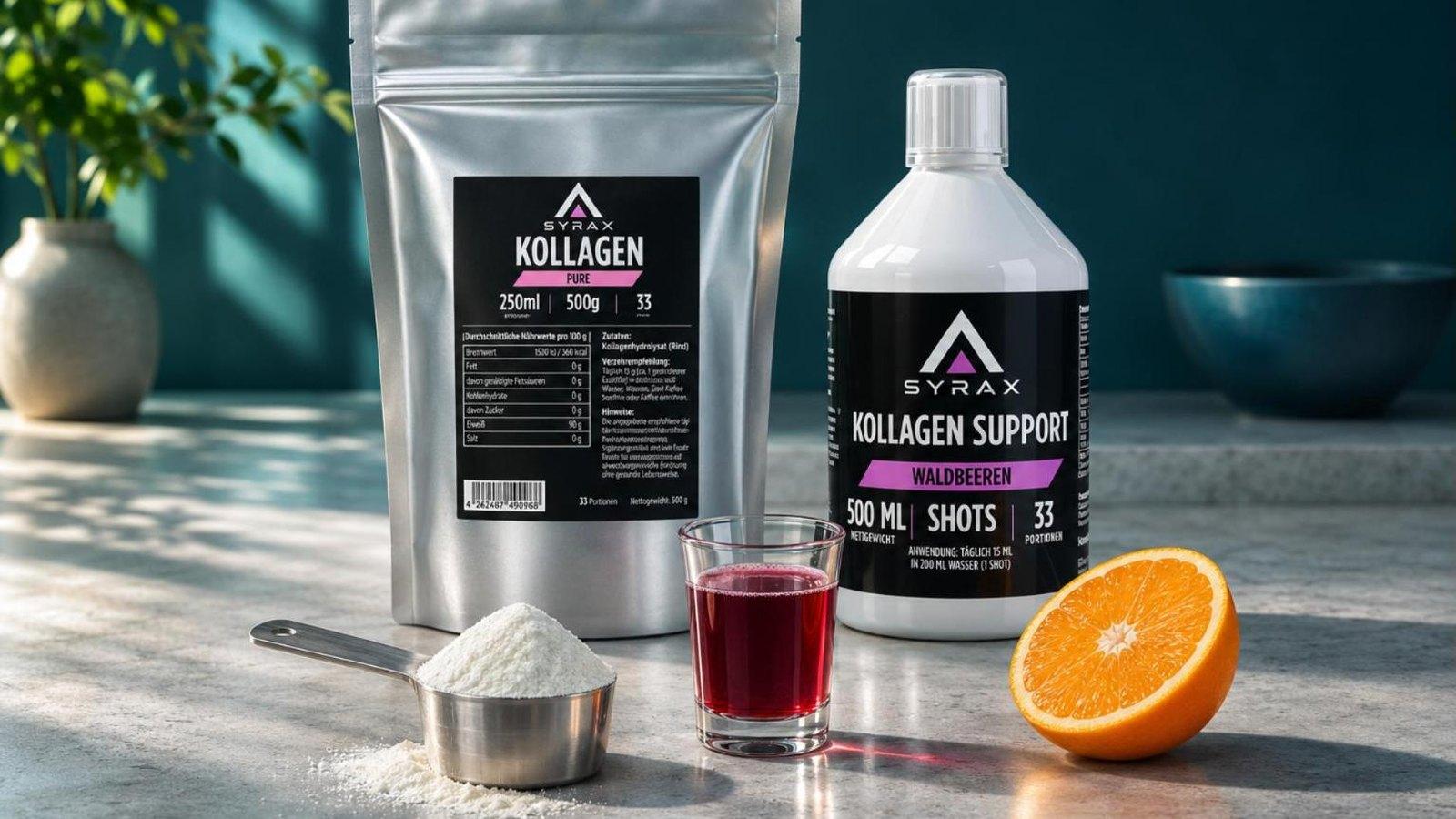
| Collagen hydrolysate powder (500 g) | powder, bovine, type I & III | 15 g | none | approx. €0.75 | approx. €0.50 |
| Collagen Support Plus shots | 15 ml shot, bovine, type I, II, III | 7.2 g | turmeric, 60 mg each of glucosamine, chondroitin, MSM, vitamin C | approx. €0.66 | approx. €0.92 |
| Collagen Vital Plus shots | 15 ml shot, bovine | 6 g | 3,000 µg biotin, vitamin C, hyaluronic acid | approx. €0.63 | approx. €1.06 |
| Collagen Night Plus shots | 25 ml shot, fish | 10 g | tryptophan, theanine, magnesium, plant extracts | approx. €1.30 | approx. €1.30 |
| Collagen Marine Plus shots | 10 ml shot, fish, type I & III | 4 g | vitamin C, biotin, hyaluronic acid | approx. €0.58 | approx. €1.45 |
| Premium collagen hydrolysate Plus | 2 capsules, bovine | 0.9 g | hyaluronic acid, vitamin C, zinc, vitamin A, selenium | approx. €0.23 | approx. €2.58 |
| Marine collagen peptides | 3 capsules, fish, type I | 1.56 g | none | approx. €0.47 | approx. €3.03 |
Collagen per daily serving
Amount of collagen per recommended daily serving according to the label of the Syrax products. Studies on joint discomfort in athletes used 5 to 10 g daily.
- Powder (15 g)15 g
- Night Plus shot10 g
- Support Plus shot7.2 g
- Vital Plus shot6 g
- Marine Plus shot4 g
- Marine capsules (3)1.56 g
- Premium capsules (2)0.9 g
عرض البيانات كجدول
| الفئة | Collagen per day |
|---|---|
| Powder (15 g) | 15 g |
| Night Plus shot | 10 g |
| Support Plus shot | 7.2 g |
| Vital Plus shot | 6 g |
| Marine Plus shot | 4 g |
| Marine capsules (3) | 1.56 g |
| Premium capsules (2) | 0.9 g |
The figures show three things:
- Capsules do not reach a study dose. For 10 g of collagen you would need around 19 marine capsules or 22 premium capsules a day. Capsules are combination products in which collagen is one ingredient among several – not the tool for the joint study dose.
- Powder is by far the cheapest per gram and can be dosed precisely at 5, 10 or 15 g.
- Shots sit in between: they reach study amounts (4 to 10 g) and include vitamin C, but cost about twice as much per gram and bring additives you do not always need.
The three forms in detail
Powder: the study dose at the lowest price
The collagen hydrolysate powder consists of 100% bovine collagen peptides without additives. 100 g contain 90 g of protein. It is tasteless and dissolves in coffee, water, yoghurt or a smoothie. Two batches were lab-tested for heavy metals and microbiology; both were unremarkable.
With one heaped tablespoon (about 10 g) you are right in the study range – for about €0.50 a day. Add vitamin C with a glass of orange juice, a kiwi or a pepper.
Shots: convenient, with vitamin C, but with additives
Shots are ready-dosed and need no mixing. Each has its own focus:
- Support Plus is the joint shot: 7.2 g of type I, II and III collagen plus turmeric and small amounts of glucosamine, chondroitin and MSM (60 mg each). The vitamin C claim for cartilage applies here. Note: the glucosamine comes from crustaceans – not for people with shellfish allergy.
- Vital Plus targets skin and hair with 3,000 µg of biotin. Biotin at this level can distort certain lab results (for example thyroid values and troponin) – tell your doctor before blood tests.
- Night Plus combines 10 g of fish collagen with tryptophan, theanine and plant extracts for the evening. Not for pregnant or breastfeeding women, and not with antidepressants or sleeping pills without medical advice.
- Marine Plus provides 4 g of fish collagen with vitamin C and biotin.
All shots must be refrigerated after opening and used up promptly.
Capsules: combination products with little collagen
The marine collagen peptides provide 1.56 g of fish collagen per three capsules, the Premium collagen hydrolysate Plus 0.9 g of bovine collagen plus hyaluronic acid, vitamin C, zinc, selenium and vitamin A. For the skin, approved claims for vitamin C, zinc and selenium apply to the latter. Neither is designed for the joint study dose. Note: the vitamin A (800 µg per daily serving) makes the premium product suitable for pregnant women only after medical advice.
Timing: when collagen makes sense
The idea from research by Keith Baar and colleagues: tendons and ligaments have a poor blood supply and take up nutrients mainly during and shortly after loading. That is why studies on collagen synthesis gave the supplement about 30 to 60 minutes before a short bout of exercise – for example before five to ten minutes of rope skipping or a rehab programme.
In practice that means:
- During tendon rehab (for example Achilles or patellar tendon): 10 to 15 g of collagen plus a vitamin C source about 45 minutes before the rehab exercises.
- As a general routine: 5 to 10 g daily, any time of day. Consistency matters more than timing.
Collagen is not a muscle protein
Collagen provides protein – 15 g of powder about 13.5 g – but an incomplete one: it lacks the essential amino acid tryptophan and contains only a little leucine, which is important for muscle protein synthesis. For muscle building, collagen is therefore a poor substitute for whey, quark, meat or pulses.
So don't count collagen fully towards your daily protein. If you combine collagen and whey, each has its own job. Werner compared our two whey variants in Whey or clear whey?
Who a trial is worth it for – and who not
| Situation | Assessment |
|---|---|
| Activity-related knee or tendon discomfort, training continues | trial with 5–10 g daily for 12 weeks is reasonable |
| Tendon rehab under physiotherapy guidance | 10–15 g plus vitamin C before the rehab exercises |
| No symptoms, purely preventive | benefit unclear; money better spent on training and diet |
| Acute injury, swelling, instability | see a doctor first, not a supplement issue |
| Osteoarthritis | can be tried as an add-on, does not replace treatment |
Who should be careful
- Fish and shellfish allergy: marine collagen contains fish, the Support shot glucosamine from crustaceans.
- Pregnancy and breastfeeding: do not use Night Plus; Premium Plus (vitamin A) only after medical advice.
- Blood tests: pause high-dose biotin (Vital Plus, Marine Plus) a few days beforehand and tell your doctor.
- Medication: Night Plus contains tryptophan and plant extracts – not with antidepressants or sleeping pills without medical advice.
Common mistakes
- Confusing capsules with study doses. Under 2 g a day is a long way from 5 to 10 g.
- Giving up after two weeks. In the studies, effects appeared after three to six months.
- Collagen instead of load management. Tendons respond above all to dosed, regular loading. How to take pressure off your joints in training is covered in Protecting your joints in training.
- Counting collagen as muscle protein. Without tryptophan and with little leucine, it is unsuitable for that.
- Stacking three joint products. Collagen shot plus glucosamine plus MSM is expensive, and the evidence for the combination is thin. Werner puts glucosamine, chondroitin and MSM into context in Joints in racket sports.
Conclusion: the dose decides, not the packaging
Collagen is not a miracle cure for joints, but a reasonable trial for athletes with activity-related symptoms – provided the amount is right. If you take the studies seriously you end up at 5 to 10 g daily, and realistically you only reach that amount with powder or shots. Powder is the purest and cheapest option, shots the most convenient.
How to check in general whether a supplement delivers what the label promises is explained in Evaluating supplements.
Sources: Clark et al.: 24-Week Study on the Use of Collagen Hydrolysate as a Dietary Supplement in Athletes with Activity-Related Joint Pain (2008) · Zdzieblik et al.: Improvement of Activity-Related Knee Joint Discomfort Following Supplementation of Specific Collagen Peptides (2017) · Shaw et al.: Vitamin C-Enriched Gelatin Supplementation before Intermittent Activity Augments Collagen Synthesis (2017) · EU Register of nutrition and health claims (vitamin C) · Syrax product labels and lab reports (as of November 2026)
الأسئلة الشائعة
Does collagen really help with joint pain?
Some small studies in athletes show less activity-related knee pain than placebo after three to six months of 5 to 10 g of collagen peptides daily. The studies are small, often funded by manufacturers, and there is no EU-approved health claim for collagen. A three-month trial is reasonable; collagen does not replace load management and physiotherapy.
How much collagen per day for joints and tendons?
Studies mostly used 5 to 10 g of collagen peptides daily; studies on collagen synthesis after exercise used 15 g of gelatin or collagen about an hour before training. Amounts below 2 g per day, as many capsules provide, are well below that.
Which is better: collagen powder, capsules or shots?
For study doses, powder is the most practical and cheapest: 15 g per serving for about €0.50 per 10 g of collagen. Shots provide 4 to 10 g and usually contain vitamin C and other additives, but cost about twice as much. Capsules contain only 0.9 to 1.6 g of collagen per daily serving.
When should you take collagen?
For tendons and ligaments, taking collagen about 30 to 60 minutes before a short bout of exercise or rehab session is discussed, because the amino acids are then available in the blood during loading. For a daily routine, consistency matters more than timing.
Does collagen need vitamin C?
The body needs vitamin C to form its own collagen. The approved claim reads: vitamin C contributes to normal collagen formation for the normal function of cartilage, bones, skin and blood vessels. If you eat fruit and vegetables daily you are usually well covered; one orange already provides around 50 to 70 mg.
Does collagen count towards my daily protein?
Partly. Collagen provides protein, but it lacks the essential amino acid tryptophan and contains little leucine. For muscle building it is therefore a poor substitute for whey, dairy, meat or pulses.
Who should be careful with collagen products?
People with fish or shellfish allergies (marine collagen, glucosamine in combination products), pregnant women with products containing vitamin A, and anyone taking high-dose biotin before blood tests – biotin can distort lab results.
الوسوم
- Collagen
- Joints
- Tendons
- Vitamin C
- Supplements
- Comparison
عن الكاتب
Eduard Boehm· كاتب في التغذية والعناصر الغذائية والمكملات
يهتم إدوارد بوم منذ عقود اهتمامًا عميقًا بالتغذية والمكملات الغذائية وتأثيرها في الجسم. في مجلة Syrax يجمع بين خبرته الطويلة وأحدث المعارف حول المكملات والعناصر الغذائية والتغذية الواعية – مع التركيز على الملصق والجرعة والدراسات.
المزيد عن إدواردهذا المقال للمعلومات العامة ولا يغني عن الاستشارة الطبية. إذا كانت لديك أمراض أو آلام أو شكوك، فاستشر طبيبك قبل تغيير تدريبك أو نظامك الغذائي.
مجلة Syrax
اقرأ أيضًا
 دليل شامل
المكملات
How to Assess Supplements: Reading the Label, Dose, Upper Limits and Lab Report
How good is a dietary supplement really? Eduard Boehm shows step by step how to read labels, check the dose against reference values and BfR maximum levels, understand lab reports, assess additives and calculate the price per effective serving – explained using real labels and analyses of Syrax products.
14 دقيقة قراءةEnglish

المكملات
Whey or Clear Whey? Nutrition, Tolerance and Price in an Honest Comparison
Classic whey protein or clear whey isolate? Werner Ludmann compares protein, leucine, lactose, calories, taste and cost per 25 g of protein – with label evidence for the Syrax products and a clear recommendation of when each powder fits.
9 دقيقة قراءةEnglish
المكملات
Pre-Workout Boosters Label-Checked: Caffeine, Beta-Alanine, Timing – and When to Skip Them
What is in a pre-workout booster, how much of it actually works, and when does it do more harm than good? Werner Ludmann checks caffeine, beta-alanine, creatine and arginine per serving, explains timing for evening training and the new German BfR recommendation on beta-alanine, and gives an honest assessment of the Syrax booster.
10 دقيقة قراءةEnglish