
Buying a Weight Bench: What to Look For
Flat bench, adjustable incline bench or foldable: which weight bench suits your home gym, which dimensions, load capacity and padding really matter, what to watch for with adjustment and which buying mistakes get expensive.
 ParMichael Lohrberg
5 min de lecture
Cet article n'est pas encore disponible en français. Il est affiché en : English.
En bref
A good weight bench is stable, doesn't wobble even on heavy sets and suits your training. For dumbbell training, an adjustable bench (flat, incline, usually decline) is the most versatile; for heavy barbell bench pressing in a rack, a sturdy flat bench is ideal. Look for a height of about 42–45 cm, a pad around 26–30 cm wide, a load capacity well above your body weight plus the weights, a small gap between seat and back pad and a wide, stable base.
Sommaire
For many people, the weight bench is the first "big" piece of equipment in a home gym – and one of the most important. On it you press, row, do shoulder presses, step-ups and hip thrusts. A wobbly bench makes each of these exercises worse and some of them dangerous. A good bench, on the other hand, lasts a training lifetime.
This guide shows you what matters. It belongs to the Home Gym & Equipment topic. The overall setup of your home gym is described in Setting up a home gym.
The three types
| Type | Strengths | Weaknesses | For whom |
|---|---|---|---|
| Flat bench | very stable, cheap, no adjustment mechanism | flat use only | barbell training in a rack, small budget |
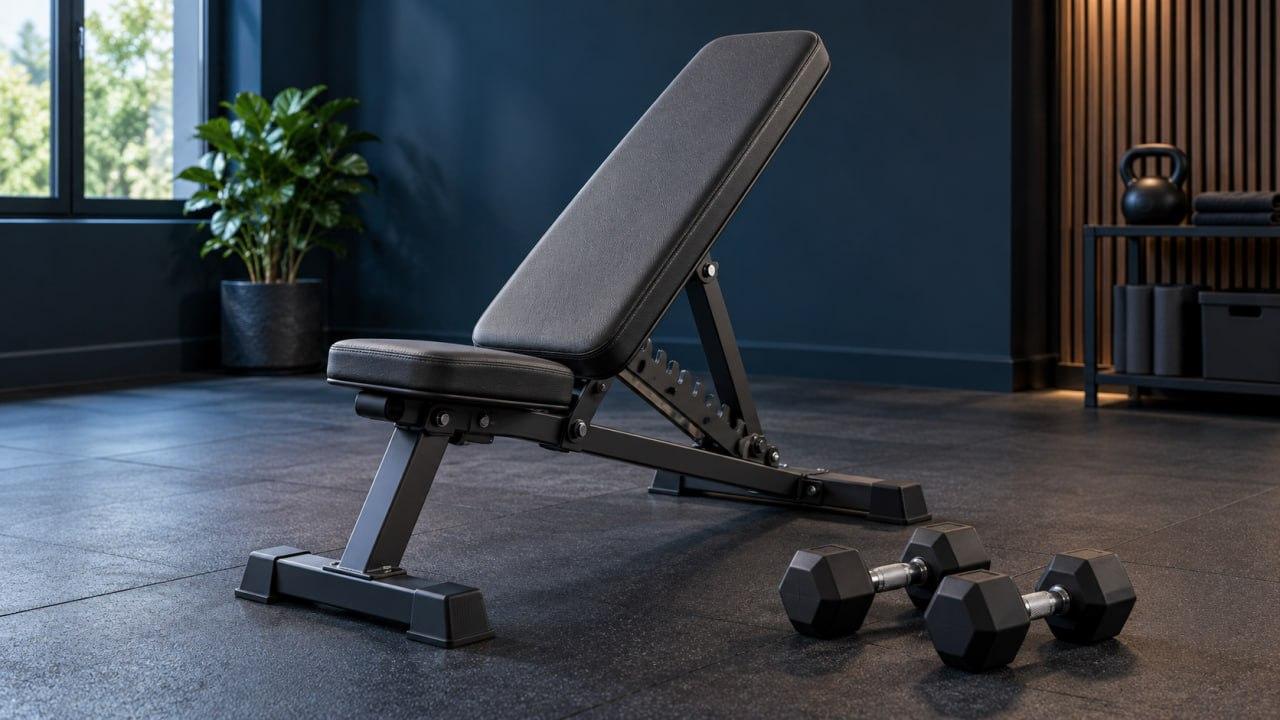
| Adjustable bench (FID: flat, incline, decline) | versatile, ideal with dumbbells | more expensive, gap between pads, more parts | most home gyms |
| Foldable bench | space-saving | often less stable | very small rooms |
Benches with fixed barbell uprights and attached leg-curl modules promise a lot but are rarely stable enough for serious training. For heavy bench pressing, a free-standing bench combined with a power rack is the safer solution.
The 8 criteria that really matter
1. Stability
The most important criterion. Sit on it, lean to the side, shift back and forth – nothing should rock. Signs of good stability:
- a wide base, especially at the front and back,
- a thick steel frame (rectangular profile instead of thin round tubes),
- few, solid joints,
- rubber feet against slipping.
2. Load capacity
Do the maths: body weight + maximum weight lifted + a margin. If you weigh 90 kg and press 2 × 40 kg dumbbells, you already load the bench with 170 kg – dynamically much more each time you set the weights down. Ratings from about 300 kg make sense for ambitious training. Check whether the rating refers to static or training load.
3. Height
About 42–45 cm. Higher benches make a firm stance difficult, especially for shorter people. Very tall people manage with a little more height.
4. Pad width and firmness
- Width: about 26–30 cm. Too narrow – your shoulder blades find no support. Too wide – your arms bump into it when lowering.
- Firmness: rather firm. Soft pads feel comfortable but give way when pressing.
- Cover: grippy and wipeable so you don't slide.
5. Gap between the pads
On adjustable benches, there is a gap between the seat and back pad. The smaller it is, the more comfortable flat bench pressing feels. Some models have a sliding seat pad that minimises the gap.
6. Adjustment
- Angles: ideally several steps between flat and upright, for example 15, 30, 45, 60, 75 and 90 degrees.
- Mechanism: quick, secure locking without play.
- Seat adjustment: stops you sliding down during incline exercises.
- Decline position: practical, but not decisive for most people.
7. Length and rack compatibility
If the bench needs to fit in a rack, check the length and width of the base. You must be able to position the bench so that the barbell is above your eyes when you lie down.
8. Moving and storage
A handle and wheels on the base make moving it easier – important if your home gym doubles as a storeroom or office.
Price ranges
| Category | Price (approx.) | What you can expect |
|---|---|---|
| Entry-level flat bench | €100–200 | solid for dumbbell and barbell training |
| Entry-level adjustable | €150–250 | enough for moderate training, often more wobble |
| Solid adjustable | €250–450 | stable frame, good adjustment, small pad gap |
| Premium | from €450 | very stable, commercial quality |
A bench is a purchase for many years. Saving here often backfires – especially with adjustable models, where cheap mechanisms are the first to develop play.
Buying second-hand
Second-hand benches can be a good deal. Check:
- welds for cracks,
- the adjustment mechanism for play,
- padding for tears and worn spots,
- rust on load-bearing parts.
The most common buying mistakes
Buying for extra features instead of stability. Leg curls, fly arms and barbell uprights sound good but often make the bench wobblier.
A bench that's too high. Without a firm stance, the bench press loses stability and power.
Underestimating load capacity. Your body weight counts too – and dynamic load is higher than static.
Not planning the space. A bench needs room around it to move the weights.
Checklist before you buy
Before you order, go through these questions once – they prevent most bad purchases:
- Which exercises do you want to do? Only barbell bench pressing points to a flat bench; lots of dumbbell training to an adjustable one.
- Where will the bench stand? Measure the space including room to move: for dumbbell exercises you need about a metre free on each side.
- Does it fit your rack? Compare base width, length and height with the rack's dimensions.
- How heavy will you train in two years? Buy for your future training, not today's.
- How good is the warranty? Reputable manufacturers often give several years or even a lifetime warranty on frame and welds.
- Are spare parts available? Pads and locking pins wear out – replaceable parts extend the bench's life considerably.
If you can answer these six points clearly, you'll usually quickly find two or three suitable models and can then decide on price, looks and availability.
The matching exercises
A bench expands your training enormously: flat and incline bench press, one-arm dumbbell rows, seated shoulder press, Bulgarian split squats, step-ups, hip thrusts, core exercises. How to bench press cleanly is explained in Bench press: technique and variations. With adjustable dumbbells, a bench and dumbbells become a complete gym.
Conclusion: buy it right once
A good weight bench is unspectacular: stable, the right height, a firm pad, clean adjustment. Exactly these qualities decide whether you train on it safely and happily for years. Invest a little more in stability rather than extra features – and expand your home gym step by step. If you'd rather start with pull-ups at home instead of a bench, see Doorway pull-up bars: what to look for.
Questions fréquentes
Flat bench or adjustable bench – which is better?
For most home gyms, an adjustable bench is the better choice because it allows incline presses, seated shoulder presses and many dumbbell exercises. A pure flat bench is usually more stable and cheaper and is particularly suited to heavy barbell bench pressing.
How high should a weight bench be?
About 42 to 45 cm from the floor to the top of the pad is a good guideline. That way most people can stand firmly with flat feet. Very high benches make a solid stance during the bench press difficult.
How much load capacity does a weight bench need?
The capacity should exceed your body weight plus the maximum weight lifted with a large margin. For heavy training, ratings from about 300 kg make sense. Important: some manufacturers only state the static load; the dynamic load during training is higher.
Do I need a bench with a barbell rack?
Only if you don't have a rack and only want to bench press with a barbell. Integrated uprights are often less stable and have no safety arms. A free-standing bench combined with a power rack is safer.
How much does a good weight bench cost?
Stable flat benches are available from about €100 to €200; solid adjustable benches usually from about €200 to €400. Very cheap models often cut corners on frame thickness, padding and the adjustment mechanism.
Mots-clés
- Weight bench
- Home gym
- Buying guide
- Incline bench
- Bench press
- Equipment
À propos de l'auteur
Michael Lohrberg· Fondateur de Syrax
Michael Lohrberg a fondé Syrax en 2026. Service militaire avec une mission à l'étranger, dans l'industrie depuis 2010, travail posté et deux emplois en parallèle – le LEEK Pulse Pro est né de la question de savoir combien de récupération il reste vraiment au quotidien. Dans le magazine, il écrit sur l'entraînement, le sommeil et la régénération – de façon concrète et fondée sur la recherche.
En savoir plus sur MichaelCet article a une vocation d'information générale et ne remplace pas un avis médical. En cas de maladie préexistante, de douleurs ou de doute, consultez votre médecin avant de modifier votre entraînement ou votre alimentation.
Syrax Magazine
À lire ensuite
 Grand guide
Home gym & équipement
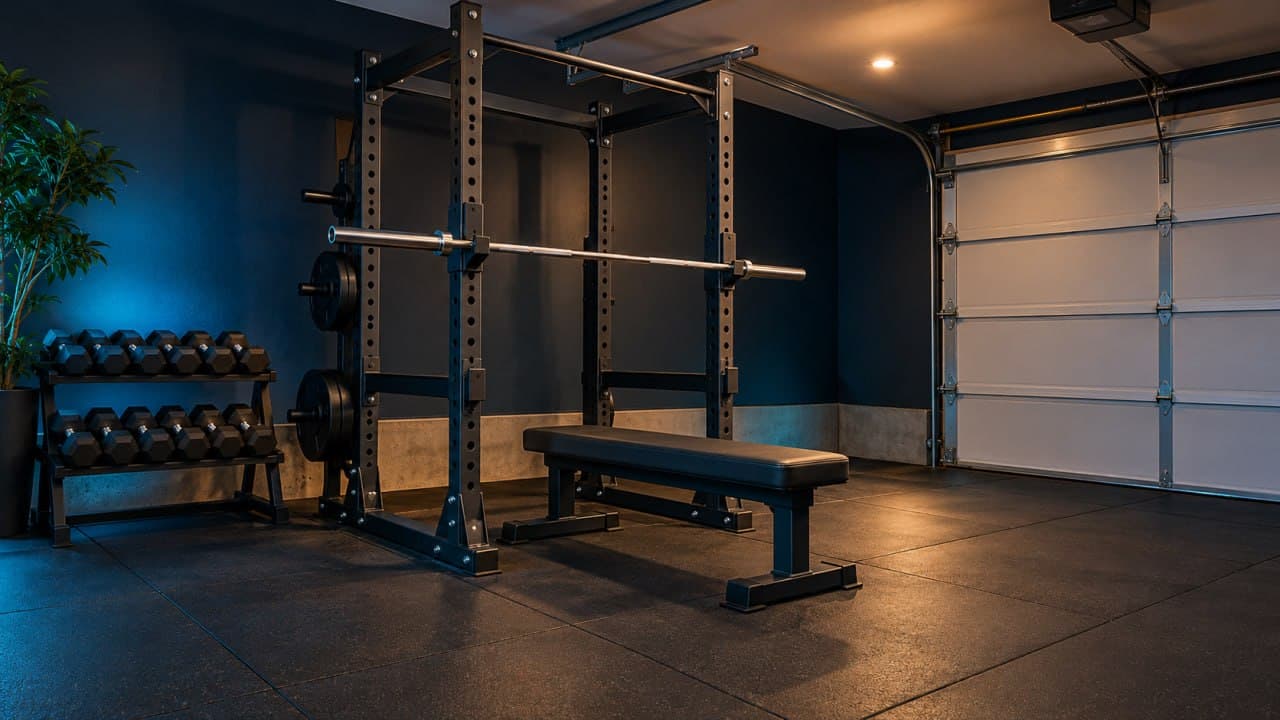
Setting Up a Home Gym: The Guide for Every Budget
From resistance bands to a power rack: what equipment you really need for a home gym, how much space it takes, what matters for flooring, safety and noise – with three setup levels for 150, 800 and 2,500 euros.
7 min de lectureEnglish
Exercices & groupes musculaires
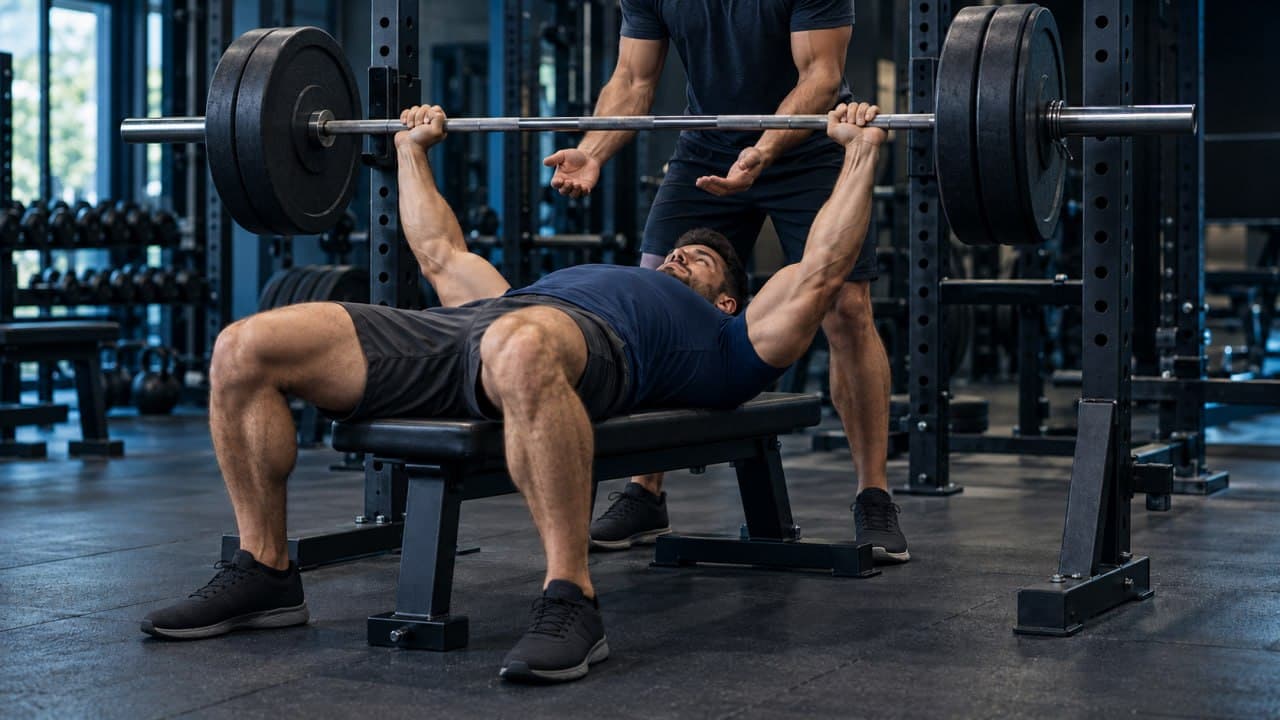
Bench Press: Technique, Mistakes and Variations for a Stronger Chest
The most popular exercise in the gym – and one of the most often performed incorrectly. Grip width, shoulder blades, arch, bar path, breathing and leg drive: how to press more weight, build more chest and protect your shoulders.
13 min de lectureEnglish

Home gym & équipement
Cap, Visor, Headband or Beanie: The Right Headwear for Sport
Which headwear suits which sport and weather? Selina Karl compares cap, visor, headband and beanie: sun protection, sweat, warmth, ventilation, the right materials, the right size and care tips – with the headwear models from Syrax Gear. Part 5 of Selina's Sport Edit.
6 min de lectureEnglish