
How to Calculate and Use Heart Rate Zones
How to calculate your heart rate zones: estimate or test your maximum heart rate, zones as a percentage of max HR or with the Karvonen method, what happens in zones 1 to 5 and how to use the zones practically in running, cycling and endurance training.
 著者:Michael Lohrberg
読了時間 5 分

この記事はまだ日本語に翻訳されていません。Englishで表示しています。
要約
You calculate heart rate zones based on your maximum heart rate (max HR). The formula 220 minus age is very inaccurate; 208 minus 0.7 × age is somewhat better, and a careful field test is best. The zones then follow either as a percentage of max HR (zone 1: 50–60 %, zone 2: 60–70 %, zone 3: 70–80 %, zone 4: 80–90 %, zone 5: 90–100 %) or more precisely with the Karvonen method, which also takes your resting heart rate into account. For most endurance athletes: about 80 % of training easy in zones 1–2, about 20 % hard in zones 4–5.
目次
Almost every sports watch shows them, almost every training plan uses them: heart rate zones. They translate "easy run" or "push hard" into clear numbers. The problem: many zones are set incorrectly – because they're based on an inaccurate formula. Then the "easy" training is too fast and the "hard" training too soft.
This article shows you how to calculate your zones properly and use them sensibly. It belongs to the Endurance & Running topic.
The basis: maximum and resting heart rate
To calculate zones, you need two values:
- Maximum heart rate (max HR): the highest pulse your heart reaches under maximum load. It is largely genetically determined, falls with age and is not a measure of fitness.
- Resting heart rate: your pulse at complete rest, ideally measured lying down in the morning or overnight. It often falls as endurance improves.
Max HR: formulas and their limits
| Method | Calculation | Accuracy |
|---|---|---|
| Classic formula | 220 − age | rough, large individual deviation |
| Tanaka formula | 208 − 0.7 × age | somewhat better, still an estimate |
| Field test | maximum effort after warming up | individual, but demanding |
| Lab test | graded exercise test | most accurate |
The deviation of the formulas is considerable: two people of the same age can differ in max HR by 20 beats or more. If you set your zones only by "220 minus age", you may be training in quite different ranges than you think.
The five zones
| Zone | % max HR | How it feels | Effect |
|---|---|---|---|
| 1 – very easy | 50–60 % | walking, easy cool-down | recovery |
| 2 – easy | 60–70 % | conversation in full sentences possible | aerobic base, fat metabolism |
| 3 – moderate | 70–80 % | conversation in short sentences | aerobic capacity, "light tempo run" |
| 4 – hard | 80–90 % | only single words | lactate threshold, tempo toughness |
| 5 – maximal | 90–100 % | no talking possible | VO₂max, sprint and interval performance |
The five heart rate zones at a glance
Percentage of maximum heart rate. The darker, the more intense – the limits are guide values and depend on how accurately your maximum heart rate is determined.
- Zone 1 – very easy · 50–60 % HRmaxrecovery, easy cool-down
- Zone 2 – easy · 60–70 % HRmaxaerobic base, full sentences possible
- Zone 3 – moderate · 70–80 % HRmaxaerobic capacity, short sentences
- Zone 4 – hard · 80–90 % HRmaxlactate threshold, only single words
- Zone 5 – maximal · 90–100 % HRmaxVO₂max, intervals and sprints
Why zone 2 matters so much is explained in detail in Zone 2 training. How to use high zones specifically for maximal oxygen uptake is shown in Improving VO₂max.
Two calculation methods
Method 1: percentage of max HR
Simple: zone boundary = percentage × max HR. Many watches use this method by default. Disadvantage: it doesn't account for how fit you are.
Method 2: Karvonen (heart rate reserve)
More precise: zone boundary = resting HR + percentage × (max HR − resting HR). Because resting heart rate is included, the zones adapt better to your fitness level. With the Karvonen method, the zones in percent of reserve differ slightly; in practice it's enough to use the same percentage ranges and check the result against how you feel.
Worked example
Lea is 40 years old; her resting heart rate is 60 beats per minute.
- Max HR (Tanaka): 208 − 0.7 × 40 = 208 − 28 = 180
- Heart rate reserve: 180 − 60 = 120
| Zone | % max HR (method 1) | Karvonen (method 2) |
|---|---|---|
| 1 | 90–108 | 120–132 |
| 2 | 108–126 | 132–144 |
| 3 | 126–144 | 144–156 |
| 4 | 144–162 | 156–168 |
| 5 | 162–180 | 168–180 |
The difference is most noticeable in the lower zones: by method 1, zone 2 would be 108–126; by Karvonen, 132–144. For many trained people the Karvonen range feels more realistic – what matters is cross-checking with how you feel.
Step by step to your zones
Calculate heart rate zones in 5 steps
- 1
ステップ 1
Measure your resting heart rate
On three to five mornings, measure your pulse lying down right after waking and take the average – or use your wearable's overnight resting heart rate.
- 2
ステップ 2
Determine your max HR
Estimate it with 208 − 0.7 × age or determine it – only if you are healthy and trained – with a field test, such as several hard hill runs after a thorough warm-up.
- 3
ステップ 3
Calculate your heart rate reserve
Subtract your resting heart rate from your max HR. The result is your heart rate reserve.
- 4
ステップ 4
Calculate the zones
For each zone boundary: resting HR + percentage × heart rate reserve (Karvonen) – or more simply percentage × max HR.
- 5
ステップ 5
Check the zones in training
After a few sessions, check the zones against how you feel: in zone 2 you should still be able to talk in full sentences. Adjust the values if necessary.
The feel check: talk test and breathing
Numbers are helpful, but your body provides a reliable check too:
- Zone 2: you can talk in full sentences and breathe calmly through your nose or mouth.
- Zone 3: talking still works, but in shorter sentences.
- Zone 4: only single words.
- Zone 5: talking is impossible.
If the feel consistently doesn't match the zones, your stored max HR is probably wrong.
Using the zones in training
The 80/20 split
Many successful endurance athletes train by a simple principle: about 80 percent easy (zones 1–2) and about 20 percent hard (zones 4–5). The most common mistake recreational athletes make is the opposite – almost every session ends up in the "grey zone" of zone 3: too hard for real recovery, too easy for strong stimuli.
Sample week for runners
| Day | Session | Zone |
|---|---|---|
| Monday | rest day or easy walking | 1 |
| Tuesday | 45 minutes easy | 2 |
| Wednesday | intervals, e.g. 5 × 3 minutes | 4–5 |
| Thursday | 30 minutes easy | 2 |
| Friday | rest day | – |
| Saturday | long run, 60–90 minutes | 2 |
| Sunday | 30 minutes easy or cycling | 1–2 |
How to structure intervals is described in Interval training for running. For a concrete race goal, the half marathon training plan provides structure over several weeks.
What shifts your heart rate
Heart rate isn't a fixed value for a given speed. It rises with:
- heat and high humidity,
- dehydration,
- fatigue, stress and lack of sleep,
- caffeine,
- an oncoming infection,
- altitude.
In addition, heart rate slowly drifts upwards at the same pace during long sessions. An unusually high pulse at a familiar effort can be a sign that you haven't recovered sufficiently – as can an elevated resting heart rate or lower heart rate variability. More in Understanding HRV.
Measurement accuracy: wrist or chest strap?
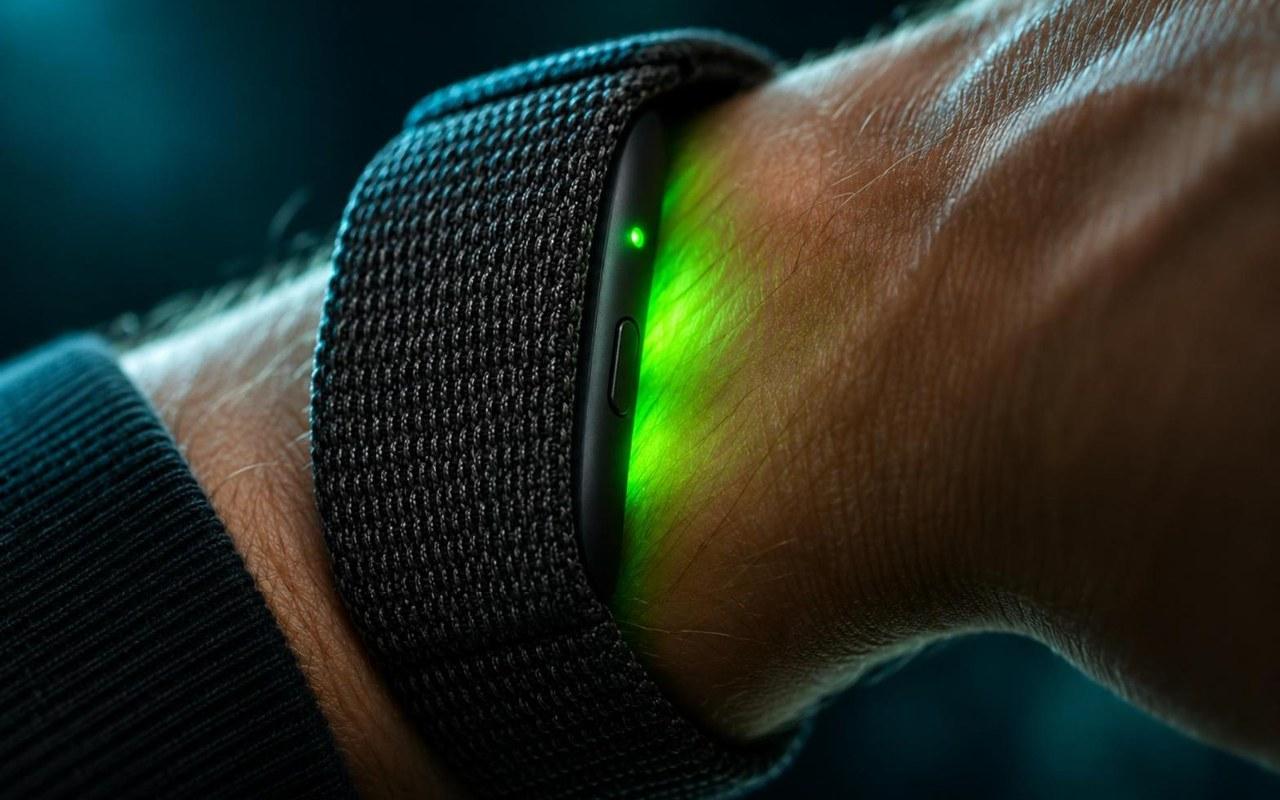
For steady sessions in zones 1–2, good optical sensors on the wrist usually measure accurately enough. With short intervals, however, they react with a delay, and with a lot of arm movement the error rate rises. If you want to control intervals precisely by heart rate, a chest strap is the better choice. Details on the limits of measurement are in How accurately do fitness trackers measure heart rate?.
Conclusion: correctly set zones make training easier
Heart rate zones are only as good as the values they're based on. If you determine your max and resting heart rate realistically, use the Karvonen method and check the zones against how you feel, you have a precise tool: easy sessions stay truly easy, hard sessions truly hard. That's the basis for sustainable progress in endurance sport. How to train the most important zone specifically is covered in Zone 2 training.
よくある質問
How do I calculate my maximum heart rate?
The well-known formula 220 minus age is a rough estimate with large individual deviation. The Tanaka formula 208 minus 0.7 × age is somewhat more accurate. A careful field test or a lab performance test is the most reliable – but only for healthy, trained people.
What is the Karvonen method?
The Karvonen method calculates training zones based on heart rate reserve, i.e. the difference between maximum and resting heart rate. It therefore takes individual differences in fitness into account better than pure percentages of max HR.
In which zone do you burn the most fat?
In lower zones, a larger share of energy comes from fat. For overall fat loss, however, the energy balance over the day is what matters most. Easy zone 2 training is still valuable because it improves fat-burning capacity and aerobic base.
Why don't my watch's zones match how I feel?
Often the stored max HR is wrong because the watch uses an age formula. Heat, fatigue, caffeine and measurement errors on the wrist also shift heart rate. Enter a determined max and resting heart rate manually and compare the zones with your breathing and perceived effort.
How much training should take place in which zone?
Many successful endurance athletes train about 80 percent easy in zones 1 to 2 and about 20 percent hard in zones 4 to 5. Zone 3 is used sparingly. For beginners, a high share of easy training is especially important.
タグ
- Heart rate zones
- Training zones
- Max heart rate
- Karvonen
- Endurance training
- Running
著者について
Michael Lohrberg· Syrax 創業者
Michael Lohrberg は 2026 年に Syrax を創業。海外派遣を含む兵役を経て、2010 年から製造業に従事し、シフト勤務と二つの仕事を並行してきました。LEEK Pulse Pro は「日常の中で本当にどれだけ回復できているのか」という問いから生まれました。マガジンでは、トレーニング、睡眠、リカバリーについて実践的かつ研究に基づいて執筆しています。
Michael について詳しくこの記事は一般的な情報提供を目的としており、医師の助言に代わるものではありません。持病や痛み、不安がある場合は、トレーニングや食事を変える前に医師に相談してください。
Syrax マガジン
次に読む
 完全ガイド
持久力とランニング
Zone 2 Training: The Guide to Better Endurance and a Healthier Heart
Run slow to get faster? Zone 2 training is the foundation of all good endurance – and one of the strongest levers for heart health and longevity. What's behind it, how to find your zone and how to fit it into a strength-training routine.
読了時間 13 分English
ウェアラブルと計測
How Accurately Do Fitness Trackers Measure Heart Rate?
How optical heart rate measurement on the wrist works, where it is reliable and where it isn't – at rest, running, during intervals and in strength training – which factors disrupt it and how to get more accurate readings.
読了時間 5 分English

持久力とランニング
How to Improve VO2max: Training for Your Endurance Ceiling
What VO2max is, why it counts as one of the strongest health markers, how to measure it and which mix of base endurance and intervals – such as the 4×4 protocol – improves it most effectively.
読了時間 5 分English