
30 Days of Battery in Everyday Life: What Long Battery Life Brings with the LEEK Pulse Pro
Fitness trackers with long battery life: why battery life matters so much for sleep and recovery data, what drains power in wearables, battery life from smartwatches to recovery bands compared, what a month with the LEEK Pulse Pro can look like, tips for maximum battery life and the honest trade-offs.
 著者:Michael Lohrberg
読了時間 5 分

この記事はまだ日本語に翻訳されていません。Englishで表示しています。
情報開示:この記事は、本マガジンの発行元である Syrax の製品 LEEK Pulse Pro を取り上げています。
要約
Long battery life in a fitness tracker is more than convenience: the less often you charge, the fewer gaps in your data – especially at night, when sleep, resting heart rate and HRV are measured. The biggest power consumers are the display and GPS. That's why smartwatches often last only one to a few days, sports watches one to two weeks and recovery bands without a display up to a month. The LEEK Pulse Pro states up to 30 days and is fully charged in around two hours. The trade-off: no display, no GPS and an app that currently only runs on Android.
目次
Plugging in every night, asking every morning whether the battery will last until the evening: for many smartwatch owners, charging is a fixed part of the day. And that's exactly where what a tracker is actually supposed to deliver often gets lost – the data from the night. A fitness tracker with long battery life changes this routine fundamentally. Instead of daily, you charge about once a month.
In this article you'll learn why battery life is so important for sleep and recovery data, what drains power in wearables and what a month with the LEEK Pulse Pro can look like. It belongs to the Wearables & Tracking topic. Transparency note: Syrax makes the LEEK Pulse Pro.

Why battery life is more than convenience
A recovery score is mainly created at night: resting heart rate, heart rate variability, sleep stages and oxygen saturation are measured while you sleep. If you charge your watch at night, you don't measure exactly these values. And if you charge it during the day, you often forget it on the charger – during training, on a walk or the next evening.
The less often you have to charge, the fewer gaps arise. Recovery scores based on your personal normal range of the last few weeks become more reliable as a result. How this normal range is established and why it's so important is described in Understanding HRV.
What drains power in wearables
| Consumer | Effect on battery life | Note |
|---|---|---|
| Display | very high | especially with always-on and high brightness |
| GPS | very high | during runs and bike rides |
| Cellular and Wi-Fi | high | in smartwatches with their own connection |
| Frequent heart rate measurement | medium | much more frequent during training than in daily life |
| SpO2 measurement | medium | at regular intervals at night |
| Notifications and vibration | low to medium | depending on quantity |
| Bluetooth syncing | low | modern connections are economical |
This results in the principle behind long-lasting bands: if you do without a display and GPS, you gain an enormous amount of battery life. The rest is efficient hardware and an economical measurement strategy.
Battery life compared
Manufacturer figures for everyday battery life
Maximum battery life in days according to manufacturer figures for typical representatives of each device class. Actual battery life depends heavily on settings and usage.
- LEEK Pulse Proup to 30 days
- Whoop 5.0 / MGup to approx. 14 days
- Garmin Forerunner 570approx. 10–13 days
- Fitbit Charge 6up to 7 days
- Apple Watch Series 11approx. 24 hours
データを表で表示
| カテゴリー | days |
|---|---|
| LEEK Pulse Pro | up to 30 days |
| Whoop 5.0 / MG | up to approx. 14 days |
| Garmin Forerunner 570 | approx. 10–13 days |
| Fitbit Charge 6 | up to 7 days |
| Apple Watch Series 11 | approx. 24 hours |
These differences reflect different concepts. A smartwatch is a computer on your wrist with a display, apps and cellular. A sports watch is a training tool with GPS and a display. A recovery band focuses on measuring in the background. Which concept suits you is covered in Smartwatch or fitness tracker. A detailed comparison of the devices can be found in LEEK Pulse Pro vs. Apple Watch, Garmin, Whoop and Fitbit.
More bands, rings and watches with battery claim, form factor and smartphone compatibility from our wearable database:
| Device | Form | Smartphone | Battery (claim) |
|---|---|---|---|
| Syrax LEEK Pulse Pro(our product) | Band, no display | Android (no iOS at present) | 30 days |
| Xiaomi Smart Band 10 | Band with display | Android and iOS (Mi Fitness) | 21 days |
| WHOOP 5.0 / MG | Band, no display | Android and iOS | 14 days |
| Amazfit Helio Strap | Band, no display | Android and iOS (Zepp) | 10 days |
| Oura Ring 4 | Ring | Android and iOS | 8 days |
| Polar Loop (2025) | Band, no display | Android and iOS (Polar Flow) | 8 days |
| Garmin Index Sleep Monitor | Upper-arm band | Android and iOS (Garmin Connect) | 7 days |
| Google Fitbit Air | Band, no display | Android and iOS (Google Health) | 7 days |
| Samsung Galaxy Ring | Ring | Android only (Android 11+) | 7 days |
| Ultrahuman Ring Air | Ring | Android and iOS | 6 days |
| Apple Watch Series 11 | Smartwatch | iPhone only | 1 day |
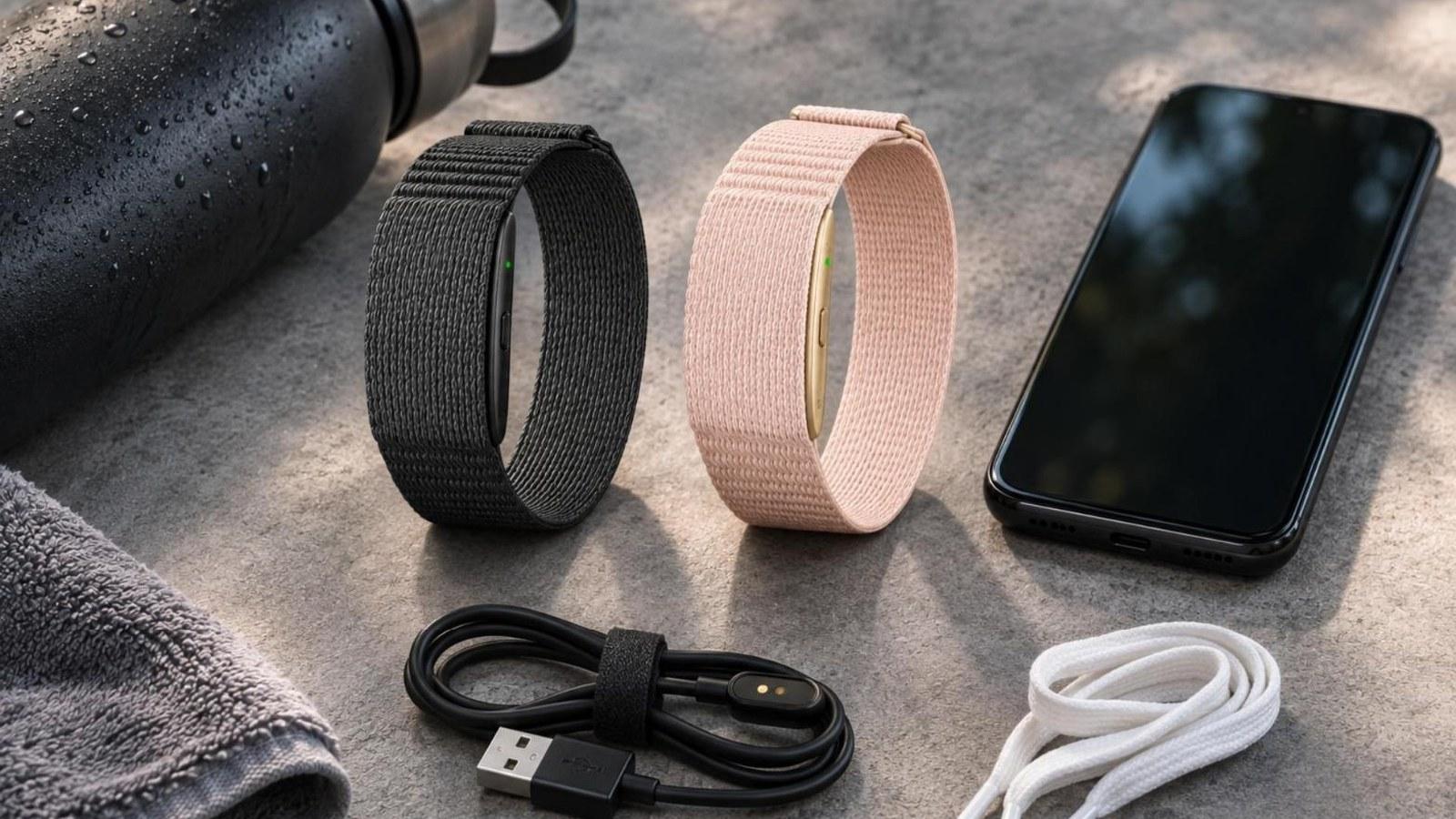
A month with the LEEK Pulse Pro: what it can look like
What does daily life look like with a band that only needs charging about once a month? A typical scenario:
Day 1: The band is fully charged in around two hours, for example on Sunday morning during breakfast. After that, it stays on your wrist – in daily life, during training, in the shower and while you sleep, thanks to IP68 protection.
Weeks 1 to 4: Every morning, the LEEK App shows sleep, recovery and strain scores. For training sessions, one of the over 236 sport modes is started; the band then measures heart rate every second and shows time in five heart rate zones. The data is transferred via Bluetooth to the Android smartphone and stays there – without a cloud.
After about a month: Another short charging session. Exactly how many days you get depends on usage: if you record long sessions in training mode every day, you'll charge a bit earlier.
The effect: hardly any data gaps, not even on the nights that are crucial for recovery. If you're just starting, Setting up the LEEK Pulse Pro has a guide to the first seven days.
Making the most of battery life
Making the most of a fitness tracker's battery life
- 1
ステップ 1
Choose a fixed charging time
Set a fixed time for charging when you're awake and little data is lost, for example on the first Sunday morning of the month during breakfast.
- 2
ステップ 2
Check the battery level
Glance at the battery level in the app once a week so an empty battery doesn't surprise you before an important night.
- 3
ステップ 3
Use training mode deliberately
Only start training mode for real sessions. The more frequent heart rate measurement during training uses more power than everyday mode.
- 4
ステップ 4
Sync regularly
Open the app regularly so the data is transferred and the band's memory doesn't fill up.
- 5
ステップ 5
Protect the battery
Don't charge in blazing sunshine or on a radiator, and don't leave the band completely empty for long periods, to protect the battery in the long run.
The honest trade-offs
Long battery life comes at a price – not in euros, but in features. The LEEK Pulse Pro has no display: you only see the time and your metrics in the app. It has no GPS: if needed, you record distance and pace when running or cycling with your smartphone or another device. The app currently only runs on Android 8.0 and later.
For precise heart rate control during intervals, a chest strap also remains the most accurate solution – when it's worth it is described in Chest strap or heart rate watch. If you need GPS routes, a display for your pace or smartwatch features, a sports watch will serve you better. If you're looking for an alternative to well-known fitness bands with a display, Fitbit alternative offers more options.
Common mistakes
Only looking at the maximum figure: Manufacturer figures are maximum values. Lots of training, always-on displays or GPS shorten battery life.
Charging at night: Costs exactly the data that counts for recovery scores.
Trading battery life for features you need: If you use GPS every day, you won't be happy with a band without GPS.
Constantly running the battery flat: Deep discharges stress lithium batteries. Better to charge in good time.
Conclusion: charge less, know more
Battery life helps determine how complete your data is. A tracker that only needs plugging in once a month stays on your wrist – at night, on holiday and on stressful days. The LEEK Pulse Pro is built around exactly that and deliberately does without a display and GPS in return. If you want to keep a complete eye on sleep and recovery and use an Android smartphone, you get a companion you hardly have to think about in everyday life.
よくある質問
Which fitness tracker has the longest battery life?
Bands without a display and GPS generally last the longest. The LEEK Pulse Pro states up to 30 days. Depending on the model, sports watches reach about one to two weeks, smartwatches often only one to a few days.
Why do smartwatches last so briefly?
Mainly because of the display, which is frequently active, and the GPS receiver. Notifications, apps, cellular and voice assistants add to it. The more features, the higher the consumption.
Why is long battery life important for sleep tracking?
Because many people charge their watch at night. Then exactly the data that's crucial for sleep and recovery scores is missing. If you only have to charge rarely, you also wear the device throughout the night.
How long does the LEEK Pulse Pro take to charge?
The band is fully charged in around two hours. As with any wearable, actual battery life depends on usage, such as the number of recorded training sessions.
Does the battery get weaker over time?
As with all lithium batteries, capacity slowly decreases over the years. A device that's only charged about once a month goes through far fewer charge cycles over the years than a watch that has to be plugged in every day.
タグ
- Fitness tracker
- Battery life
- LEEK Pulse Pro
- Sleep tracking
- Wearables
- Recovery
著者について
Michael Lohrberg· Syrax 創業者
Michael Lohrberg は 2026 年に Syrax を創業。海外派遣を含む兵役を経て、2010 年から製造業に従事し、シフト勤務と二つの仕事を並行してきました。LEEK Pulse Pro は「日常の中で本当にどれだけ回復できているのか」という問いから生まれました。マガジンでは、トレーニング、睡眠、リカバリーについて実践的かつ研究に基づいて執筆しています。
Michael について詳しくこの記事は一般的な情報提供を目的としており、医師の助言に代わるものではありません。持病や痛み、不安がある場合は、トレーニングや食事を変える前に医師に相談してください。
Syrax マガジン
次に読む
ウェアラブルと計測Syrax
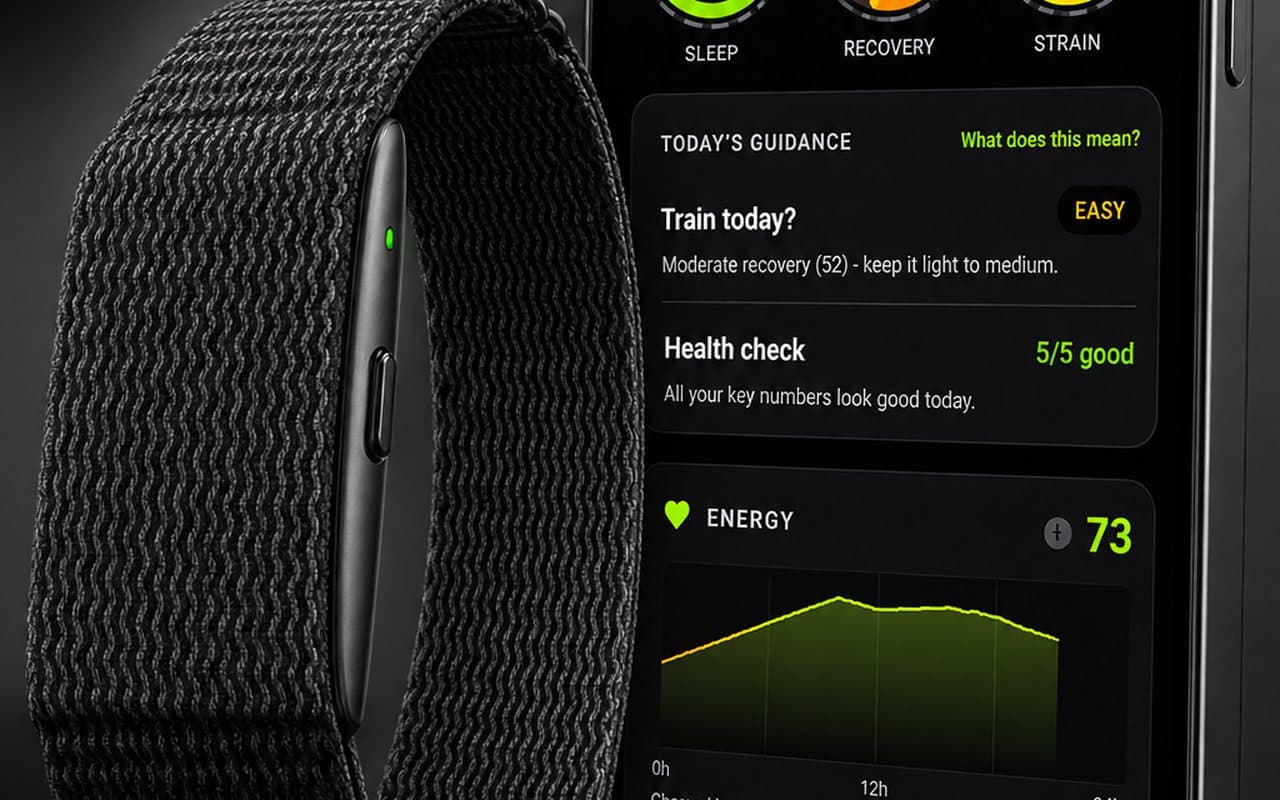
LEEK Pulse Pro in Detail: The Fitness Tracker Without a Display or Subscription
No screen, no cloud, no subscription, up to 30 days of battery: the LEEK Pulse Pro deliberately takes a different path from smartwatches. What the band measures, how the analysis works, where its limits are – and who it is worth it for.
読了時間 13 分English
ウェアラブルと計測Syrax
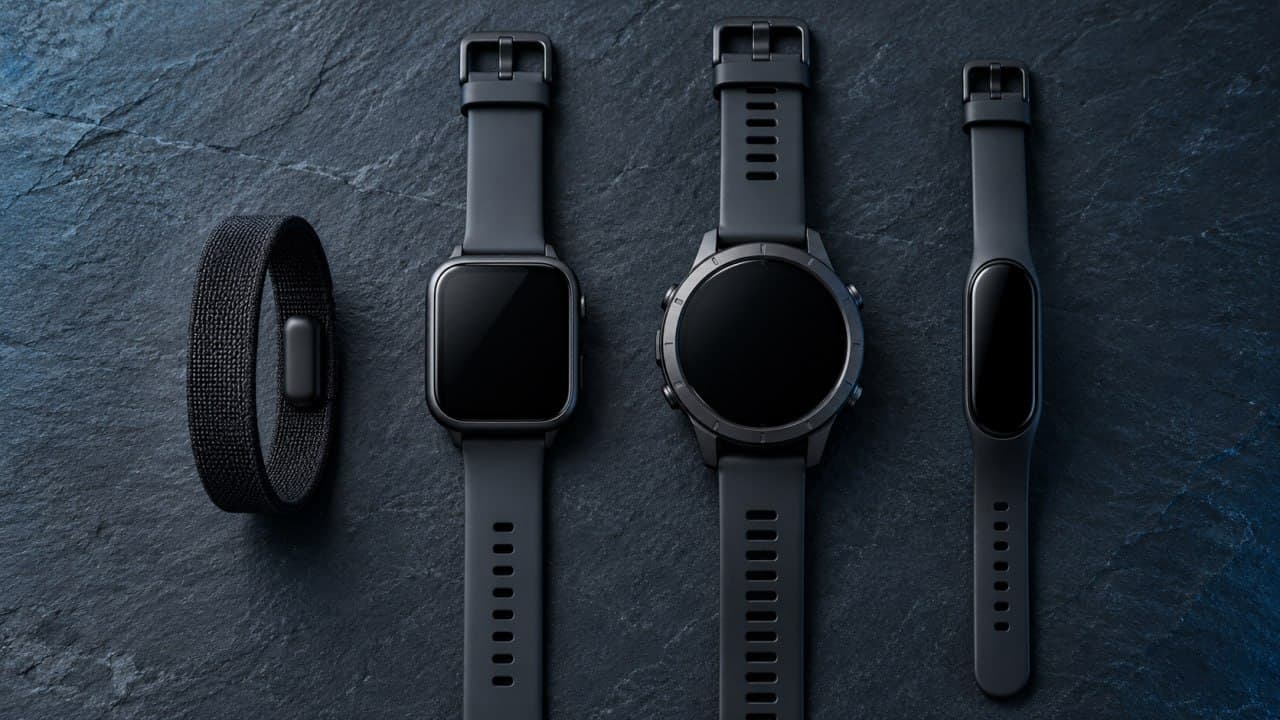
LEEK Pulse Pro vs. Apple Watch, Garmin, Whoop and Fitbit: The Big Comparison
Five concepts, five philosophies: smartwatch, sports watch, recovery band with membership, fitness tracker with display – and the LEEK Pulse Pro without display, cloud or subscription. Which tracker suits whom? A fair comparison with all strengths and weaknesses.
読了時間 14 分English
 完全ガイド
ウェアラブルと計測
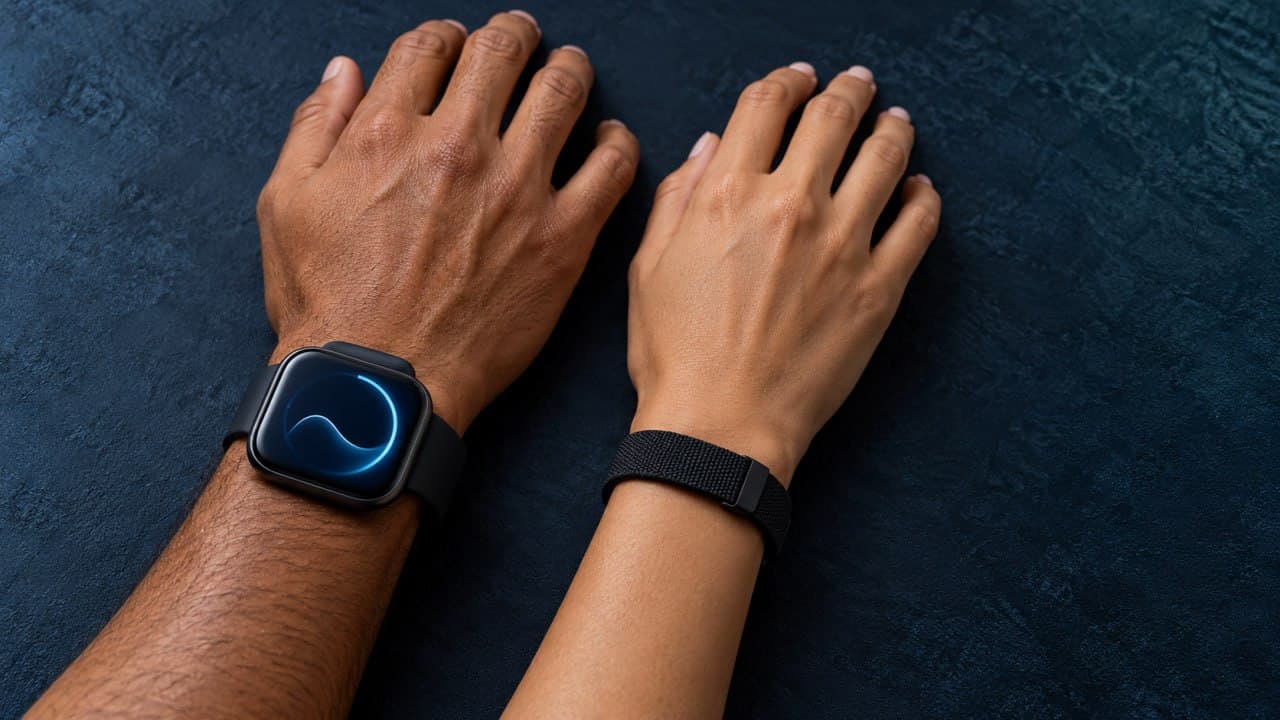
Smartwatch or Fitness Tracker? What Matters for Training
Smartwatch, GPS sports watch or slim fitness band: which device class suits your training, what the sensors can really do, how important battery, subscription and privacy are – with a decision guide for every profile.
読了時間 8 分English