Domowa siłownia i sprzętSport Edit Seliny · Część 1 z 9
Packing Your Gym Bag: My Checklist for the Gym
What goes in the gym bag – and what gets kicked out? Selina Karl unpacks hers: clothes, shoes, towel, water bottle, hygiene and little lifesavers, plus tricks against odour, the right bag size and a checklist to tick off. Part 1 of Selina's Sport Edit.
 Autor:Selina Karl
6 min czytania
Ten artykuł nie jest jeszcze dostępny po polsku. Wyświetlamy go w języku: English.
W skrócie
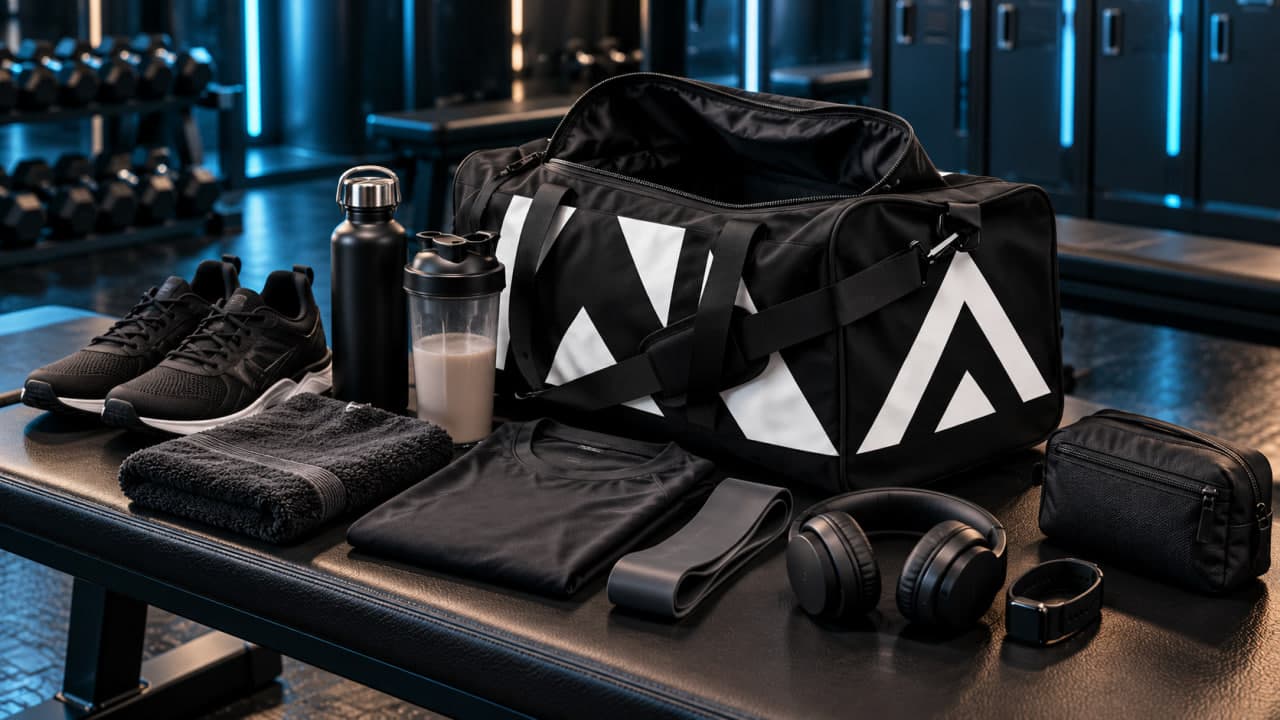
A well-packed gym bag is half the battle. In it go training clothes made of performance fabric, training shoes, two pairs of socks, two towels (equipment and shower), a water bottle, flip-flops, travel-size toiletries, fresh underwear and a bag for wet things. Little lifesavers like hair ties, plasters, a lock and headphones live in the bag permanently. The one thing that really fights odour: unpack and air the bag after every workout. For training after work, about 30 litres is enough; if you also haul work clothes and a laptop, you'll want a bigger duffle bag.
Spis treści
Hi, I'm Selina – and I have a theory: most workouts don't fail because of a lack of motivation, but because of a missing sock. Or the towel that's still damp in the bathroom. Or the water bottle that's been sitting in the office since Tuesday and is slowly developing a life of its own.
By day I work as a manager at Statistics Austria; in the evenings and at weekends you'll find me in the gym, on the Pilates mat, training for HYROX or on the padel court. To fit all of that into one calendar, my gym bag is basically my second office. In this series – Selina's Sport Edit – I'll take you along every Friday: from the gym bag to running and yoga outfits all the way to the supplement shelf. Honest, practical and happily with a wink.
We're starting where every workout starts: with packing. If you'd rather train at home, you'll find everything about your own training corner in Setting up a home gym.
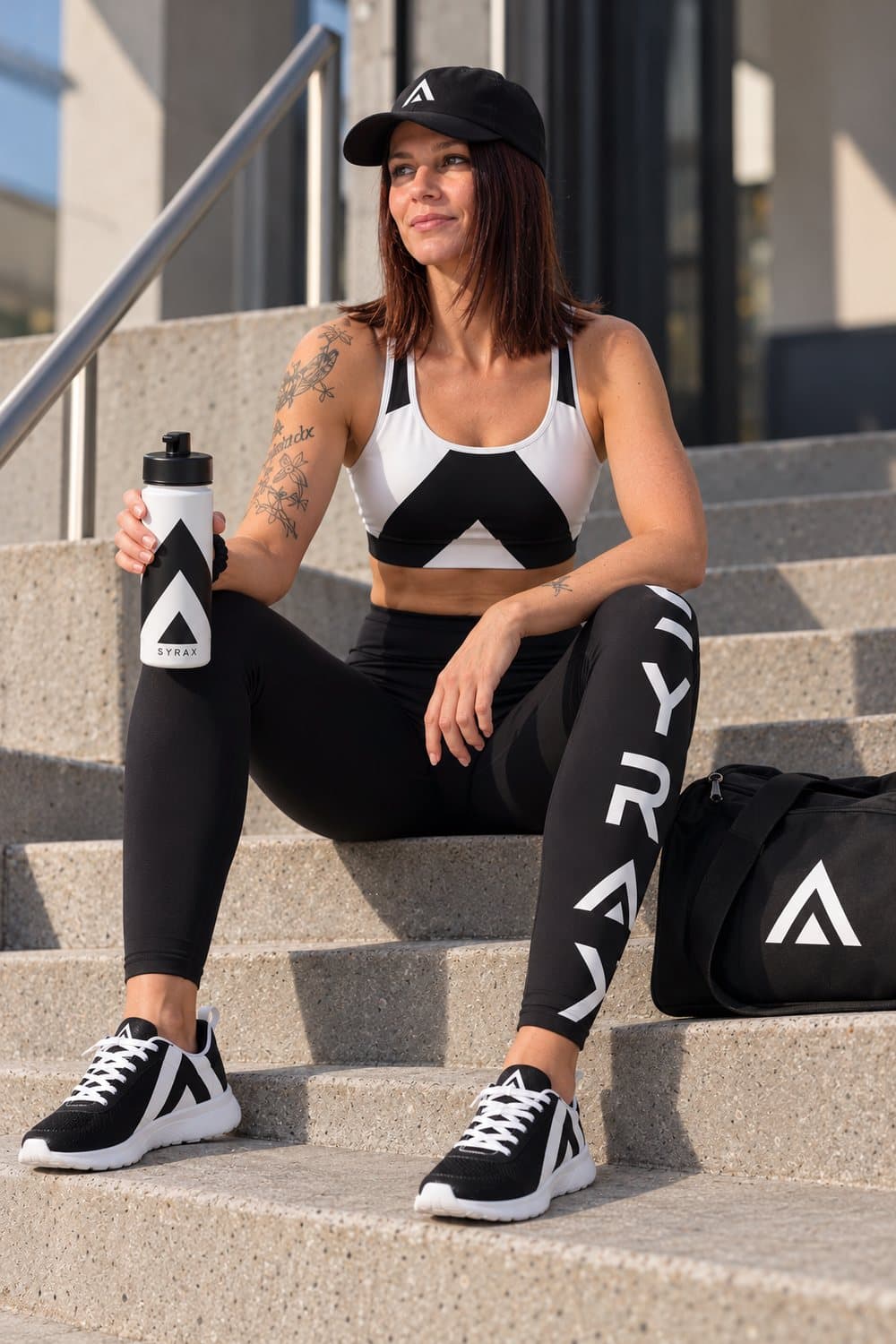
The basics: clothes and shoes
Training shirt and bottoms: Performance fabric dries faster than cotton and chafes less. My standard for strength training: leggings or loose shorts, plus a top or shirt I don't get tangled up in during overhead exercises.
Sports bra: For squats and deadlifts, medium support is often enough; for jumps, skipping or the HYROX workout it can be more. Better to pack a second one if there's a class after training.
Training shoes: For strength training, flat, stable soles make sense; for cardio, cushioned shoes. My tip: don't wear your gym shoes outside. That's better for the sole – and for the floor you'll be doing your ab work on later.
Socks: One pair for training, one for afterwards. I've learned that "one will do" is one of life's great lies.
Warm layer: A hoodie or light jacket for warming up and the way home while your body is still warm.
Fresh underwear for after the shower.
By the way, in the photo I'm wearing the Athletic Shoes from Syrax Gear – light sneakers that look good in the gym and on the way there. A small note: the model is cut to men's sizes, so check the size chart before ordering.
Hygiene and shower
Two towels: a smaller one for benches and pads, a large, absorbent one for the shower. In many gyms a towel on the equipment is mandatory – and honestly: that's a good thing.
Flip-flops: protect against athlete's foot in the shower and changing room. Not glamorous, but non-negotiable.
Shower gel, shampoo, deodorant – in small, leak-proof bottles. My pro move: refill travel sizes instead of packing the big bottle every time.
Bag for wet things: a laundry bag or wash bag for sweaty clothes and the wet towel.
Hydration and energy
Water bottle: You lose less fluid in strength training than in long endurance sessions, but a bottle within reach still belongs in the bag. An insulated stainless steel bottle keeps water cool for hours – handy if the bag sits in the car or office all day.
Snack for afterwards: a banana, a yoghurt or a protein bar if dinner is still a long way off. Everyone knows that if you go to the supermarket hungry after training, you'll buy everything – except vegetables.
Our Stainless Steel Water Bottle holds 950 ml, is double-walled and vacuum-insulated and has a lid with a fold-down straw and a twist handle. It isn't dishwasher-safe – a quick rinse by hand is enough.
Little lifesavers that always stay in the bag
- Padlock for the locker
- Headphones and, if needed, a charging cable
- Hair ties – plural. They disappear faster than biscuits in the office.
- Training plan or notebook to record weights and sets
- Plasters for small blisters on your hands
- Chalk for heavy pulling exercises, if the gym allows it
- Lip balm and a small hand cream – dumbbells are no friends of dry hands
If you mainly train with machines and dumbbells, this basic kit is all you need. For heavy compound lifts, some people also bring lifting straps, knee sleeves or a lifting belt – useful if you plan to use them deliberately, but not a must to start. You'll find a suitable plan for the first months in Muscle building for beginners.
Which bag suits which routine
| Routine | Suitable bag |
|---|---|
| Training after work, sports kit only | gym bag of about 30 litres |
| Training plus work clothes, food and laptop | large duffle bag with shoulder strap |
| Weekend trip with training | large duffle bag with several inner compartments |
| Only phone, keys and headphones for a class | small crossbody bag |
Our Gym Bag holds 30 litres, is made of water-resistant polyester with reinforced fabric, has an inner pocket for valuables and padded double handles. The Big Duffle Bag offers more space at 56 × 29 × 29 cm, has a mesh side pocket, several inner compartments – one of them with a zip – and a removable, padded shoulder strap. On office days with Pilates in the evening, the duffle is my choice, because the blazer can lie on top without creasing.
Special cases: classes, swimming and training before work
Classes and functional training: For circuits, HIIT or functional classes you need shoes with good lateral support and a flat sole, a headband against sweat and a larger water bottle. A small towel for the mat is worth its weight in gold, because you work on the floor a lot. You can read how intervals work in the HIIT guide.
Swimming or sauna after training: Swimsuit or trunks, goggles and a large bath towel. Wet swimwear belongs in a waterproof bag so the rest of the bag stays dry.
Training before work: Here, organisation is everything. Put your work clothes on top so they don't crease, or keep a set in your locker or office. Allow enough time to shower and remember a comb, hair ties and toiletries. A breakfast to go means you won't walk into your first meeting hungry.
Cycling or walking to training: A backpack or bag with a shoulder strap is more comfortable than handles alone. A rain cover or water-resistant material protects the contents.
How to keep your bag odour-free
Unpack after every workout: Sweaty clothes don't belong in the bag overnight. Otherwise it'll greet you the next morning with a very distinct personality.
Separate wet things: Towel and clothes in their own bag, shoes in a shoe bag.
Air it: Let the bag dry open; don't put it in the cupboard closed.
Clean regularly: Most polyester bags can be wiped down with a damp cloth and mild soap.
The gym bag checklist to tick off
- training shirt and bottoms
- sports bra
- training shoes
- socks (two pairs – really)
- hoodie or training jacket
- fresh underwear
- towel for the equipment and for the shower
- flip-flops
- shower gel, shampoo, deodorant
- bag for wet things
- water bottle
- snack
- lock, headphones, hair ties, training plan
Conclusion: pack properly once, benefit every time
A good gym bag isn't a luxury but part of your training routine. With a fixed packing list you won't forget anything, and with a few habits the bag stays fresh. Then there's only one task left: go and train.
Next Friday it gets darker – literally: the clocks have gone back, and I'm looking at what vitamin D3 + K2 drops are all about. Until then: pack your bag, count your socks.
Najczęstsze pytania
What belongs in a gym bag?
Training clothes, training shoes, two pairs of socks, two towels, a water bottle, flip-flops, shower gel and deodorant, fresh underwear, a bag for wet clothes and, depending on the gym, a padlock. Hair ties, plasters and headphones are best kept in the bag permanently.
How big should a gym bag be?
For training after work with clothes, shoes and a towel, about 25 to 35 litres is enough. If you also take work clothes, food for the day or things for two days, you'll need more like 40 litres or more.
How do I get the smell out of my gym bag?
Empty the bag completely after every workout, dry or wash wet things immediately and let the bag air open. A separate bag for shoes and sweaty clothes stops the smell from settling into the fabric.
Do I need a towel at the gym?
In most gyms a towel on benches and pads is mandatory – for hygiene reasons. A second, absorbent towel for the shower is handy.
Why flip-flops at the gym?
In showers and changing rooms, the floors are damp and many people walk on them barefoot. Flip-flops protect against athlete's foot and wart viruses.
Tagi
- Gym bag
- Gym
- Packing list
- Sports bag
- Syrax Gear
- Selina's Sport Edit
O autorce
Selina Karl· Redaktorka: fitness, moda i suplementy
Selina Karl jest menedżerką w Statistik Austria – liczby to jej codzienność i tak właśnie czyta badania: najpierw próba, potem nagłówek. W wolnym czasie trenuje siłowo i wytrzymałościowo, ćwiczy pilates, startuje w zawodach HYROX i gra w padla. W Syrax Magazine pisze o fitnessie, odzieży sportowej i suplementach – szczerze, praktycznie i z przymrużeniem oka.
Więcej o SelinieTen artykuł ma charakter ogólnoinformacyjny i nie zastępuje porady lekarskiej. Jeśli masz choroby, odczuwasz ból lub masz wątpliwości, porozmawiaj z lekarzem przed zmianą treningu lub diety.
Syrax Magazyn