
How Accurate Are Fitness Trackers? The Research in Numbers
Steps, heart rate, HRV, sleep, calories, oxygen and heart rhythm: what independent validation studies show about the accuracy of fitness trackers and smartwatches – all key figures with sources on one page.
 DeMichael Lohrberg
11 min de citit
Acest articol nu este încă disponibil în limba română. Este afișat în: English.
Pe scurt
Fitness trackers don't measure everything equally well. They are reliable for steps at normal to brisk walking speeds, for heart rate at rest, during sleep and during steady movement, and for whether and how long you slept (86 to 89 percent agreement with a sleep lab). They become less accurate during slow walking, rapid changes in intensity and for sleep stages (50 to 65 percent). No device studied estimates calorie expenditure accurately – in reviews the mean error was over 30 percent. Irregular heart rhythm notifications can be useful but do not replace an ECG. For everyday use, this means trends over weeks are more reliable than single values.
Cuprins
8,412 steps, resting heart rate 58, deep sleep 1 hour 24, 2,340 kilocalories burned: fitness trackers deliver numbers every day that look very precise. But how accurate are fitness trackers really? The answer differs completely depending on the metric – and it can be found in validation studies in which research teams compared the devices with gold standards such as ECG, polysomnography or calorimetry.
This page brings together the most important of these studies with their key figures. Every number is backed by the original source. The overview is part of the Wearables & Tracking topic.
Accuracy at a glance
| Metric | Assessment | Key finding |
|---|---|---|
| Steps (normal and brisk walking) | good | accurate in the lab for Fitbit, Apple Watch and Samsung (Fuller et al. 2020) |
| Steps (slow walking) | moderate to weak | deviations of 0 to 26.4% depending on device and pace (Fokkema et al. 2017) |
| Heart rate at rest and during sleep | good | high agreement with ECG during sleep (Miller et al. 2022) |
| Heart rate during steady movement | good | 6 of 7 devices with median error below 5% when cycling (Shcherbina et al. 2017) |
| Heart rate during intensity changes | moderate | error during activity on average 30% higher than at rest (Bent et al. 2020) |
| HRV during sleep | moderate to good | moderate to high agreement when measured during sleep (Miller et al. 2022) |
| Asleep or awake | good | 86 to 89% agreement with the sleep lab (Miller et al. 2022) |
| Wake periods during the night | weak | only 18 to 54% of wake periods detected (Chinoy et al. 2021) |
| Sleep stages | rough | 50 to 65% agreement (Miller et al. 2022) |
| Calorie expenditure | weak | no device below 20% error; mean error over 30% (Shcherbina 2017, Germini 2022) |
| Irregular heart rhythm notification | useful as a hint | 84% of notifications matched atrial fibrillation on ECG (Perez et al. 2019) |
Steps: good when walking, weak when strolling
A wrist-worn tracker counts steps with an accelerometer that detects your arm swing. A large systematic review of 158 publications on nine brands concluded that Fitbit, Apple Watch and Samsung measure steps accurately in the lab (Fuller et al., JMIR mHealth and uHealth 2020).
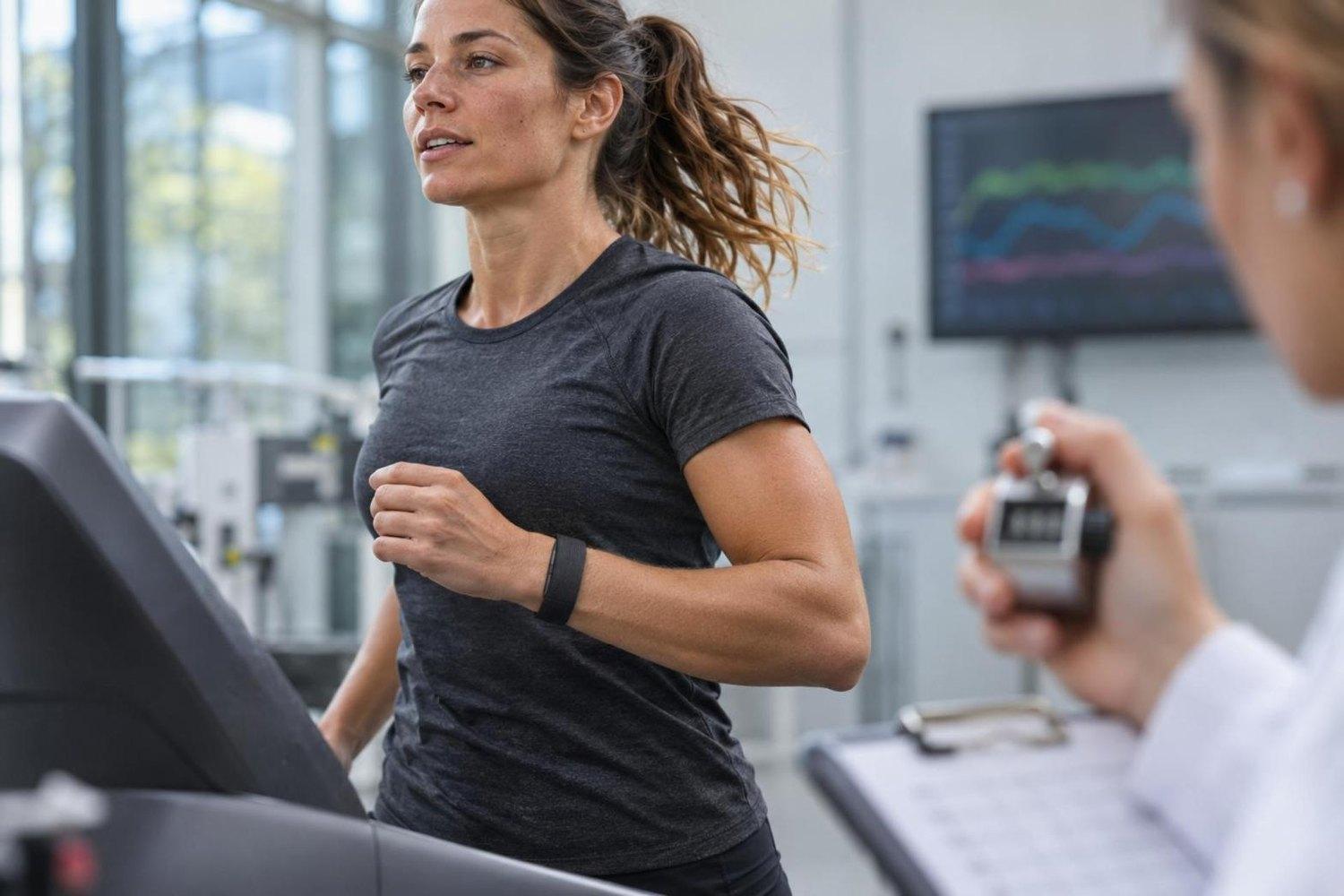
How strongly pace affects accuracy is shown by a Dutch study: 31 adults walked on a treadmill wearing ten trackers at once, at slow (3.2 km/h), average (4.8 km/h) and brisk (6.4 km/h) speeds. Compared with steps counted by hand, the deviations ranged from 0 to 26.4 percent. At average and brisk speeds most devices performed better than when walking slowly (Fokkema et al., Medicine & Science in Sports & Exercise 2017).
Typical sources of error in everyday life are prams, walkers and shopping trolleys (too few steps) as well as gesturing or bumpy car journeys (too many). More on this in the guide Step counter wristband with heart rate.
Heart rate: accurate at rest, sluggish with changes in pace
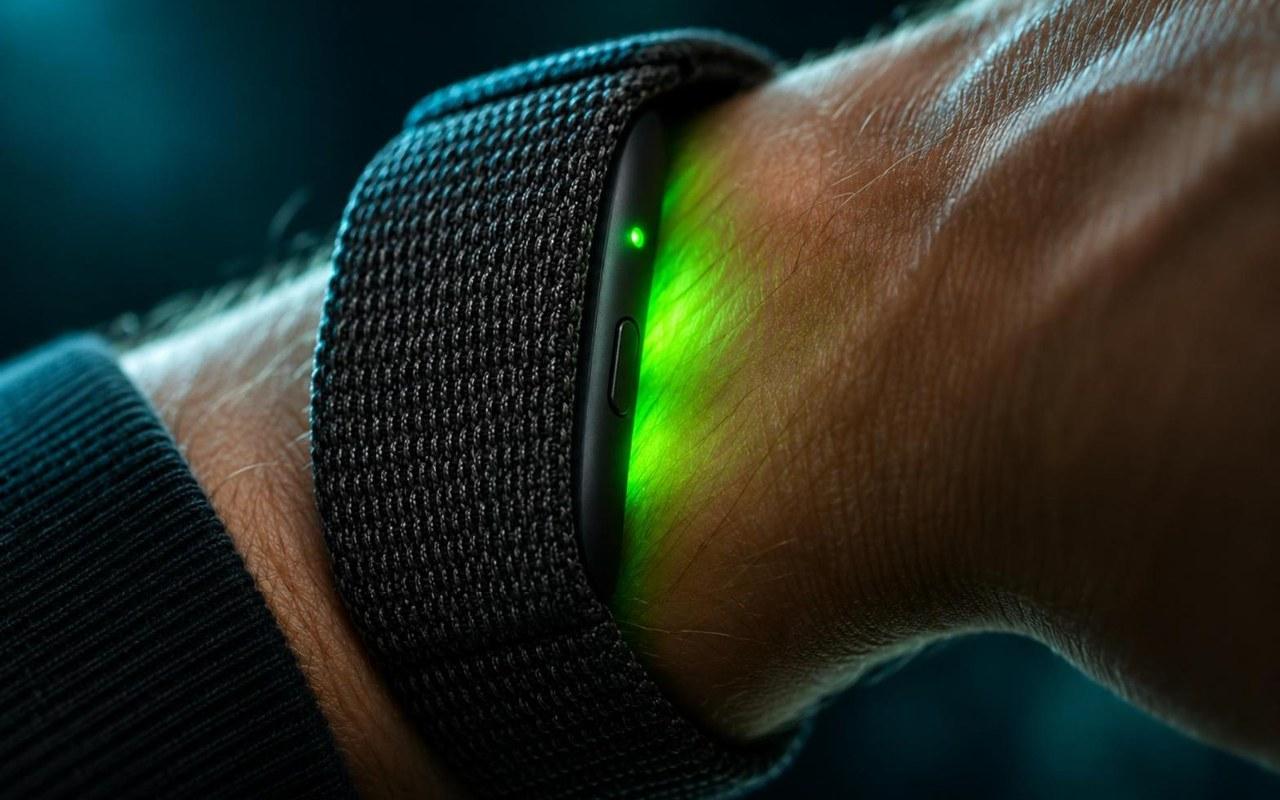
Fitness trackers measure heart rate optically using photoplethysmography (PPG): green light penetrates the skin, and the sensor measures how much of it is reflected by the pulsing blood.
- Steady exercise: a Stanford study with 60 adults and seven devices found a median error below 5 percent for six devices during cycling. Errors were largest during walking (Shcherbina et al., Journal of Personalized Medicine 2017).
- Changes in intensity: a Duke University study found that the absolute error during activity was on average 30 percent higher than at rest. At rest and during prolonged elevated heart rate all devices were reasonably accurate; differences showed mainly in how they responded to changes (Bent et al., npj Digital Medicine 2020).
- During sleep: devices that recorded heart rate during sleep showed high agreement with ECG in an Australian lab study (Miller et al., Sensors 2022).
A detailed assessment can be found in How accurately do fitness trackers measure heart rate?
Does skin tone matter?
Here the studies contradict each other. Shcherbina et al. (2017) found larger errors with darker skin. Bent et al. (2020) specifically examined the full range of skin tones and found no statistically significant difference in accuracy. A clear problem, however, has been documented for clinical pulse oximeters (see below).
HRV: useful when measured during sleep
Heart rate variability (HRV) describes the fluctuations between individual heartbeats. In the study by Miller et al. (2022), the devices measured HRV in very different ways – across the whole night, in four-hour periods or in a three-minute test while awake. Devices that measured during sleep achieved moderate to high agreement with ECG; the lowest agreement was seen in the awake test. In practice this means: HRV values from different devices are hardly comparable, but your own trend over weeks is. More on this in Understanding HRV.
Sleep: duration good, stages rough
In an Australian lab study, 53 adults spent a night in a sleep lab wearing six wearables at once. For the question "asleep or awake?", all devices reached 86 to 89 percent agreement with polysomnography. When they also had to determine the sleep stage, agreement dropped considerably (Miller et al., Sensors 2022):
Sleep stages correctly identified
Agreement with polysomnography when classifying wake, light sleep, deep sleep and REM. Source: Miller et al. (2022), 53 adults, one night in a sleep lab.
- Somfit65 %
- Oura Ring Gen 261 %
- WHOOP 3.060 %
- Apple Watch S653 %
- Polar Vantage V51 %
- Garmin Forerunner 24550 %
Afișează datele ca tabel
| Categorie | % |
|---|---|
| Somfit | 65 % |
| Oura Ring Gen 2 | 61 % |
| WHOOP 3.0 | 60 % |
| Apple Watch S6 | 53 % |
| Polar Vantage V | 51 % |
| Garmin Forerunner 245 | 50 % |
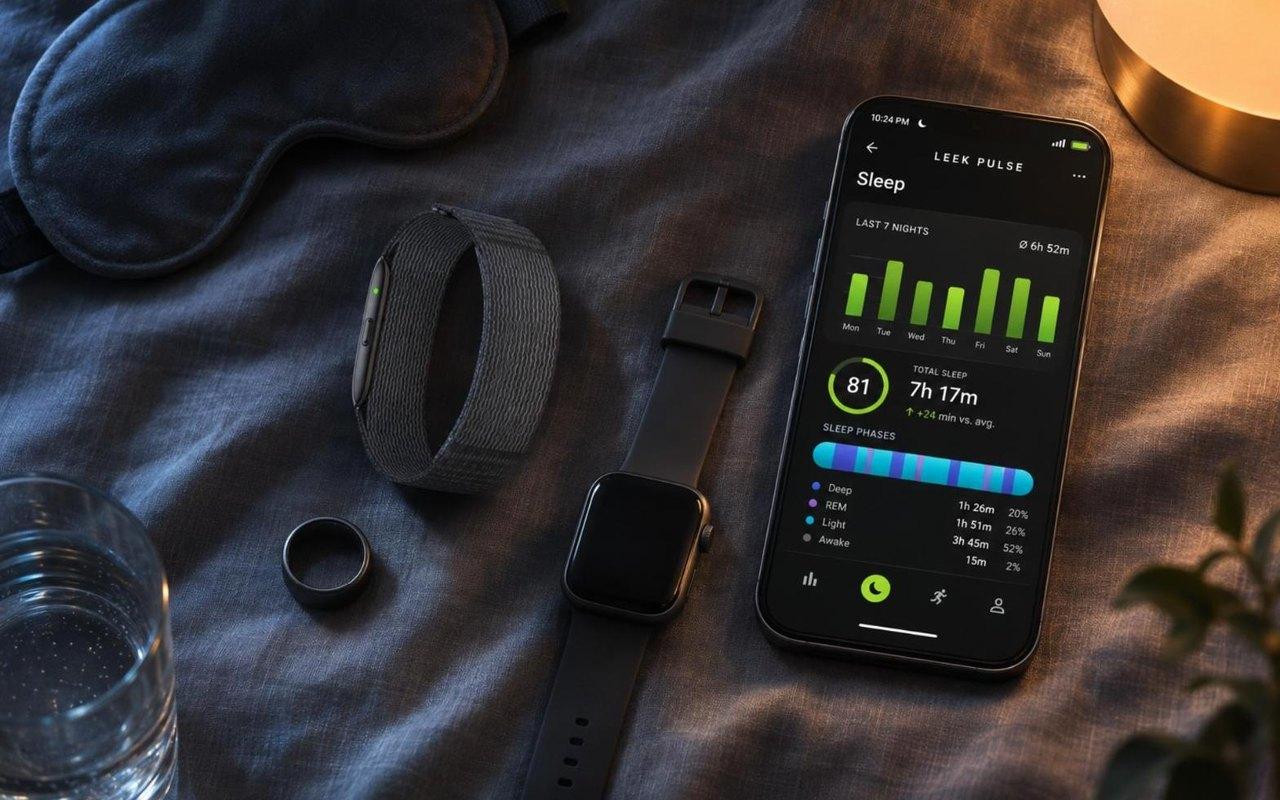
A US study with 34 young adults and seven devices – bands, watches and under-mattress mats – showed the typical weakness: all devices detected sleep at least 93 percent of the time, but wake periods only 18 to 54 percent of the time (Chinoy et al., Sleep 2021). Trackers tend to mistake lying awake quietly for sleep. How band, ring, watch and mat differ in everyday use is shown in the sleep tracker comparison.
Calories: the weakest value
On energy expenditure, all major studies agree:
- In the Stanford study, none of the seven devices achieved an error below 20 percent (Shcherbina et al. 2017).
- The review of 158 publications found no brand that measures energy expenditure accurately (Fuller et al. 2020).
- A review of 65 studies found a mean error of over 30 percent for all brands examined (Germini et al., Journal of Medical Internet Research 2022).
If you want to lose weight, you should therefore not count the tracker's calorie figure one-to-one into your diet. As a rough comparison between active and quiet days, it is still useful.
Heart rhythm: a hint, not a diagnosis
The largest study to date on a smartwatch feature is the Apple Heart Study with 419,297 participants. Over a median of 117 days, 0.52 percent received a notification of an irregular pulse. In 34 percent of these people, an ECG patch worn later showed atrial fibrillation. When another notification was recorded at the same time as the ECG, it matched atrial fibrillation in 84 percent of cases (Perez et al., New England Journal of Medicine 2019). The study was funded by Apple.
Oxygen saturation: caution with low values
Oxygen saturation (SpO2) is also measured optically. A widely cited analysis from US hospitals shows how important independent testing is: at readings of 92 to 96 percent on a finger pulse oximeter, the actual arterial blood saturation was below 88 percent in 11.7 percent of measurements in Black patients – but in only 3.6 percent in White patients (Sjoding et al., New England Journal of Medicine 2020).
Missed low oxygen in pulse oximeters
Share of measurements with arterial saturation below 88% despite 92–96% on the pulse oximeter. Source: Sjoding et al. (2020), University of Michigan cohort. Clinical finger pulse oximeters were studied, not fitness trackers.
- Black patients11.7 %
- White patients3.6 %
Afișează datele ca tabel
| Categorie | % |
|---|---|
| Black patients | 11.7 % |
| White patients | 3.6 % |
The study concerns clinical finger devices, not wrist-worn wearables. But it shows that optical saturation values should be read with caution, especially in the low range. SpO2 values from a fitness tracker are suitable as a trend, not for self-diagnosis.
Steps and health: why counting pays off
Accuracy is not an end in itself. A meta-analysis of 15 cohorts with 47,471 adults shows why counting steps pays off despite measurement errors: compared with the quarter taking the fewest steps (a median of 3,553 a day), the risk of death was considerably lower in the more active groups (Paluch et al., The Lancet Public Health 2022):
Risk of death by steps per day
Adjusted relative risk of death per quarter (median steps per day), compared with the quarter taking the fewest steps (= 100). Source: Paluch et al. (2022), 47,471 adults. Observational data show associations, not causation.
- 3,553 steps100
- 5,801 steps60
- 7,842 steps55
- 10,901 steps47
Afișează datele ca tabel
| Categorie | |
|---|---|
| 3,553 steps | 100 |
| 5,801 steps | 60 |
| 7,842 steps | 55 |
| 10,901 steps | 47 |
In people aged 60 and over, the benefit levelled off at about 6,000 to 8,000 steps, in younger people at about 8,000 to 10,000. An error of a few percent changes little about this assessment. It also fits that people with a pedometer walked around 2,000 more steps a day on average in a systematic review (Bravata et al., JAMA 2007).
What this means for you
| If you … | then |
|---|---|
| want to increase your activity | steps and active minutes are reliable enough – look at the weekly average |
| train by heart rate | the wrist is fine for steady sessions, a chest strap is more accurate for intervals |
| track your recovery | compare resting heart rate and HRV during sleep over weeks, not single nights |
| want to sleep better | take sleep duration and regularity seriously, read deep and REM sleep minutes only as estimates |
| want to lose weight | don't count calorie figures into your diet |
| have symptoms | get them checked by a doctor, even if the tracker looks normal |
How we selected the studies
We included peer-reviewed studies and reviews that compare consumer wearables with a recognised reference method: hand counting for steps, ECG for heart rate and HRV, polysomnography for sleep, indirect calorimetry for energy expenditure and arterial blood gas analysis for oxygen saturation. Three limitations apply to all figures:
- Models change quickly. Many studies examined devices that are no longer sold today. The results show what the technology can basically do, not how good a specific current model is.
- The lab is not everyday life. In everyday life, loose bands, cold, tattoos and irregular movements come into play.
- Manufacturer algorithms are secret. Researchers usually only see the finished values, not the raw data.
We update this overview when major new validation studies are published.
Cite this overview
Do you write about wearables, teach or give talks? You are welcome to use the tables and figures on this page. Please cite the respective original study and link to this overview as the source, for example:
Syrax Magazin: "How Accurate Are Fitness Trackers? The Research in Numbers", syrax.site/en/magazin/fitness-tracker-accuracy-studies
What the devices cost over three years, whether a subscription is needed and whether you can export your data is shown in the Syrax database on wearable costs and data access.
Which study tested which device under which conditions – with reference method, error measure and DOI – is listed in the Syrax study register on wearable accuracy.
Where the LEEK Pulse Pro stands
The LEEK Pulse Pro is a fitness band without a display, built to be worn around the clock: it measures heart rate, HRV, oxygen saturation, sleep stages, steps and activity and, according to the manufacturer, lasts up to 30 days on one charge. It uses the same optical measurement technology as the devices in the studies and therefore has the same fundamental limits. There is no independent validation study of the LEEK Pulse Pro yet. The app is free, without a subscription, and the data stays on your smartphone; it is currently only available for Android. All the details are in LEEK Pulse Pro in detail.
Conclusion: accurate enough for trends
Fitness trackers are not lab instruments, but they are not random number generators either. For steps, resting heart rate, sleep duration and HRV trends they deliver values you can work with well – as long as you compare weeks rather than single days. Caution is advised with calories, sleep stages and health warnings. If you know this, you get more out of any tracker.
Sources:
- Bent B et al. (2020): Investigating sources of inaccuracy in wearable optical heart rate sensors. npj Digital Medicine 3:18.
- Bravata DM et al. (2007): Using Pedometers to Increase Physical Activity and Improve Health: A Systematic Review. JAMA 298(19):2296–2304.
- Chinoy ED et al. (2021): Performance of seven consumer sleep-tracking devices compared with polysomnography. Sleep 44(5):zsaa291.
- Fokkema T et al. (2017): Reliability and Validity of Ten Consumer Activity Trackers Depend on Walking Speed. Medicine & Science in Sports & Exercise 49(4):793–800.
- Fuller D et al. (2020): Reliability and Validity of Commercially Available Wearable Devices for Measuring Steps, Energy Expenditure, and Heart Rate: Systematic Review. JMIR mHealth and uHealth 8(9):e18694.
- Germini F et al. (2022): Accuracy and Acceptability of Wrist-Wearable Activity-Tracking Devices: Systematic Review of the Literature. Journal of Medical Internet Research 24(1):e30791.
- Miller DJ et al. (2022): A Validation of Six Wearable Devices for Estimating Sleep, Heart Rate and Heart Rate Variability in Healthy Adults. Sensors 22(16):6317.
- Paluch AE et al. (2022): Daily steps and all-cause mortality: a meta-analysis of 15 international cohorts. The Lancet Public Health 7(3):e219–e228.
- Perez MV et al. (2019): Large-Scale Assessment of a Smartwatch to Identify Atrial Fibrillation. New England Journal of Medicine 381(20):1909–1917.
- Shcherbina A et al. (2017): Accuracy in Wrist-Worn, Sensor-Based Measurements of Heart Rate and Energy Expenditure in a Diverse Cohort. Journal of Personalized Medicine 7(2):3.
- Sjoding MW et al. (2020): Racial Bias in Pulse Oximetry Measurement. New England Journal of Medicine 383(25):2477–2478.
Întrebări frecvente
How accurate are fitness trackers overall?
It depends on the metric. Good devices capture steps and heart rate fairly accurately in the lab, and for sleep they reliably detect whether you are asleep or awake. Sleep stages are rough estimates, and according to several reviews no device estimates calorie expenditure accurately.
Which fitness tracker value is the least accurate?
Calorie expenditure. In a study of seven devices, none achieved an error below 20 percent, and in a review of 65 studies the mean error was over 30 percent for all brands.
Is wrist-based heart rate accurate enough?
At rest, during sleep and during steady movement, yes. Optical sensors react with a delay to rapid changes in intensity; in one study the error during activity was on average 30 percent higher than at rest. For exact values in interval training, a chest strap is the better choice.
Do fitness trackers measure less accurately on darker skin?
The evidence is mixed. One study found larger heart rate errors with darker skin tones, another found no statistically significant difference. For hospital pulse oximeters, however, it is well documented that low oxygen levels were missed more often in Black patients.
Can I use the figures from this overview?
Yes. You are welcome to use the tables and figures on this page in articles, presentations or teaching materials. Please cite the original study and link to this overview as the source.
Etichete
- Fitness tracker
- Accuracy
- Studies
- Heart rate
- Sleep tracking
- Step counter
- Wearables
Despre autor
Michael Lohrberg· Fondatorul Syrax
Michael Lohrberg a fondat Syrax în 2026. Serviciu militar cu misiune în străinătate, în industrie din 2010, muncă în ture și două joburi în paralel – LEEK Pulse Pro s-a născut din întrebarea câtă recuperare rămâne cu adevărat în viața de zi cu zi. În revistă scrie despre antrenament, somn și regenerare – practic și pe baza cercetării.
Mai multe despre MichaelAcest articol are caracter informativ și nu înlocuiește sfatul medical. Dacă ai afecțiuni, dureri sau nelămuriri, discută cu medicul înainte de a-ți schimba antrenamentul sau alimentația.
Syrax Magazin
Citește în continuare
Wearables și monitorizare
How Accurately Do Fitness Trackers Measure Heart Rate?
How optical heart rate measurement on the wrist works, where it is reliable and where it isn't – at rest, running, during intervals and in strength training – which factors disrupt it and how to get more accurate readings.
5 min de cititEnglish
Wearables și monitorizare
Sleep Trackers Compared: Band, Ring, Watch or Mat – What Really Measures
Sleep trackers come as wristbands, smartwatches, rings, under-mattress mats or apps. What they measure, how accurate they are compared with a sleep lab, which type suits whom and what to look for when buying – with studies and an honest assessment.
9 min de cititEnglish

Wearables și monitorizare
Step Counter Wristband with Heart Rate: What Really Matters
A step counter wristband counts steps, measures heart rate and motivates you to move more. How accurately bands capture steps and pulse, when they miscount, how many steps a day make sense and which criteria really matter when buying.
7 min de cititEnglish