
Creatine for Women: Dosage, Effects and the Worry About Water Retention – What's Really True
Does creatine make sense for women? Werner Ludmann explains what studies with women show, why 3 g a day is enough, what the water and weight issue is about, how it relates to the cycle, menopause and pregnancy – and which form of creatine fits everyday life.
 作者:Werner Ludmann
閱讀時間 6 分鐘

本文尚未提供繁體中文版,目前以 English 顯示。
重點摘要
Creatine works in women the same way as in men: it fills the phosphocreatine stores in the muscle and supports short, intense efforts. The EU allows the claim that creatine at a daily dose of 3 g increases physical performance in successive bursts of short-term, high-intensity exercise, and for adults over 55 that it can enhance the effect of resistance training on muscle strength. A meta-analysis with older women found better upper-body strength but no clear effect on muscle mass; the evidence base is small. For women, 3 g a day applies, without a loading phase and every day. A weight gain of one to two kilos from water in the muscle is possible, mainly with a loading phase, and is not fat. During pregnancy and breastfeeding, only after medical advice.
目錄
Among many women creatine still has the reputation of a bodybuilder powder: puffed-up muscles, water in the face, more weight on the scales. Yet creatine is one of the best-researched supplements of all – and research is increasingly focusing on women, especially from midlife onwards.
I have played club tennis for many years – and for women just as for men it's about exactly the short, explosive efforts creatine is made for: serve, first step, stop. This article explains what the studies show, how much you should take and where the limits are. The basics of creatine – how it works, myths, combinations – are in the big creatine guide.
The short answer
- Creatine works in women just as in men: it supports short, intense efforts such as sprints, jumps, serves and heavy sets.
- 3 g a day is enough – every day, without a loading phase.
- One to two kilos more on the scales are possible at first; that is water in the muscle, not fat.
- From 55 it is authorised that creatine can enhance the effect of resistance training on muscle strength.
- Pregnancy and breastfeeding: only after medical advice.
How creatine works – in women as in men
Creatine is stored in the muscle as phosphocreatine and quickly replenishes energy in the first seconds of an intense effort. With creatine as a supplement these stores become fuller. That brings more performance in short, repeated efforts – and thus more quality in training.
On average, women eat less meat and fish, the most important dietary sources of creatine, and have less muscle mass. A 2021 review by Smith-Ryan and colleagues therefore sees potential for creatine especially for women across the lifespan – from young athletes to the phase after menopause. The authors also stress, however, that many questions are still open.
What studies with women show
Most creatine studies were done with men. For older women there is now a meta-analysis by dos Santos and colleagues (2021) that evaluated ten randomised trials with a total of 211 participants – all with creatine plus resistance training compared with resistance training alone.
Creatine plus resistance training in older women
Standardised mean difference (SMD) versus placebo plus resistance training; values around 0.2 count as small, around 0.5 as medium. Significant: upper-body strength overall, and upper- and lower-body strength in studies of 24 weeks or longer.
- all studies
- studies of 24 weeks or more
- Upper-body strengthall studies: 0.35studies of 24 weeks or more: 0.41
- Lower-body strengthall studies: 0.22 (n.s.)studies of 24 weeks or more: 0.44
- Muscle massall studies: 0.24 (n.s.)studies of 24 weeks or more: –
來源: dos Santos et al., Nutrients 2021
以表格顯示資料
| 類別 | all studies | studies of 24 weeks or more |
|---|---|---|
| Upper-body strength | 0.35 | 0.41 |
| Lower-body strength | 0.22 (n.s.) | 0.44 |
| Muscle mass | 0.24 (n.s.) | – |
What does that mean in practice?
- Upper-body strength increased somewhat more with creatine than with training alone.
- Lower-body strength only improved clearly in the longer studies of 24 weeks or more.
- For muscle mass the analysis found no clear difference.
- The quality of the evidence was rated low by the authors – mainly because the studies are small.
My verdict: creatine is a sensible, well-tolerated building block for women who train. But it isn't a substitute for training and no shortcut – the effects show over months and only together with regular resistance training.
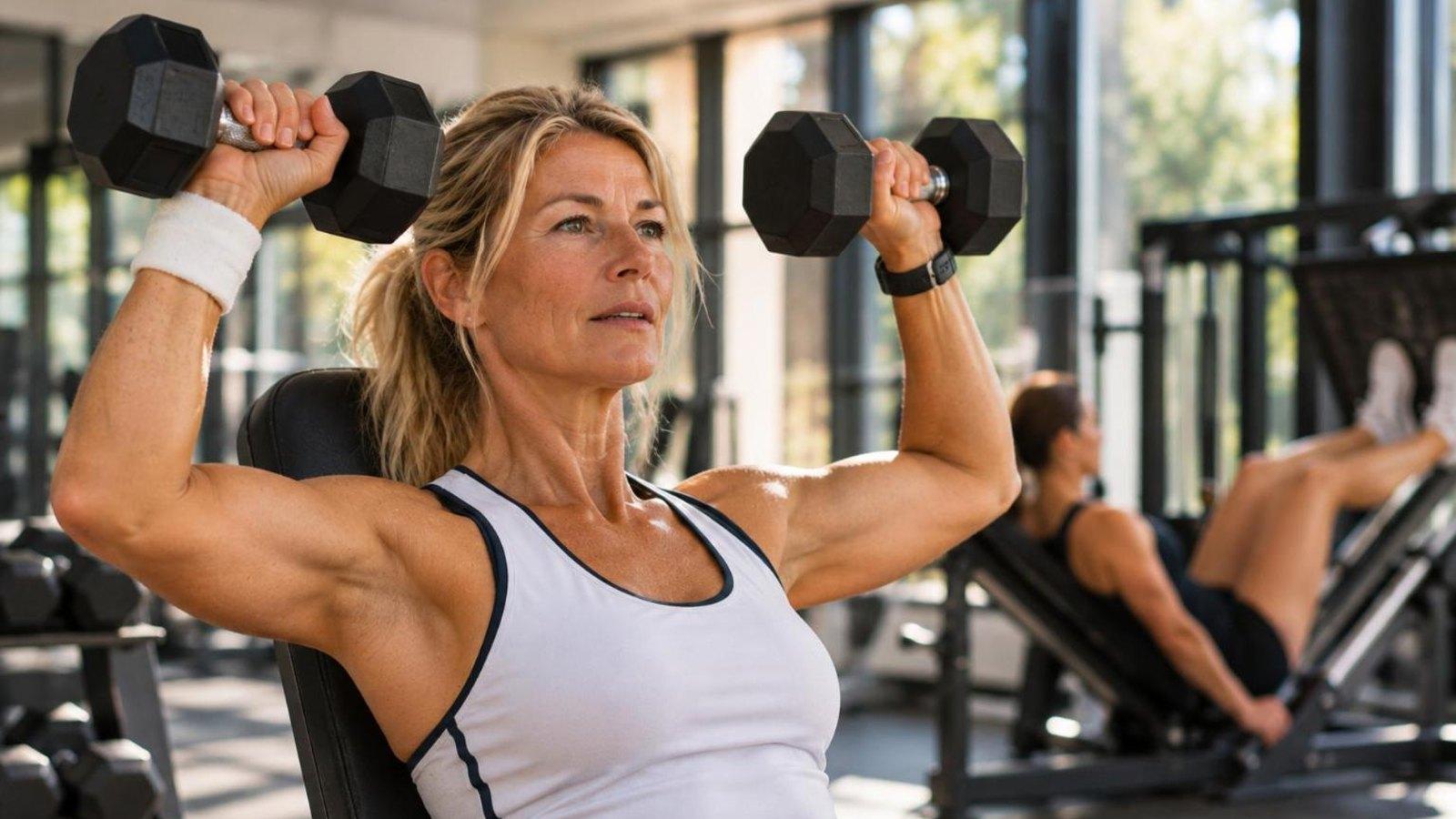
Dosage: 3 grams, every day
The dosage for women is the same as for men – and it is simple:
Whether you take creatine before or after training hardly matters. The most common reason creatine "doesn't work" isn't the wrong time but forgetting it. More in Creatine: when to take it?
Water, weight and the worry about looking "bloated"
This is the question that comes up most often. The honest answer:
- Creatine binds water in the muscle. That is part of how it works and not a problem – it isn't water under the skin.
- One to two kilos more are possible in the first weeks, especially with a loading phase. With 3 g daily the effect is usually smaller.
- No fat is built. Creatine provides no meaningful calories.
If, for example, you're competing in a weight class or simply dislike seeing fluctuations on the scales, it's best to start outside important dates and skip the loading phase.
Cycle, menopause, pregnancy
Menstrual cycle. Hormones influence creatine metabolism, and researchers consider it possible that creatine is especially useful in certain phases of the cycle. There are no robust recommendations for cycle-dependent dosing. The practical rule stays the same: 3 g every day. How training and the cycle relate is explained in Muscle building for women.
Menopause and beyond. This is where the research is most interesting, because muscle mass and bone density decline in this phase. For adults over 55 it is authorised that creatine can enhance the effect of resistance training on muscle strength. The key word is resistance training: the claim only applies with at least three sessions a week over several weeks. There is no authorised claim for hot flushes, sleep or mood during menopause.
Pregnancy and breastfeeding. There is early research on creatine in pregnancy, but no recommendation to take it on your own initiative. The German consumer advice centre advises pregnant and breastfeeding women to take creatine only on medical recommendation.
Which form of creatine fits everyday life?
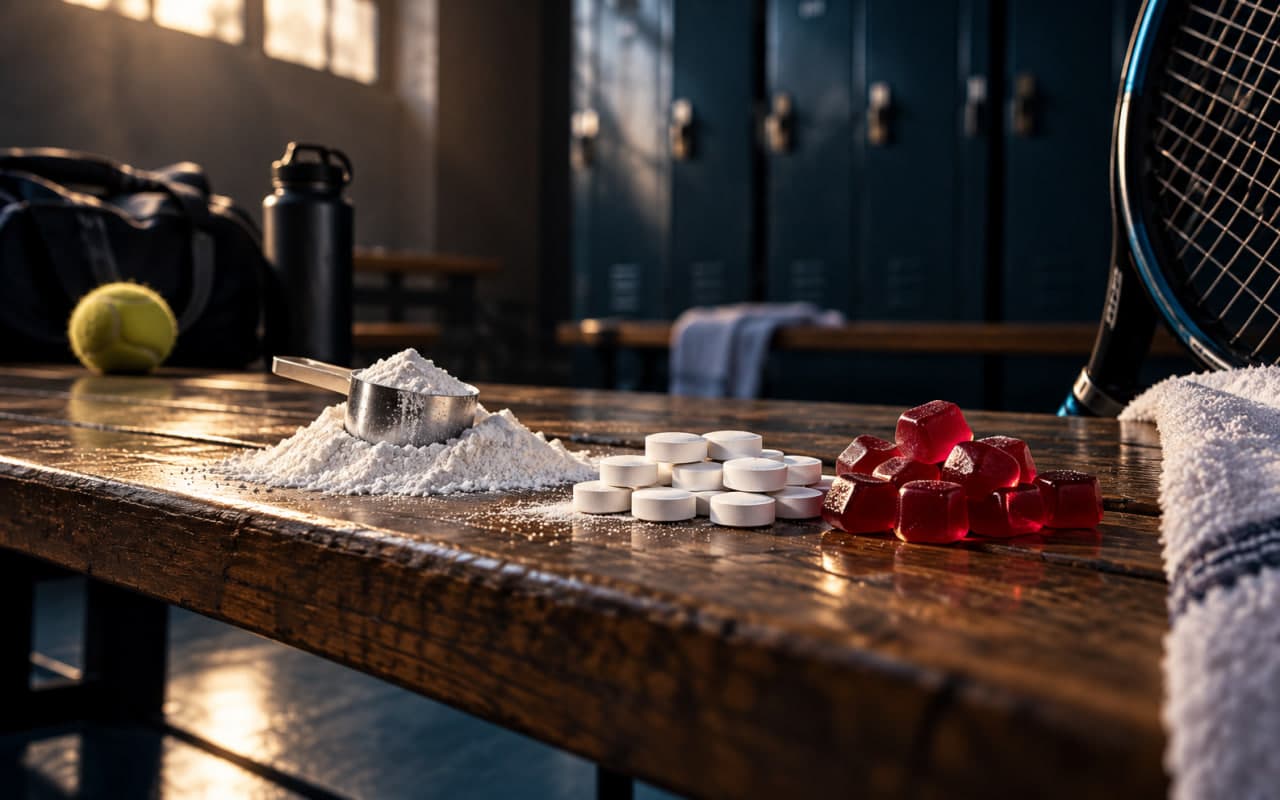
All forms provide the same active ingredient, creatine monohydrate. The choice is a question of price and habit:
| Form | Price per 3 g creatine (Syrax, October 2026) | Fits if … |
|---|---|---|
| Powder (1,000 g pouch) | approx. €0.17 | you like stirring it into yoghurt, muesli or a drink |
| Tablets | approx. €0.50 | you don't want to measure powder or are often on the go |
| Gummies | approx. €1.00 | you'd otherwise forget to take creatine and taste helps you |
Gummies are the most expensive form and contain sugar alcohols. Their advantage: they are rarely forgotten. What matters is that the manufacturer backs up the creatine content per serving with an analysis. The detailed comparison with lab values is in Creatine powder, tablets or gummies.

Common mistakes
Starting with a loading phase and then quitting. 20 g a day leads to water in the muscle faster and sometimes to digestive complaints. 3 g daily is the more relaxed option.
Taking it only on training days. The stores slowly empty again. Creatine works through daily intake.
Expecting miracles without resistance training. Creatine enhances the effect of training – it doesn't replace it.
Giving up after a week. With 3 g a day it takes three to four weeks for the stores to fill.
Conclusion
Creatine isn't a men's supplement. For women who regularly do strength or power training it is a well-researched, inexpensive and simple building block – especially from midlife, when muscle strength matters more than ever. The rule is the same for everyone: 3 g every day, patience for a few weeks, and don't forget the training.
Sources: Smith-Ryan et al.: Creatine Supplementation in Women's Health – A Lifespan Perspective, Nutrients (2021) · dos Santos et al.: Creatine plus resistance training in older females – systematic review and meta-analysis, Nutrients (2021) · Implementing Regulation (EU) 2017/672 on the creatine claim for adults over 55 · Verbraucherzentrale: Creatine – effects, risks and what to look for (German) · Labels and shop prices of the Syrax creatine products (as of October 2026)
常見問題
Does creatine make sense for women?
For women who do strength or power training, creatine can make sense: it supports short, intense efforts. For adults over 55 it is authorised that creatine can enhance the effect of resistance training on muscle strength. Without training, creatine does little for the muscles.
How much creatine should women take?
3 g of creatine a day, every day, including rest days. That is the amount for which the EU allows the performance claim. A loading phase with 20 g isn't necessary; with 3 g the stores are full after about three to four weeks.
Does creatine make women gain fat?
No. Creatine contains no meaningful calories and doesn't build fat. A weight gain of about one to two kilos in the first weeks is possible, mainly from water bound in the muscle – most noticeably with a loading phase.
Can I take creatine during my period?
Yes. There is no established reason to stop creatine during your period or to adjust the dose to your cycle. Research on creatine and the menstrual cycle is still small; the simple rule is: 3 g every day.
Can you take creatine during pregnancy?
Only after medical advice. Consumer advocates advise pregnant and breastfeeding women to take creatine only on medical recommendation. There is early research on creatine in pregnancy, but no recommendation for self-medication.
Does creatine help during menopause?
For adults over 55 it is authorised that creatine at 3 g a day can enhance the effect of resistance training on muscle strength – provided you train at least three times a week. Without resistance training this claim doesn't apply. There is no authorised claim for menopausal symptoms themselves.
標籤
- Creatine
- Women
- Strength training
- Supplements
- Menopause
- Dosage
Syrax 雜誌
延伸閱讀
 完整指南
補充品
Creatine: Effects, Dosage and Myths Fact-Checked
Creatine is the most thoroughly researched sports supplement in the world – and still surrounded by myths. What it really does, how to dose it correctly, whether you need a loading phase and what is true about hair loss, kidney damage and water retention.
閱讀時間 13 分鐘English
補充品
Creatine: Powder, Tablets or Gummies? An Honest Comparison with Lab Results
Creatine powder, creatine tablets or creatine gummies: Werner Ludmann compares the three forms by active ingredient per serving, cost per 3 g of creatine, additives, everyday practicality and lab results – with label evidence for every Syrax product.
閱讀時間 10 分鐘English
 完整指南
補充品
How to Assess Supplements: Reading the Label, Dose, Upper Limits and Lab Report
How good is a dietary supplement really? Eduard Boehm shows step by step how to read labels, check the dose against reference values and BfR maximum levels, understand lab reports, assess additives and calculate the price per effective serving – explained using real labels and analyses of Syrax products.
閱讀時間 14 分鐘English