
居家健身房與器材完整指南
Setting Up a Home Gym: The Guide for Every Budget
From resistance bands to a power rack: what equipment you really need for a home gym, how much space it takes, what matters for flooring, safety and noise – with three setup levels for 150, 800 and 2,500 euros.
 作者:Michael Lohrberg
閱讀時間 7 分鐘
本文尚未提供繁體中文版,目前以 English 顯示。
重點摘要
A working home gym starts with a few versatile pieces: adjustable dumbbells, a sturdy flat bench and a pull-up bar cover almost every movement pattern. For heavy training with squats and bench presses, add a power rack, barbell and plates, which need about 3 × 3 metres of space and a strong, protected floor. Buy by movement patterns rather than machines, invest in safety and flooring first and expand step by step.
目錄
No commute, no queue at the rack, no opening hours: a home gym removes most excuses for not training. At the same time, it's easy to spend money on equipment that ends up as a clothes rack after three months. The difference lies in planning.
This guide shows you how to build a home gym that suits your training, your room and your budget – with three setup levels that build on each other. It is the pillar article of our Home Gym & Equipment topic.
The principle: buy by movement patterns
Building muscle doesn't require 20 machines, but the ability to train six fundamental movements heavily enough:
| Movement pattern | Example exercise | What you need |
|---|---|---|
| Squatting | goblet squat, squat | dumbbell or rack + barbell |
| Hip hinging | Romanian deadlift, hip thrust | dumbbells or barbell, bench |
| Horizontal pushing | bench press, push-ups | bench + dumbbells or barbell |
| Vertical pushing | shoulder press | dumbbells or barbell |
| Horizontal pulling | rows | dumbbells, bench, rings |
| Vertical pulling | pull-ups | pull-up bar |
Every piece of equipment that covers at least one pattern is a good investment. Every piece that allows only a single exercise can wait.
Space and room
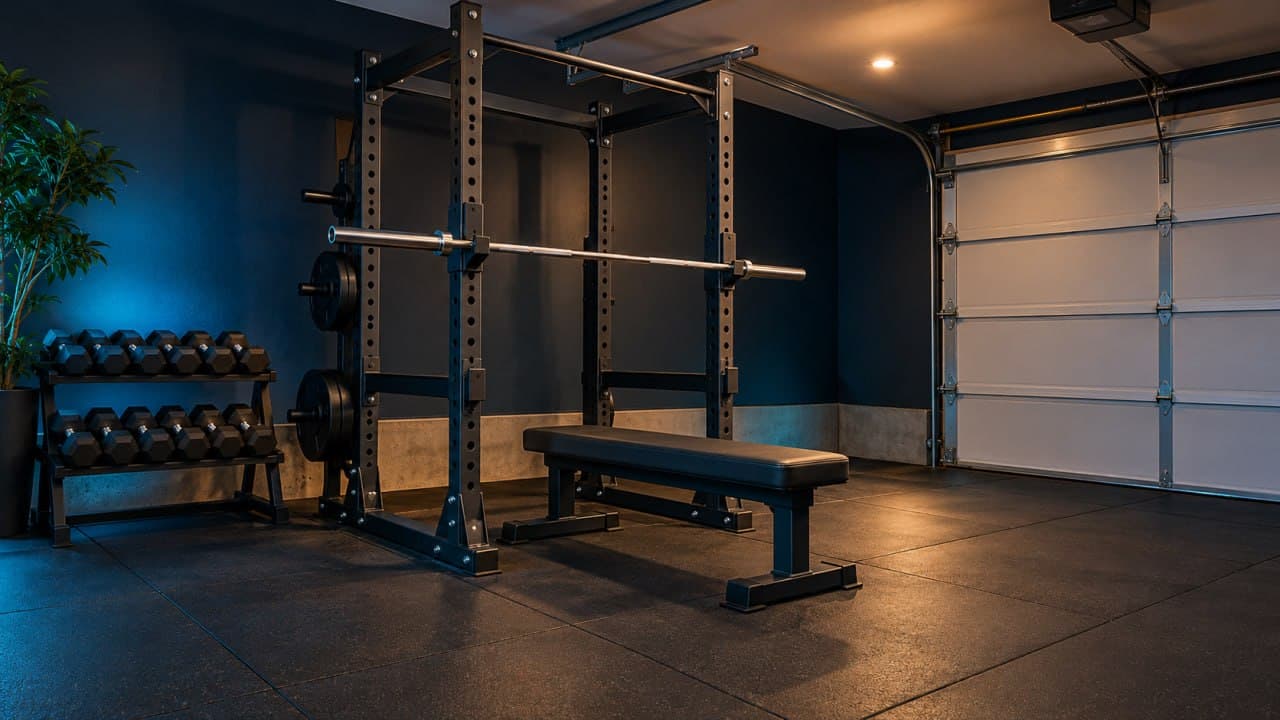
Floor area. A setup with dumbbells and a bench works in about 2 × 2 metres. A power rack with a barbell needs around 3 × 3 metres: the Olympic barbell is 2.2 metres long, and you need space on both sides to load it.
Ceiling height. For pull-ups and standing overhead presses, about 2.3 to 2.5 metres is comfortable. In low basements, press seated and use a pull-up bar on the rack with enough headroom.
Room climate. Basements are often cool and damp. A dehumidifier protects steel from rust, a fan makes training more pleasant. Garages get hot in summer and cold in winter – plan clothing and warm-up time accordingly.
Flooring: the underrated investment
The floor protects three things: the surface underneath, the equipment and your relationship with the neighbours.
- Rubber mats from agricultural suppliers or dedicated sports flooring 15–20 mm thick are enough for dumbbell training.
- Under the rack and deadlift area, 30–40 mm or a two-layer solution makes sense.
- A deadlift platform (wooden core with rubber sections) dampens noise and vibration best.
On parquet or laminate, a continuous mat protects against dents from the bench and rack.
Level 1: the start for around 150 euros
For beginners, small flats and anyone who first wants to test whether home training suits them.
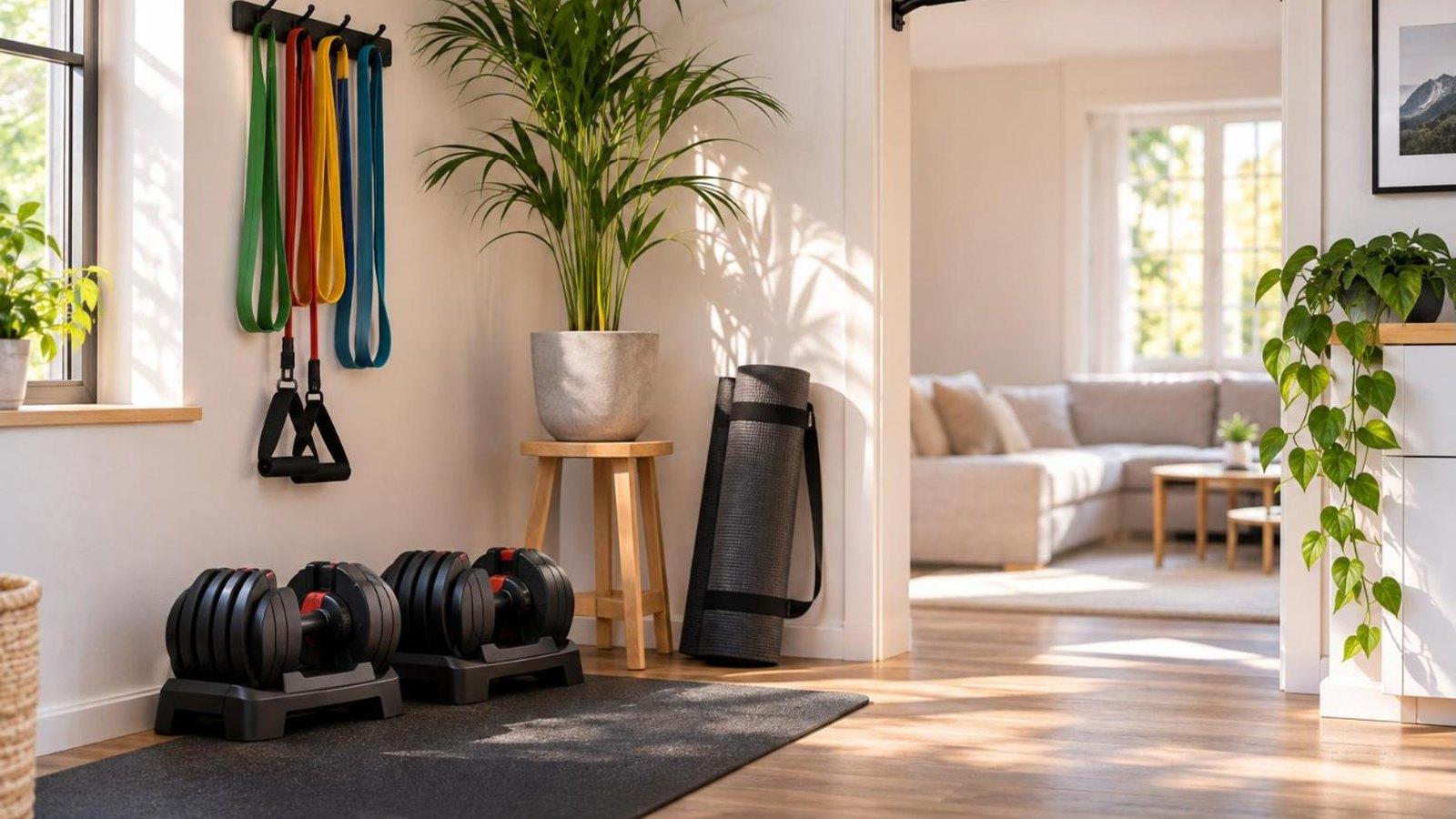
- Resistance bands in three to four strengths
- Doorway pull-up bar – check beforehand that the frame and wall are sturdy enough, more in Doorway pull-up bars: what to look for
- Exercise mat
- Optional: a pair of gymnastic rings
This allows a complete bodyweight programme and many pulling exercises. A suitable plan is the home workout without equipment. If you want to build muscle without weights in the long term, read Building muscle without equipment.
Level 2: the dumbbell setup for 600–1,000 euros
The best value for building muscle at home.
- Adjustable dumbbells up to 24–32 kg per hand. They replace a whole dumbbell rack in a fraction of the space. Systems and pitfalls are explained in Adjustable dumbbells: buying guide.
- A sturdy flat bench, ideally adjustable. What matters for stability and padding is covered in Buying a weight bench.
- Pull-up bar (doorway, wall or ceiling).
- Floor mats 15–20 mm.
- Optional: a kettlebell (12–20 kg) for swings and goblet squats.
With this setup you can train a complete upper/lower split. The limits are mainly heavy squats and deadlifts once the dumbbells become too light – then single-leg variations help, which create a big stimulus with less weight.
Level 3: the barbell gym for 2,000–3,000 euros
For anyone who trains heavy and plans long term.
- Power rack with safety arms or spotter bars – the most important safety element when you train alone. More in Buying a power rack.
- Olympic barbell (20 kg, 2.2 m, 50 mm sleeves).
- Weight plates – about 100–140 kg to start; bumper plates are quieter and protect the floor. More in Buying a barbell set.
- Adjustable bench that fits in the rack.
- Deadlift platform or 30–40 mm flooring.
- Optional: lat pulldown or cable attachment for the rack, dip handles.
Cardio at home: which machine suits you?
If you want to train endurance at home alongside strength, choose by space, noise and training goal:
| Machine | Space | Noise | Strengths |
|---|---|---|---|
| Rowing machine | long, often foldable | medium | full body, joint-friendly, ideal for zone 2 and intervals |
| Exercise bike / indoor bike | small | quiet | simple, joint-friendly, good for long easy sessions |
| Treadmill | large | loud, vibration | running-specific, incline walking possible |
| Skipping rope | minimal | loud when jumping on hard floors | cheap, short intense sessions |
| Air bike | medium | loud (fan) | very intense intervals |
For most home gyms, a rowing machine or exercise bike is the best choice: little space, little noise, versatile. How to train endurance sensibly is explained in Zone 2 training; short intense sessions are described in HIIT training.
Home gym vs. commercial gym: the honest calculation
| Commercial gym | Home gym (level 2) | Home gym (level 3) | |
|---|---|---|---|
| One-off costs | €0–100 | approx. €600–1,000 | approx. €2,000–3,000 |
| Running costs per year | approx. €300–700 | almost €0 | almost €0 |
| Commute and waiting per session | often 20–40 minutes | 0 minutes | 0 minutes |
| Variety of equipment | very high | medium | high |
| Training partners, classes | yes | no | no |
Cumulative costs over five years (worked example)
Midpoint of the ranges from the table: gym with €50 start-up costs and €500 per year, home gym level 2 at €800, level 3 at €2,500 one-off. Schematic, excluding the resale value of the equipment.
- Gym
- Home gym level 2
- Home gym level 3
以表格顯示資料
| Years | Gym | Home gym level 2 | Home gym level 3 |
|---|---|---|---|
| 0 | 50 € | 800 € | 2,500 € |
| 1 | 550 € | 800 € | 2,500 € |
| 2 | 1,050 € | 800 € | 2,500 € |
| 3 | 1,550 € | 800 € | 2,500 € |
| 4 | 2,050 € | 800 € | 2,500 € |
| 5 | 2,550 € | 800 € | 2,500 € |
With three sessions a week and 30 minutes of travel saved, that's around 75 hours a year. For many people, that is the real reason for a home gym – not the money saved. Conversely, a gym offers community, advice and equipment that hardly fits at home. Many combine both: core training at home, occasional visits to the gym.
Buying second-hand: where it pays off
Weight plates, dumbbells and barbells last forever and hardly lose function – buying them second-hand often saves a lot of money. Be careful with:
- Benches and racks: check welds, wobbling and rust.
- Adjustable dumbbells: the mechanism must lock cleanly.
- Cable machines: check the cables for wear.
Care and maintenance
A home gym lasts for decades if you look after it. Ten minutes once a month is enough:
- Barbell: brush chalk out of the knurling and oil the bar lightly so it doesn't rust.
- Rack and bench: tighten screws and bolts, check the padding for tears, check the safety arms for deformation.
- Dumbbells: clean the adjustment mechanism; with spin-lock dumbbells, check the collars.
- Bands: check for tears and brittle spots – a snapping band can whip into your face.
- Floor: lift the mats and let the floor underneath dry to prevent mould in damp basements.
Who a home gym isn't the best choice for
As practical as a home gym is, it doesn't suit everyone. If you need community, fixed classes and a change of scene for motivation, you often train more consistently in a gym. If you have very little space and value a wide variety of equipment, a gym is also the better place. And if you get distracted easily at home, plan for it honestly: a fixed training spot that isn't also a laundry rack or office makes the difference.
Noise and neighbours
- Set weights down instead of dropping them – especially dumbbells.
- Bumper plates and a platform for deadlifts.
- Rubber pads under the rack feet against structure-borne noise.
- Training times within the usual quiet hours.
The right training
A home gym only shows its effect with a plan. For beginners, the 3-day full-body plan works with all three setup levels. If you use dumbbells, replace barbell exercises with the dumbbell version.
Particularly practical at home: short, frequent sessions. Without a commute, you can even train for 30 minutes before work. How to make that a fixed habit is explained in Stick with it instead of starting over.
The most common home gym mistakes
Starting with specialist equipment. Ab trainers, vibration plates and teleshopping multi-gyms rarely cover more than one pattern.
Buying dumbbells that are too light. A set up to 10 kg is too light for legs and back after a few weeks. Plan for adjustable dumbbells up to at least 24 kg.
Forgetting the floor. Scratched parquet and trouble with neighbours cost more than rubber mats.
Saving on safety. A rack without safety arms is unsuitable for heavy sets without a training partner.
Buying everything at once. Only expand when a specific exercise is missing. That way you only buy what you really use.
Conclusion: start small, expand deliberately
The best home gym is not the biggest but the one you train in regularly. With a clear goal, a well-planned room and equipment that covers several movement patterns, you build a training space step by step that serves you for years – and replaces the trip to the gym. Which bench should be your first big piece of equipment is covered in Buying a weight bench: what to look for.
逐步說明
Set up a home gym in 5 steps
- 1
步驟 1
Define your goal and training
Clarify what you want to train: general fitness, muscle building with dumbbells or heavy barbell training. Space and equipment depend on it.
- 2
步驟 2
Measure the room
Measure floor area and ceiling height. For standing overhead presses and pull-ups you need about 2.3 to 2.5 metres of height; for a power rack with a barbell, around 3 × 3 metres of floor space.
- 3
步驟 3
Prepare the floor
Lay rubber or sports flooring mats at least 15–20 mm thick, more under heavy areas. They protect the floor and equipment and dampen noise.
- 4
步驟 4
Buy the core equipment
Start with the equipment for your level: bands and a pull-up bar, adjustable dumbbells and a bench, or a rack, barbell and plates.
- 5
步驟 5
Adapt your plan and expand
Choose a plan that fits your equipment and only add equipment when a specific exercise is missing.
常見問題
What is the minimum you need for a home gym?
For full muscle-building training, adjustable dumbbells, a sturdy flat bench and a pull-up bar are enough. They let you train all major movement patterns: squatting, hip hinging, pushing and pulling.
How much space does a home gym need?
A minimalist setup with dumbbells and a bench fits in about 2 × 2 metres. For a power rack with a barbell you should allow about 3 × 3 metres, as the barbell is around 2.2 metres long and you need space at the sides to load it.
How much does a home gym cost?
A start with resistance bands, a pull-up bar and a mat is possible from about 150 euros. A solid dumbbell setup with a bench costs around 600–1,000 euros, a complete barbell setup with rack, bench, bar, plates and flooring about 2,000–3,000 euros.
Is a home gym possible in a rented flat?
Yes, with consideration for noise and load. Thick rubber flooring, setting weights down instead of dropping them and training at normal times of day prevent trouble. With very heavy racks and weights on upper floors, it is worth checking the permitted floor load.
Is a home gym worth it compared to a gym membership?
Financially, a solid setup often pays for itself after two to four years of membership fees. The bigger advantage is usually the time saved: no commute and no waiting make it easier to train regularly.
標籤
- Home gym
- Home training
- Equipment
- Dumbbells
- Power rack
- Buying guide
Syrax 雜誌
延伸閱讀
 完整指南
居家訓練與徒手健身
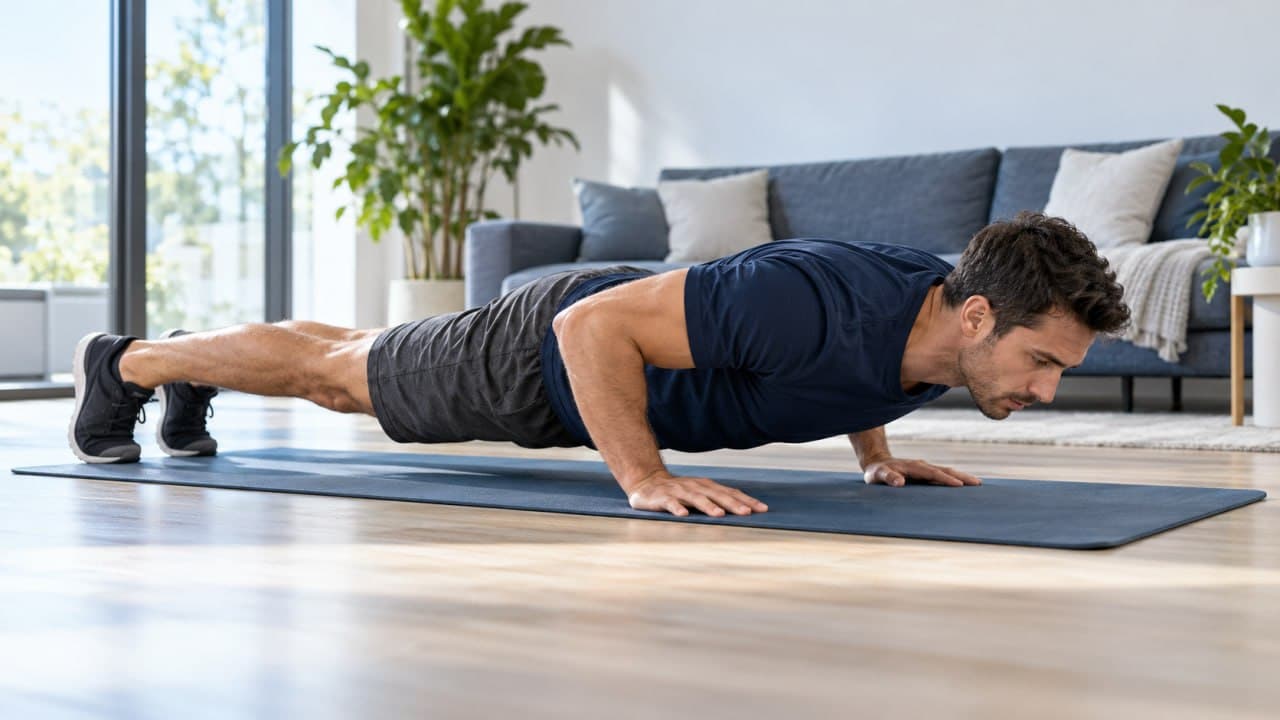
Home Workout Without Equipment: The Complete Full-Body Plan
Build muscle and get fit without a gym, without dumbbells, without excuses. The complete bodyweight plan for beginners and intermediates – with exercise progressions, a weekly schedule and the tricks that make even bodyweight really hard.
閱讀時間 13 分鐘English
居家健身房與器材
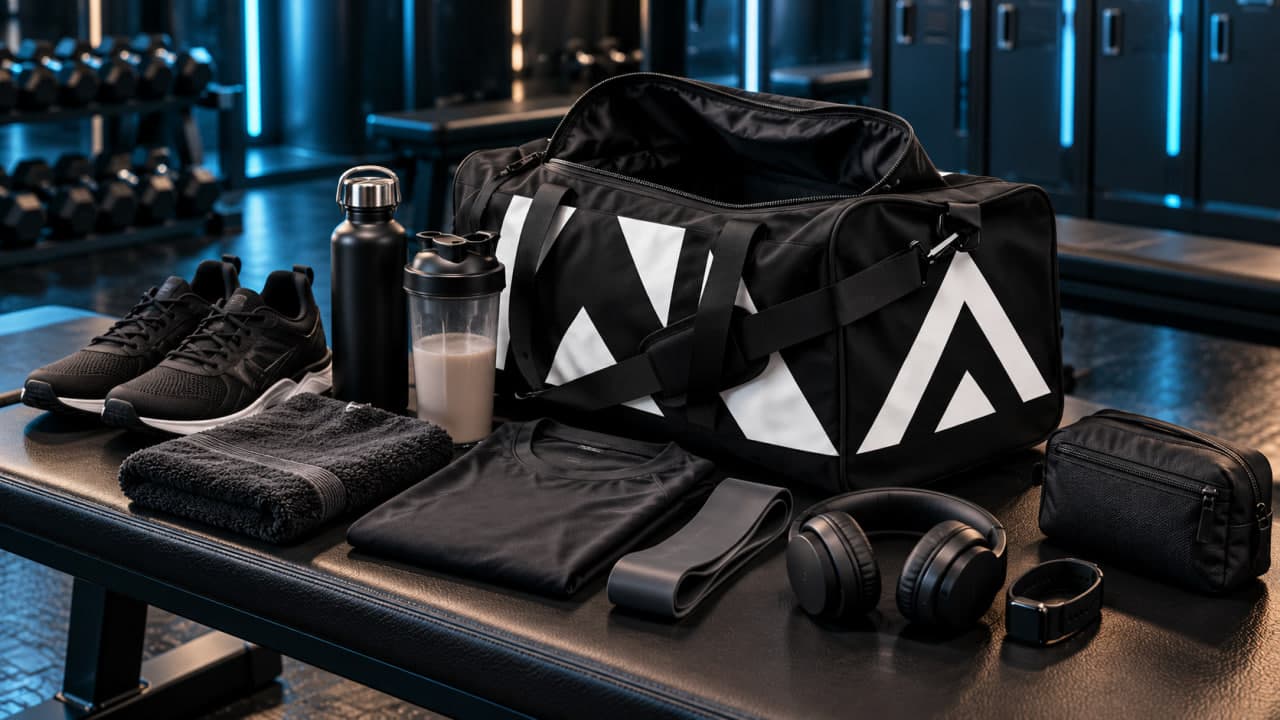
Packing Your Gym Bag: My Checklist for the Gym
What goes in the gym bag – and what gets kicked out? Selina Karl unpacks hers: clothes, shoes, towel, water bottle, hygiene and little lifesavers, plus tricks against odour, the right bag size and a checklist to tick off. Part 1 of Selina's Sport Edit.
閱讀時間 6 分鐘English
訓練課表
12-Week Workout Plan: How Your Plan Is Built – With Deloads, Volume Check and Log
How a good workout plan is built and how our free workout plan generator calculates: split by your days, exercises by equipment and aches, volume per muscle, time per session, 12 weeks with deloads, a log with progression tips and a link to your supplement stack.
閱讀時間 8 分鐘English