
Protein Intake Chart: Daily Protein by Body Weight and Goal – From 50 to 120 kg
How much protein do you need per day? Eduard Boehm's protein calculator uses the reference values of the German Nutrition Society and sports nutrition research – for health, endurance, muscle gain and fat loss, with the amount per meal and food examples. Plus a table for 50 to 120 kg and the method explained openly.
 作者:Eduard Boehm
閱讀時間 6 分鐘
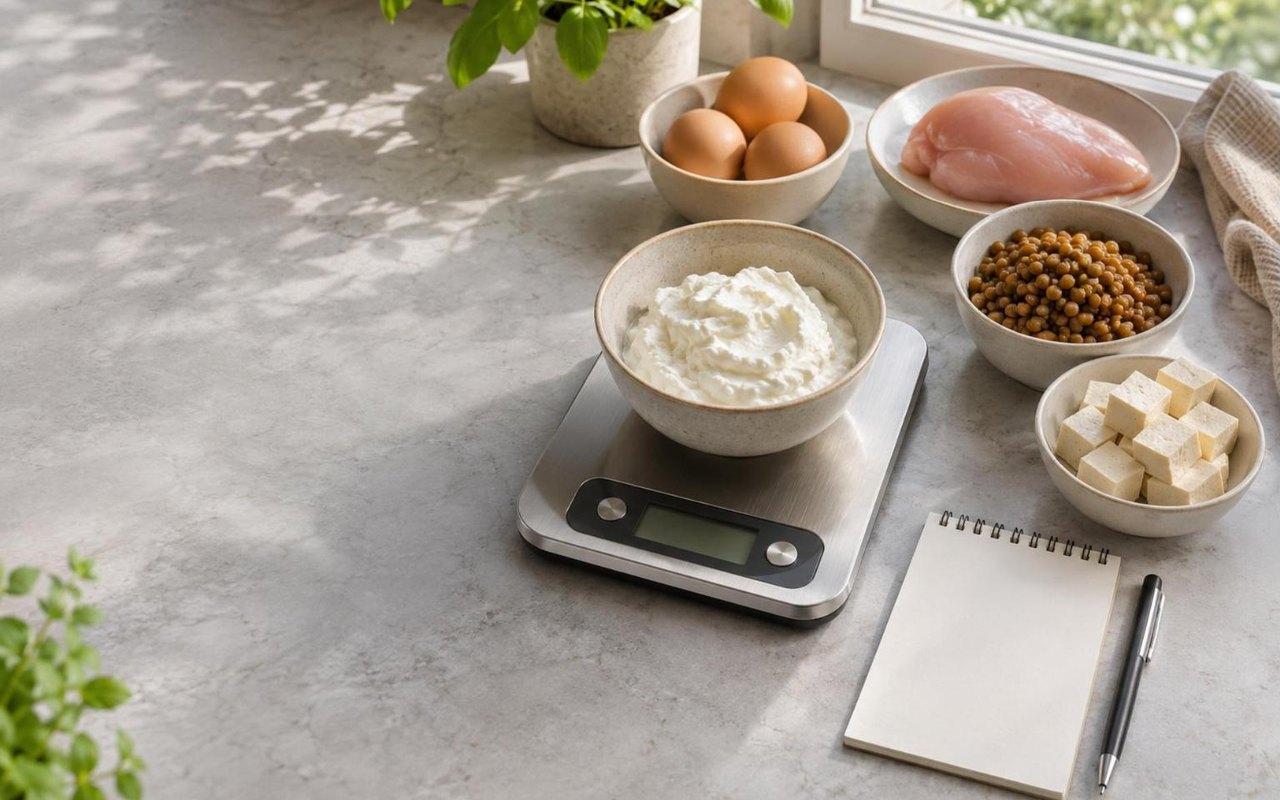
本文尚未提供繁體中文版,目前以 English 顯示。
重點摘要
You calculate your protein needs with one formula: body weight in kilograms times a guide value per kilogram. Adults who don't train need 0.8 g per kg according to the German Nutrition Society (DGE); from age 65 the DGE estimates 1.0 g per kg. For endurance sport about 1.2–1.6 g apply, for muscle gain with strength training 1.6–2.2 g and in a diet with strength training 1.8–2.4 g per kg. At 80 kg and muscle gain that is 128–176 g a day. Spread the amount over at least three to four meals of about 0.4 g per kg each. With significant excess weight, calculate with your goal weight; with kidney disease, your doctor's advice applies.
目錄
The question I hear most often in conversations about nutrition isn't "which powder?" but "how much, actually?". The answer is a simple multiplication – once you know which guide value to use. That is exactly what the calculator below does: it takes your body weight, your goal and the number of your meals and shows you the daily amount, the amount per meal and what that means on your plate.
Want to compare it with what you actually eat? The protein calculator also shows whether anything is missing from your diet at all.
Important up front: the calculator gives guide values for healthy adults, not a therapeutic recommendation. How the numbers come about is laid out further down – so you can check them instead of simply believing me. If you want the background in more depth, read How much protein do you really need?.
Calculator
Your daily protein requirement
Protein meals per day
Daily target
144g
1.8 g per kg body weight · Range 128–176 g
per meal
≈ 35 g
0,4 g/kg
≈ 30 g
With 4 meals that is about 35 g per meal. Muscle-building guide per meal: about 30 g (0.4 g per kg).
What that looks like in food
Examples with rounded average values – in practice you combine different sources.
With kidney disease, during pregnancy or on a medically prescribed diet, follow your doctor's advice. The calculation runs only in your browser; nothing is stored or sent.
How the calculator works
The formula is deliberately simple: body weight in kg × guide value in g per kg = protein per day. The guide value depends on your goal:
| Goal | Range per kg per day | Calculator target | Basis |
|---|---|---|---|
| Stay healthy, little training | 0.8 g | 0.8 g | DGE reference value for adults aged 19 to under 65 |
| From age 65 | from 1.0 g | 1.0 g | DGE estimate for older adults |
| Endurance sport | 1.2–1.6 g | 1.4 g | Joint position of the American and Canadian sports nutrition bodies (1.2–2.0 g for athletes) |
| Strength training, muscle gain | 1.6–2.2 g | 1.8 g | Meta-analysis by Morton et al. 2018, ISSN position stand 2017 |
| Fat loss with strength training | 1.8–2.4 g | 2.1 g | higher intake protects muscle mass in a calorie deficit |
Why does the calculator show 1.8 g for muscle gain rather than 1.6 g? Because 1.62 g is an average. Some people benefit from a little more; the researchers name 2.2 g as a sensible upper limit for anyone who wants to be on the safe side. A target slightly above the average leaves room for days when one meal turns out leaner.
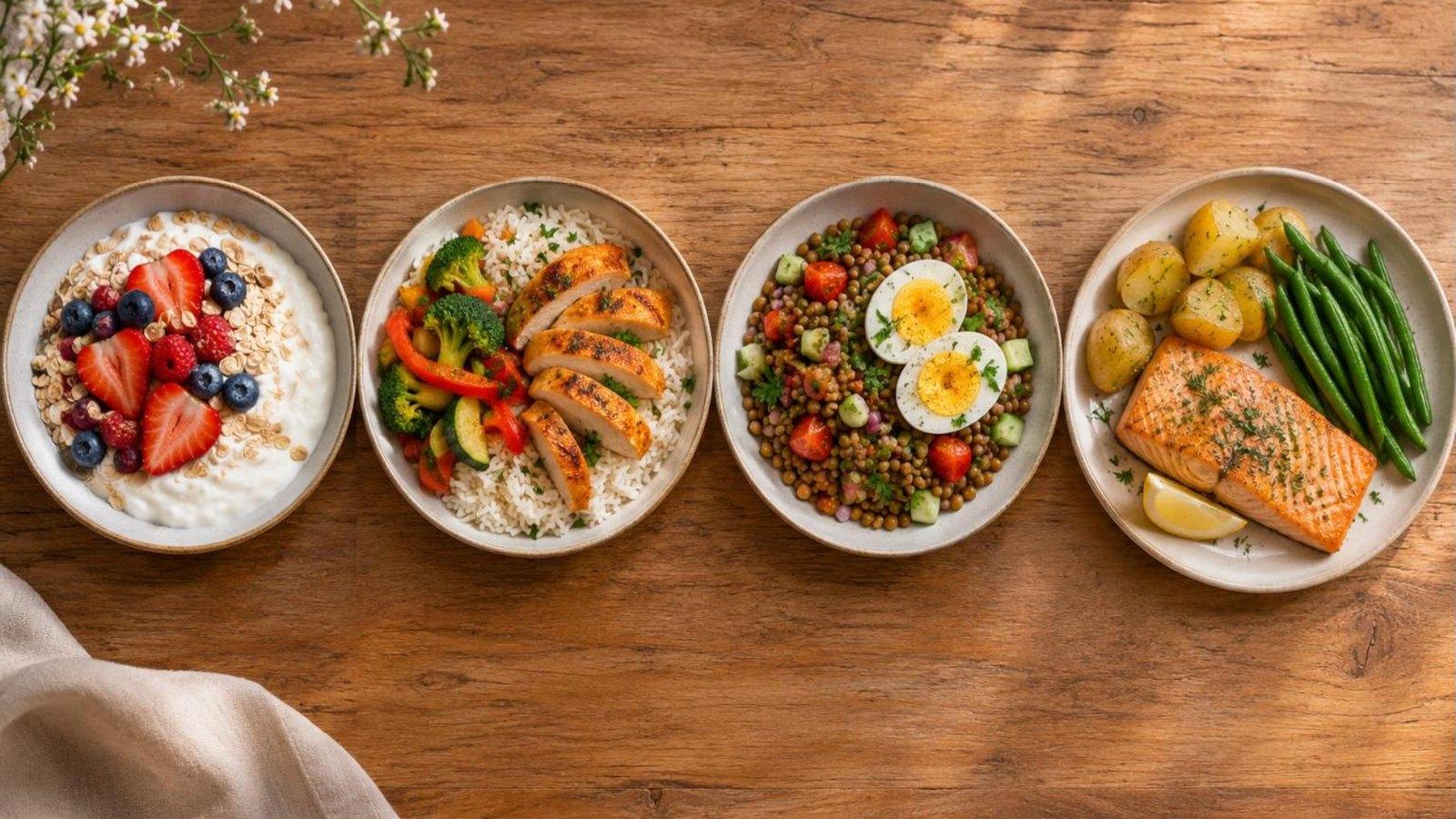
Protein requirement table by body weight
If you don't want to calculate, read your value straight off. The ranges correspond to the guide values in the table above; the amount per meal is rounded to 5 g.
| Body weight | no training (0.8 g/kg) | endurance (1.2–1.6 g/kg) | muscle gain (1.6–2.2 g/kg) | diet with strength training (1.8–2.4 g/kg) | per meal (0.4 g/kg) |
|---|---|---|---|---|---|
| 50 kg | 40 g | 60–80 g | 80–110 g | 90–120 g | ≈ 20 g |
| 60 kg | 48 g | 72–96 g | 96–132 g | 108–144 g | ≈ 25 g |
| 70 kg | 56 g | 84–112 g | 112–154 g | 126–168 g | ≈ 30 g |
| 80 kg | 64 g | 96–128 g | 128–176 g | 144–192 g | ≈ 30 g |
| 90 kg | 72 g | 108–144 g | 144–198 g | 162–216 g | ≈ 35 g |
| 100 kg | 80 g | 120–160 g | 160–220 g | 180–240 g | ≈ 40 g |
| 110 kg | 88 g | 132–176 g | 176–242 g | 198–264 g | ≈ 45 g |
| 120 kg | 96 g | 144–192 g | 192–264 g | 216–288 g | ≈ 50 g |
How much protein at 80 kg?
Daily amount at 80 kg body weight by goal. For ranges, the bar shows the calculator's target.
- No training (0.8 g/kg)64 g
- Endurance sport (1.2–1.6 g/kg)96–128 g
- Muscle gain (1.6–2.2 g/kg)128–176 g
- Diet with strength training (1.8–2.4 g/kg)144–192 g
以表格顯示資料
| 類別 | g protein per day |
|---|---|
| No training (0.8 g/kg) | 64 g |
| Endurance sport (1.2–1.6 g/kg) | 96–128 g |
| Muscle gain (1.6–2.2 g/kg) | 128–176 g |
| Diet with strength training (1.8–2.4 g/kg) | 144–192 g |
Protein per meal: why distribution matters
The daily amount matters most. Still, it is worth looking at individual meals. Schoenfeld and Aragon summarised the evidence in 2018 like this: if you want to build muscle, about 0.4 g of protein per kg of body weight per meal over at least four meals gets you to at least 1.6 g per day. If you want to go up to 2.2 g, you end up at about 0.55 g per kg per meal.
The calculator therefore shows two values side by side: what lands on each plate for your number of meals – and the guide value of 0.4 g per kg. If the first is clearly above the second, that is no problem: the body absorbs larger portions completely too, it just takes longer. It is, however, a hint that an extra protein meal can make things easier.
Special cases where you calculate differently
Significant excess weight. Fat tissue needs practically no protein. Someone who weighs 120 kg and is aiming for 85 kg calculates with 85 kg – otherwise the result is neither necessary nor practical.
From age 65. The DGE estimates the needs of older people at 1.0 g per kg. More makes sense for older people who train, because muscles respond more weakly to the protein stimulus with age. With the box ticked, the calculator therefore uses at least 1.0 g and shows a range up to at least 1.2 g.
Vegan diet. Plant protein is on average somewhat lower in leucine and less digestible. If you eat exclusively plant-based, plan about ten per cent more. Which sources complement each other is covered in Vegan protein powder.
Pregnancy, breastfeeding, illness. Separate reference values apply here. With kidney disease, your doctor determines the amount of protein – not an online calculator.
From the number to the plate
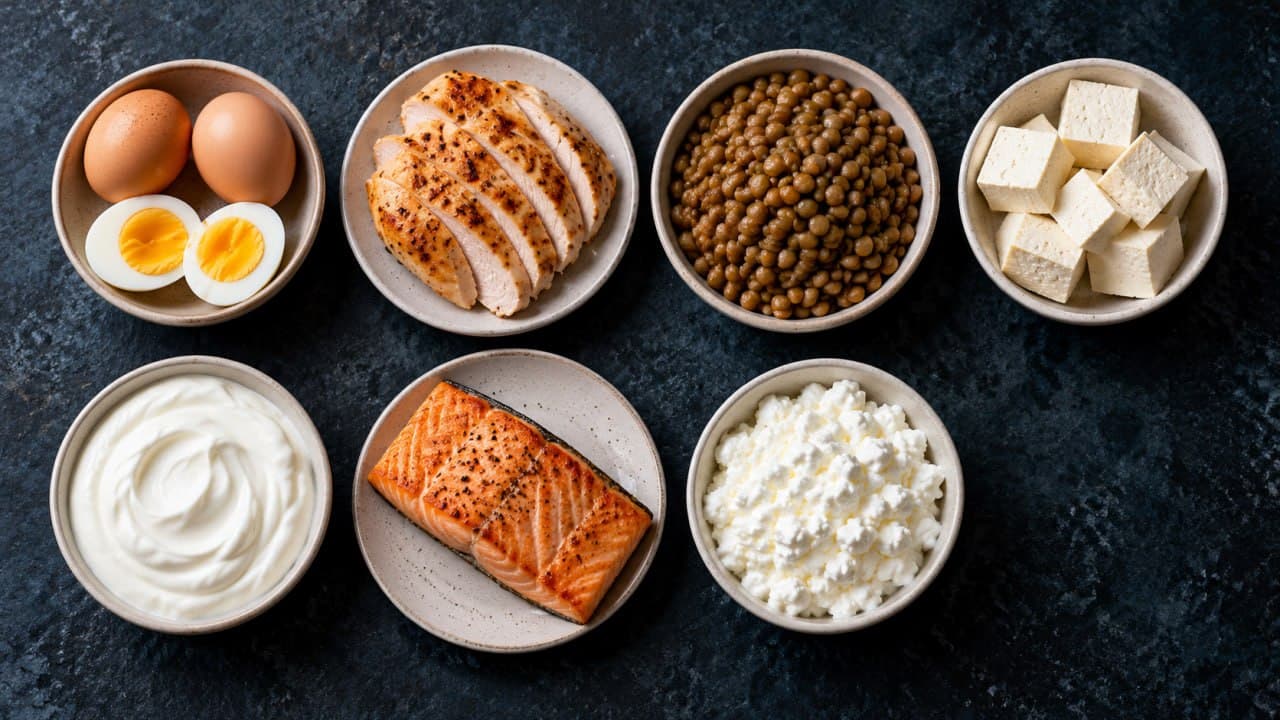
Numbers are one thing, the shopping is another. The food examples in the calculator show how much of one source you would need to cover the entire daily amount – that is deliberately exaggerated and is meant to give a feel for the scale. In everyday life you combine:
- Breakfast: 250 g low-fat quark with oats – about 35 g of protein.
- Lunch: 150 g chicken or tofu with rice and vegetables – 20–35 g.
- Snack: two eggs or a shake – 14–25 g.
- Dinner: a lentil bolognese or fish with potatoes – 25–35 g.
Protein powder isn't mandatory, but a tool for days when a meal falls through. Which powder suits whom is compared in Which protein powder is right for you?. If you also want to keep an eye on your calories, Calculate your calorie needs helps.
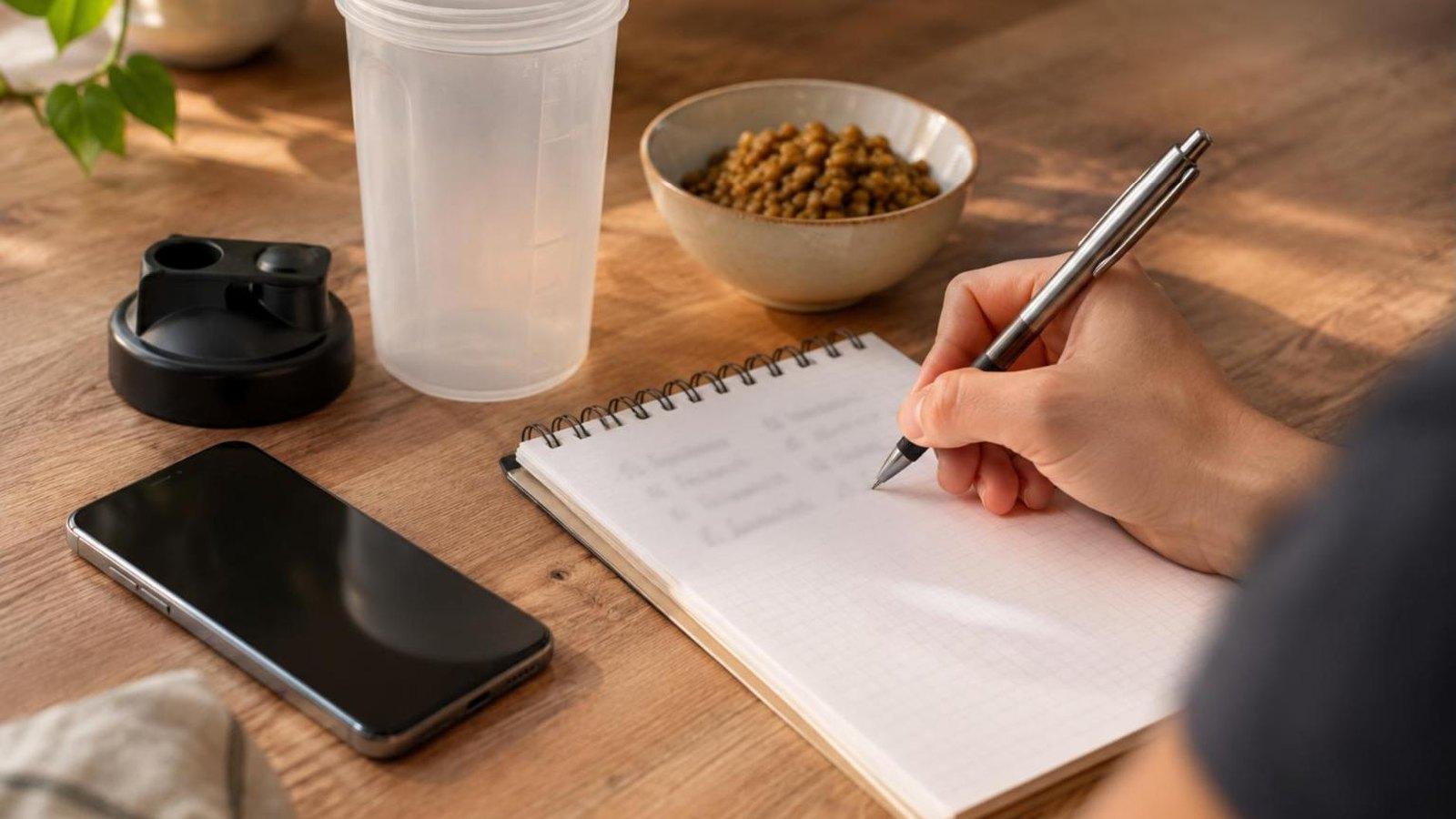
Common calculation mistakes
Counting the food weight instead of the protein. 100 g of chicken is not 100 g of protein but about 23 g. A serving of protein powder with 30 g of powder provides about 20–25 g of protein depending on the product.
Forgetting the milk. If you have quark in the morning and a shake made with milk in the evening, count the milk protein too – that quickly adds up to 8–10 g.
Eating a lot only on training days. Muscles also build on rest days. The daily amount applies every day.
Conclusion
Calculating your protein needs takes ten seconds – the real work is getting that amount onto your plate every day. Take the value from the calculator as a guide, spread it over several meals and check after two or three weeks whether you realistically reach it. If you consistently land at the lower limit and still train well, you're doing nothing wrong: 1.6 g per kg is enough for most people.
Sources: DGE: New reference values for protein (press release 2017, German) · DGE: FAQ on protein (2021, German) · Morton et al.: Protein supplementation and resistance training – meta-analysis, British Journal of Sports Medicine (2018) · Schoenfeld & Aragon: How much protein can the body use in a single meal?, JISSN (2018) · Jäger et al.: ISSN Position Stand – Protein and Exercise (2017) · Thomas, Erdman & Burke: Nutrition and Athletic Performance, Joint Position Statement (2016)
常見問題
How do I calculate my protein needs?
Multiply your body weight in kilograms by the guide value for your goal: 0.8 g without training, 1.2–1.6 g for endurance sport, 1.6–2.2 g for muscle gain and 1.8–2.4 g in a diet with strength training. At 70 kg and muscle gain that gives 112–154 g of protein a day.
How much protein at 80 kg?
Without training, about 64 g of protein a day is enough at 80 kg. If you do strength training and want to build muscle, plan 128–176 g, in a diet with strength training 144–192 g. Spread over four meals that is about 30–45 g each.
How much protein per meal?
For muscle gain, about 0.4 g of protein per kilogram of body weight per meal is a guide value, spread over at least four meals. At 70 kg that is about 28 g, at 90 kg about 36 g. Larger portions aren't wasted; the daily total matters more.
Do women need less protein?
Not per kilogram of body weight. The guide values apply equally to women and men. Because women weigh less on average, the absolute amount is usually somewhat smaller. During pregnancy and breastfeeding needs rise; separate reference values apply.
Which weight do I use if I'm overweight?
With significant excess weight, it is better to calculate with your goal weight or a realistic normal weight. Fat tissue needs hardly any protein; otherwise the result is unnecessarily high.
Is the calculator suitable for children and teenagers?
No. Children and teenagers have their own age-dependent reference values. The calculator is designed for healthy adults.
標籤
- Protein needs
- Protein
- Calculator
- Muscle building
- Nutrition
Syrax 雜誌
延伸閱讀
營養與身體組成
How Much Protein Do You Really Need?
Protein needs for muscle building, dieting, endurance and after 50: what research recommends, how to spread the amount across meals, which foods provide the most and whether too much protein is harmful.
閱讀時間 6 分鐘English
 完整指南
營養與身體組成
Lose Fat, Keep Muscle: The Guide to the Right Calorie Deficit
How big your deficit should be, how much protein you need, how to train while dieting – and why the scale lies. The complete guide to losing fat without losing muscle.
閱讀時間 13 分鐘English

補充品
Omega-3 for Athletes: Reading EPA and DHA per Capsule – 18/12 or High-Strength?
How much EPA and DHA do you need, when do omega-3 capsules make sense and how do you recognise good fish oil? Eduard Boehm explains requirements, approved health claims, triglyceride form, oxidation and lab values, and compares Syrax Omega 3 18/12 and Omega 3 Max 35/25 by content and price per gram of EPA + DHA.
閱讀時間 9 分鐘English