
睡眠與輪班工作完整指南
Shift Work and Sleep: The Guide for Rotating and Night Shifts
How to get enough restful sleep despite early, late and night shifts: understanding your body clock, using light deliberately, sleep times for every shift, naps, caffeine, eating at night and training on shifts.
 作者:Michael Lohrberg
閱讀時間 8 分鐘

本文尚未提供繁體中文版,目前以 English 顯示。
重點摘要
Shift work disrupts sleep because the body clock adapts to new times only slowly. The most effective measures are a dark, quiet bedroom, bright light during the shift and sunglasses on the way home after a night shift, a 20–90 minute nap before the first night shift, no caffeine in the last six hours before sleep and light meals in the second half of the night. A fixed "anchor sleep" of a few hours at the same time every day stabilises your rhythm. With persistent insomnia or severe sleepiness, see a doctor.
目錄
Millions of employees work rotating shifts or nights on a regular basis – in care, industry, logistics, the police, hospitality and many other fields. Almost all of them know the feeling: the body is tired, but sleep won't come. Or it comes, but it is shallow and short.
To turn your own roster into a concrete sleep plan, use the free shift work sleep optimizer.
That is not a lack of discipline but biology. If you work against your body clock, you have to plan your sleep more deliberately than others. This guide shows how – with concrete plans for early, late and night shifts. It is the pillar article of our Sleep & Shift Work topic. Our founder Michael knows the subject from his own experience: years of shift work were one of the reasons Syrax came into being at all.
The body clock: why shift work is so hard
Every cell in the body follows a roughly 24-hour rhythm, the circadian rhythm. The pacemaker sits in the brain and is set mainly by light. Morning light signals the start of the day; darkness in the evening triggers the release of the sleep hormone melatonin.
Two processes determine when you can sleep:
- Sleep pressure – the longer you are awake, the sleepier you get.
- Circadian wake signal – the body clock keeps you awake during the day, especially in the late morning and early evening.
After a night shift, sleep pressure is high, but the body clock is signalling "day". That is why you often wake up after three or four hours of daytime sleep, even though you are tired. The body clock does shift, but only slowly – roughly one hour per day, and only under favourable light conditions. With rotating shifts, it almost always lags behind.
The basics for every shift
Turn your bedroom into a cave
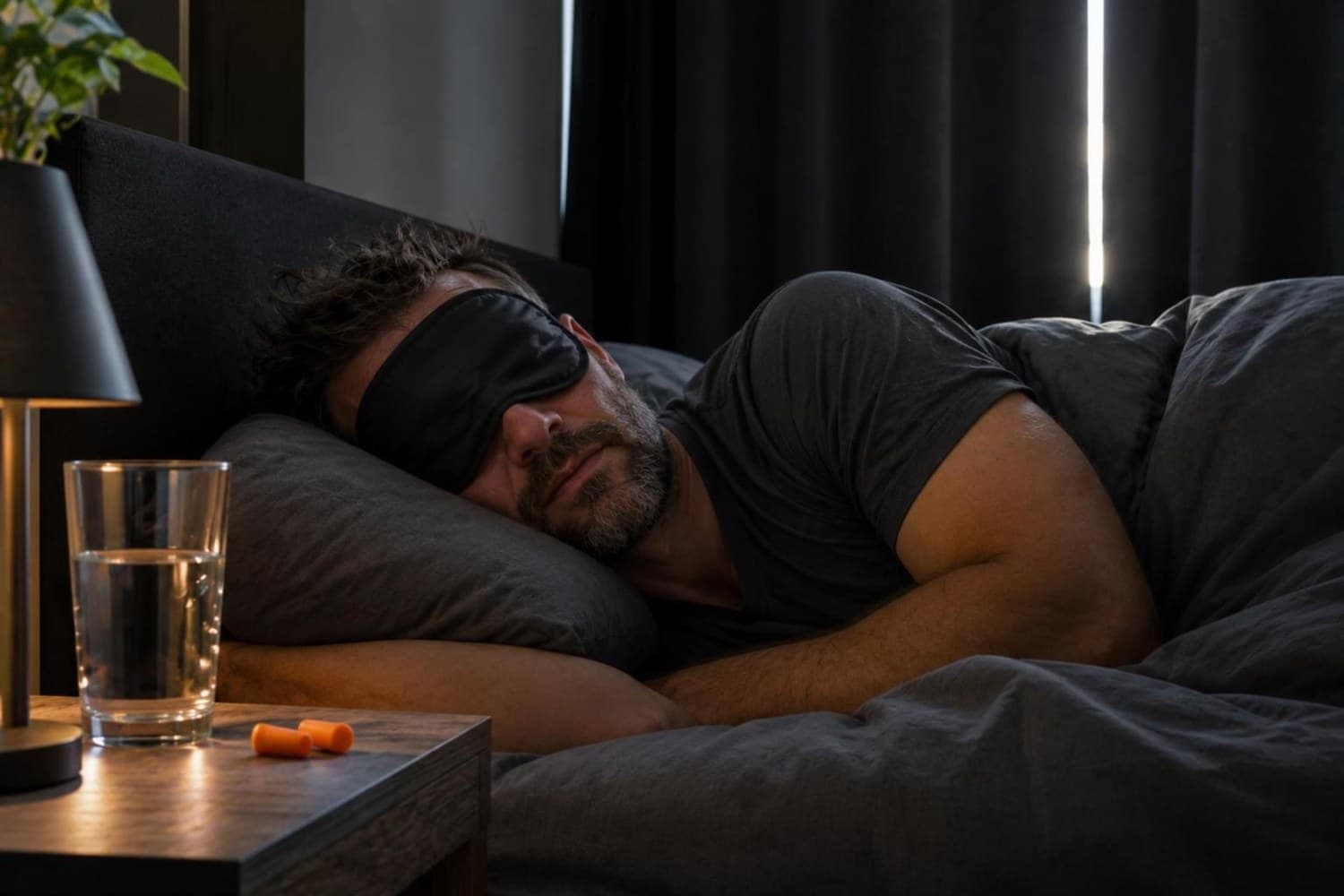
Daytime sleep often fails because of the environment. The measures are simple but very effective:
- Darken: shutters, blackout curtains or film; a sleep mask as well.
- Quiet: earplugs or ear defenders, doorbell and phone off, family and housemates informed.
- Cool: about 16–19 °C. Airing the room during the day is difficult in summer – a fan helps.
- Fixed rituals: shower, small snack, dimmed lights – the same ritual before every main sleep, whatever the time.
More basic rules for restful sleep are collected in Sleep hygiene: the 12 rules that really count.
Light as a tool
Light is the strongest lever for shifting the body clock – and the one most often used wrongly:
| Situation | Light | Why |
|---|---|---|
| First half of the night shift | bright, lots of light at work | keeps you awake, shifts the clock towards night |
| Second half of the night shift | less glaring light if possible | makes sleeping afterwards easier |
| Way home after the night shift | sunglasses, as little light as possible | morning light would signal "day" |
| Before the early shift | bright immediately after getting up | wakes you up, helps you fall asleep earlier |
| Evening before the early shift | dimmed, fewer screens | makes falling asleep early easier |
Anchor sleep
If your shift schedule changes a lot, an anchor sleep helps: a block of about four hours that you sleep at the same time on as many days as possible – for example between 9 am and 1 pm on night shifts and overlapping on days off. It gives the body clock a stable reference point, even if the rest of your sleep moves around.
Sleep plans for each shift
Early shift
The problem is the early alarm, not the shift itself. If you get up at 4:30 am, you would need to sleep at around 9 pm – hardly possible against the body clock.
- Dim the lights in the evening, no bright screens after 7 pm.
- Go to bed as soon as you are tired – don't force yourself to go earlier.
- After the shift, a 20–30 minute nap in the early afternoon, no longer and not after 3 pm.
- Caffeine only until midday.
Late shift
The late shift is the easiest for most people, but it tempts you into very late sleep.
- After the shift, wind down for 60–90 minutes instead of going straight to bed with your head full of work.
- Keep your bedtime as fixed as possible, for example 12:30 am to 8:30 am.
- Still get daylight in the morning so you don't keep drifting later.
Night shift
The most demanding shift. The plan in the steps above shows the sequence for a block. The key points:
- Sleep in advance: a 60–90 minute nap in the afternoon before the first night.
- A short nap during your break, if your employer allows it: 15–20 minutes improve alertness and safety.
- Go straight home and sleep while sleep pressure is high.
- Before the next shift, a short 20–30 minute nap if your main sleep was short.
How to plan daytime sleep after a night shift in detail is described in Sleeping after a night shift.
Sleep plan for a block of night shifts
- 1
步驟 1
Before the first night: sleep in advance
Sleep normally in the morning and take a 60–90 minute nap in the afternoon that ends at least two hours before your shift starts.
- 2
步驟 2
During the shift: manage light and caffeine
Make sure there is bright light in the first half of the shift. Drink caffeine only in the first half and no later than six hours before your planned sleep.
- 3
步驟 3
Way home: avoid light
Wear sunglasses on the way home, avoid detours and bright screens. Every bright light stimulus in the morning tells your body the day has begun.
- 4
步驟 4
Protect your daytime sleep
Sleep as soon as possible after the shift in a darkened, cool, quiet room. Phone off, family informed, earplugs ready.
- 5
步驟 5
After the block: back to a daytime rhythm
After the last night, sleep only four to five hours, then get up, go out into daylight and go to bed at your normal time in the evening.
Shift systems compared
Not everyone can design their own shift schedule. If you have a say – in your team, works council or when submitting preferences – these findings from occupational medicine are worth knowing:
| Feature | Better for sleep | Worse |
|---|---|---|
| Rotation direction | forward (early → late → night) | backward (night → late → early) |
| Consecutive night shifts | few (2–3) | long blocks (5–7) |
| Rest after a night block | at least 48 hours | one day off |
| Start of early shift | rather 6:00–7:00 am | very early (4:30–5:00 am) |
| Predictability | schedule known weeks in advance | short-notice changes |
Forward-rotating systems follow the body clock's natural tendency to drift later. Backward-rotating changes – such as going straight from a late shift to an early shift – shorten rest time and are particularly stressful.
Family, relationships and social life
Shift work affects not only sleep but also living together. A few agreements make things much easier:
- Make the shift schedule visible – a shared calendar stops appointments landing in your daytime sleep.
- Treat sleep times as fixed appointments that are only disturbed in an emergency.
- Plan shared meals – for example a late breakfast after daytime sleep or an early dinner before the night shift.
- Use days off deliberately without completely resetting your body clock: sleeping in yes, but not until the afternoon.
Caffeine, alcohol and sleeping pills
Caffeine is a valuable tool on shifts if dosed correctly. Its half-life is about five hours. The rule: in the first half of the shift, no later than six hours before your planned sleep. More on dosage and timing in Caffeine as a performance booster.
Alcohol helps you fall asleep faster but significantly worsens the second half of your sleep – more waking phases, less restful sleep. The "after-work beer" after a night shift is therefore a poor sleep aid. Background in Alcohol and sleep.
Sleeping pills and melatonin should only be taken after consulting a doctor or pharmacist. Melatonin can make it easier for some people to fall asleep during the day, but it doesn't replace planning your light and sleep.
Eating at night
The digestive system follows the body clock too. At night, the body processes food less well; heavy meals sit in the stomach for a long time and disturb your sleep afterwards.
- Main meal before the shift, for example around 7 pm.
- In the first half of the night, a light, protein-rich meal.
- In the second half of the night, only small snacks: yoghurt, fruit, nuts.
- Before daytime sleep, a small breakfast instead of a big one.
- Drink enough – water or unsweetened tea instead of energy drinks.
Prepared meals stop the night from ending with vending-machine food. How to do it in two hours is shown in Meal prep: the system for a whole week.
Training on shifts
Exercise improves sleep quality and protects against the health effects of shift work. The challenge is planning:
- Train by sequence rather than clock time: "after the first sleep following the early shift", "before the late shift", "on the second day off after the night block".
- Intense sessions not right before your main sleep; leave two to three hours in between.
- During night blocks, keep it easy: walks, mobility, light strength training.
- Watch your recovery: resting heart rate and heart rate variability show when your body can handle a hard session. How to use these values is explained in Understanding HRV.
A flexible plan based on how you feel on the day makes more sense on shifts than a rigid weekly plan. More in Training plan with recovery-based adjustments.
Take the health risks seriously
Long-term night work is associated with a higher risk of sleep disorders, excess weight, type 2 diabetes and cardiovascular disease. The International Agency for Research on Cancer (IARC) classifies night shift work as "probably carcinogenic". That sounds worrying – but what matters is what you can influence: enough sleep, exercise, good nutrition, not smoking and regular check-ups.
Warning signs that should be checked by a doctor:
- persistent insomnia over several weeks despite good conditions
- severe sleepiness or microsleeps, especially while driving
- loud snoring or pauses in breathing
- significant low moods
If you struggle with sleepiness while driving after a night shift, take a short nap before the drive or use public transport.
Measuring sleep on shifts
A wearable can help you understand your own patterns: how long do you actually sleep after a night shift? What effect does the after-work beer have? Do you recover during the night block or does a deficit build up? What matters is a device you wear even with changing sleep times – long battery life is worth more here than a big display. Which device class suits you is covered in Smartwatch or fitness tracker?.
Conclusion: against the clock, but not against yourself
Shift work will never be as restful as a regular daytime rhythm. But with a dark bedroom, deliberate light, smart caffeine timing and a plan for every shift, the difference can be reduced considerably. Start with what brings the most: blackout, sunglasses on the way home and no caffeine in the last six hours before sleep. How to get more out of your sleep in general is covered in Sleep as a performance booster.
常見問題
How much sleep do you need with shift work?
Your sleep need doesn't change with shift work: most adults need seven to nine hours in 24 hours. With shift work, this sleep can be split, for example into a main sleep and a nap.
When should you sleep after a night shift?
Ideally as soon as possible after getting home, while sleep pressure is high. If you only sleep in the afternoon, you fight the body clock's natural wake signal. Many people combine a main sleep in the morning with a short nap before the next shift.
Does melatonin make sense for shift work?
Melatonin can help some people fall asleep faster during the day, but the effect is limited and individual. Dose and timing should be discussed with a doctor or pharmacist, especially if you take other medication.
Which shift system is healthiest?
Forward-rotating systems (early, late, night) and short blocks of night shifts with few consecutive nights are considered better for sleep and recovery than backward-rotating systems or long night blocks.
Can you exercise with shift work?
Yes, and regular exercise even helps you sleep. Don't place intense sessions right before your main sleep, and plan training around fixed sequences rather than clock times, for example always after the first sleep following an early shift.
標籤
- Shift work
- Night shift
- Sleep
- Body clock
- Recovery
- Health
Syrax 雜誌
延伸閱讀
恢復與 HRV
Sleep as a Performance Booster: 7 Strategies for Better Recovery
Sleep is the most effective and cheapest recovery tool there is. Why it matters so much for strength, endurance and muscle growth – and seven strategies to fall asleep faster, sleep deeper and train better recovered.
閱讀時間 5 分鐘English
 完整指南
恢復與 HRV
Understanding HRV: What Heart Rate Variability Reveals About Your Recovery
HRV is probably the most valuable metric a wearable can provide – and the most often misunderstood. What it measures, which values are normal, how to measure it properly and how to guide your training with it.
閱讀時間 13 分鐘English