
Fitness Tracker Buying Guide: The 9 Most Important Criteria
Buying a fitness tracker: the 9 most important criteria, from metrics and accuracy to battery life, display, GPS and app, through to data privacy, subscription costs, comfort and compatibility – with guidance on which device type suits whom.
 ByMichael Lohrberg
8 min read
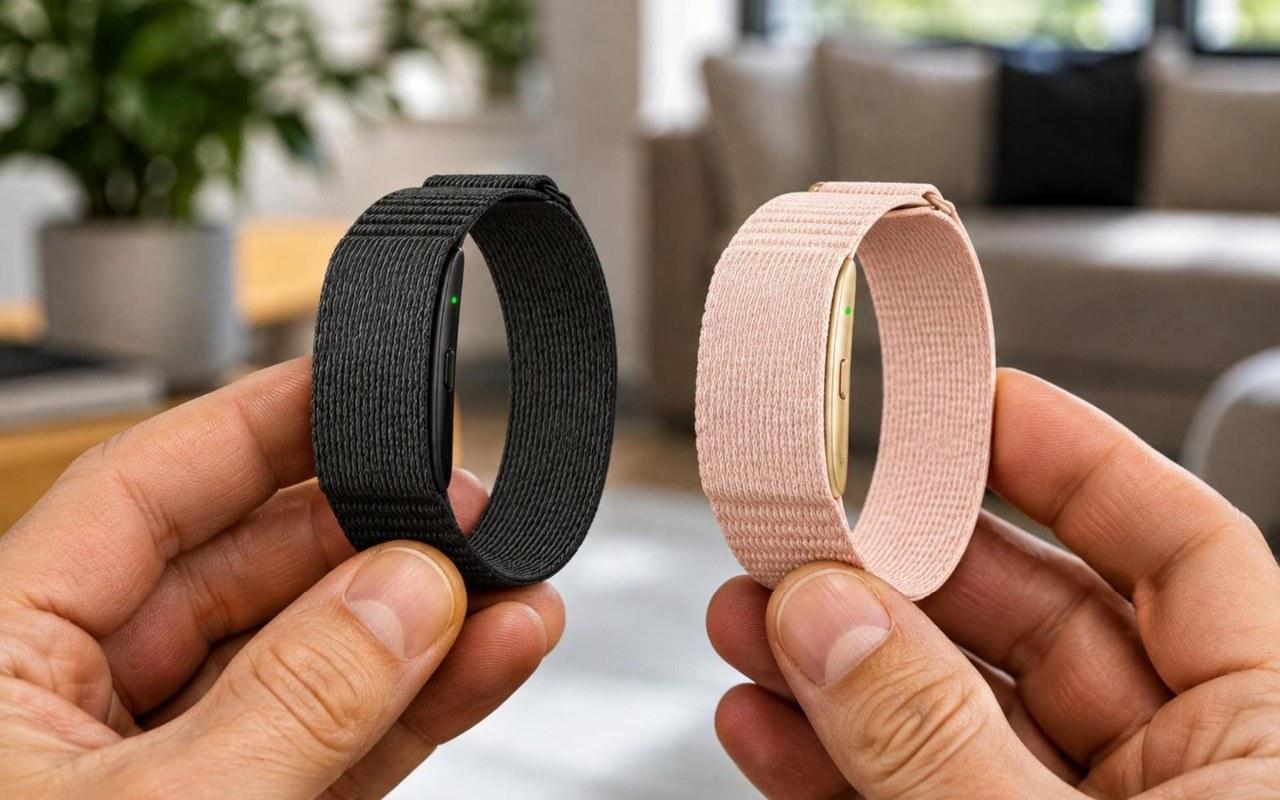
Full disclosure: this article covers the LEEK Pulse Pro – a product made by Syrax, the publisher of this magazine.
In short
There's no best fitness tracker – only the right one. Nine criteria are decisive: which metrics you really need, how accurately the sensor measures, how long the battery lasts, whether you need a display and GPS, how well the app analyses your data, where your data is stored, whether a subscription is required, how comfortable the device is around the clock and whether it works with your smartphone. If you mainly want to understand sleep, recovery and strain, you'll benefit more from long battery life and good overnight measurement than from smartwatch features.
Contents
Hundreds of models, similar promises, prices between 30 and 1,000 euros: anyone wanting to buy a fitness tracker faces a confusing choice. Yet the most important question isn't which device is best but which one suits you. This fitness tracker buying guide takes you through the nine criteria that really count – and shows what to watch out for before you spend money.
The article belongs to the Wearables & Tracking topic. A note up front: with the LEEK Pulse Pro, Syrax makes a fitness tracker itself. We therefore describe the criteria as neutrally as possible and also show when another device is the better choice.
First: what do you want to know?
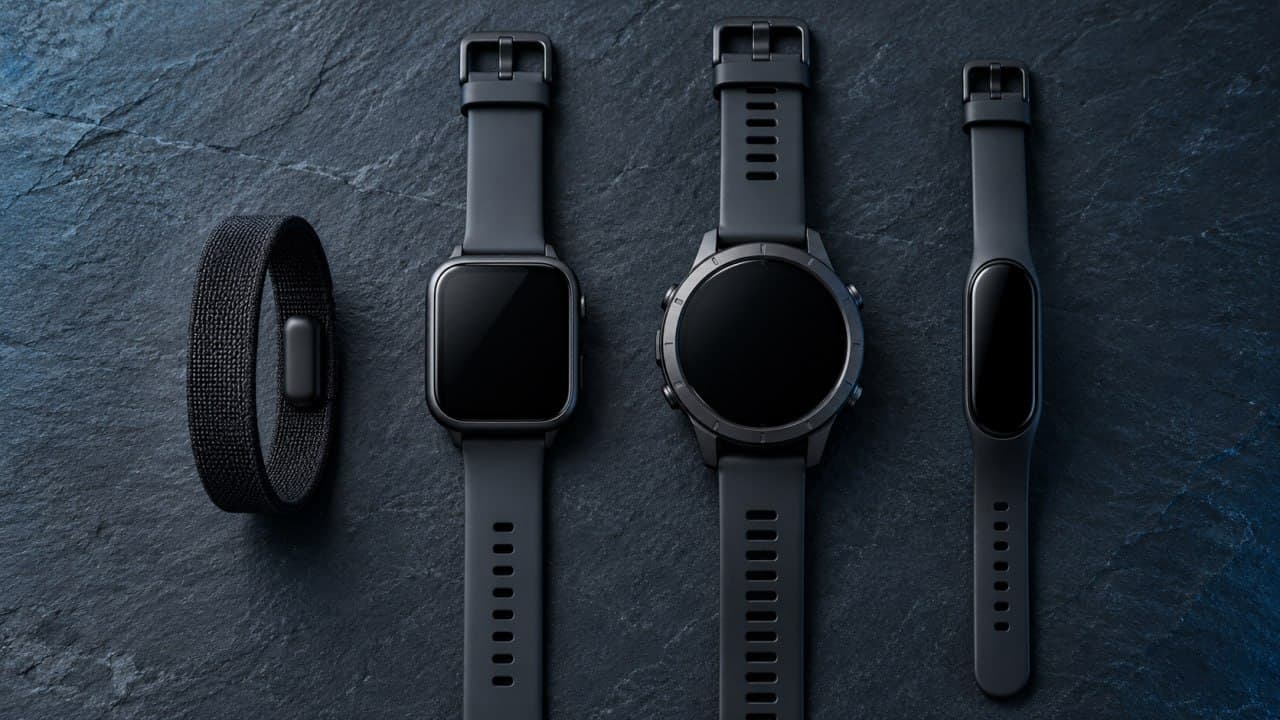
Before comparing spec sheets, answer one question: Which decision should the tracker make easier for you? Do you want to control your running pace, improve your sleep, keep an eye on recovery or simply take more steps? The answer determines which criteria have priority for you. An overview of device classes can be found in Smartwatch or fitness tracker.
Which criterion matters for whom
Simplified weighting of criteria by usage profile. The higher the value, the more important the criterion.
- Runners focused on pace
- Recovery and sleep
- Daily life and steps
- GPSRunners focused on pace: very highRecovery and sleep: lowDaily life and steps: low
- Battery lifeRunners focused on pace: moderateRecovery and sleep: very highDaily life and steps: high
- DisplayRunners focused on pace: very highRecovery and sleep: lowDaily life and steps: moderate
- Overnight measurement (HRV, sleep)Runners focused on pace: moderateRecovery and sleep: very highDaily life and steps: moderate
Show data as table
| Category | Runners focused on pace | Recovery and sleep | Daily life and steps |
|---|---|---|---|
| GPS | very high | low | low |
| Battery life | moderate | very high | high |
| Display | very high | low | moderate |
| Overnight measurement (HRV, sleep) | moderate | very high | moderate |
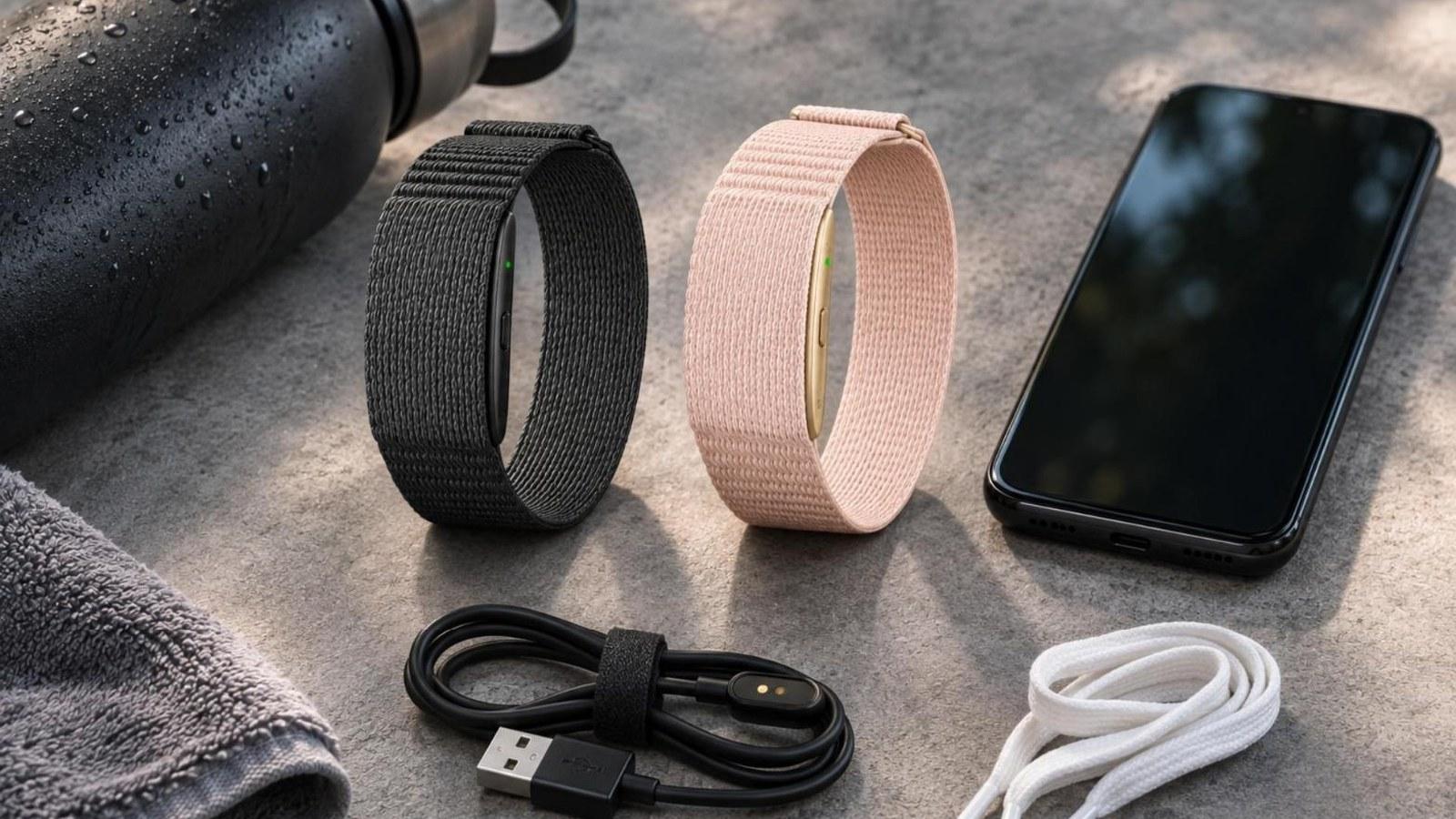
The 9 most important criteria
1. Metrics: Almost every device offers heart rate, steps and sleep today. It gets interesting with heart rate variability (HRV), resting heart rate trends, oxygen saturation and strain scores. Make sure the metrics you actually want to use are included – not just as many as possible.
2. Accuracy: Optical wrist sensors usually measure resting heart rate and steady exercise well. With intervals, strength training and calories, deviations are larger. More on this in Fitness tracker heart rate accuracy.
3. Battery life: An underrated criterion. If you have to charge every night or every two days, you lose data – often exactly the sleep data that matters most for recovery. Devices that last several weeks provide more complete trends.
4. Display: Handy for seeing the time, live heart rate or notifications. At the same time, it's the biggest power drain and a source of distraction. If you look at your data calmly in the app anyway, you don't necessarily need one.
5. GPS: Almost indispensable for runners and cyclists who want to record route and pace precisely. Irrelevant for strength training, sleep and recovery. Alternatively, your smartphone can record the route.
6. App and analysis: Raw data is of little use. What matters is whether the app provides understandable values such as sleep, recovery or strain scores and shows trends clearly.
7. Data privacy: Health data is highly sensitive. Check whether data is uploaded to a cloud, whether an account is mandatory and where the servers are located.
8. Ongoing costs: Some recovery trackers only work with a paid membership; others unlock analyses for a fee. Calculate the costs over two to three years, not just the purchase price.
9. Comfort and compatibility: A tracker that bothers you ends up in a drawer. Pay attention to weight, strap and water resistance – and make sure the app works with your smartphone.
Comparing costs over three years
| Device type | Typical purchase price | Ongoing costs | Special feature |
|---|---|---|---|
| Simple fitness tracker | low | usually none | basic functions, display |
| Smartwatch | high | usually none | many functions, short battery life |
| GPS sports watch | medium to high | usually none | GPS, display, long battery life |
| Recovery band with membership | low to none | annual fee | focus on recovery, no display |
| Recovery band without subscription | one-off | none | focus on recovery, no display |
With membership models in particular, costs add up considerably over the years. How to calculate this in practice is shown in Fitness trackers without a subscription.
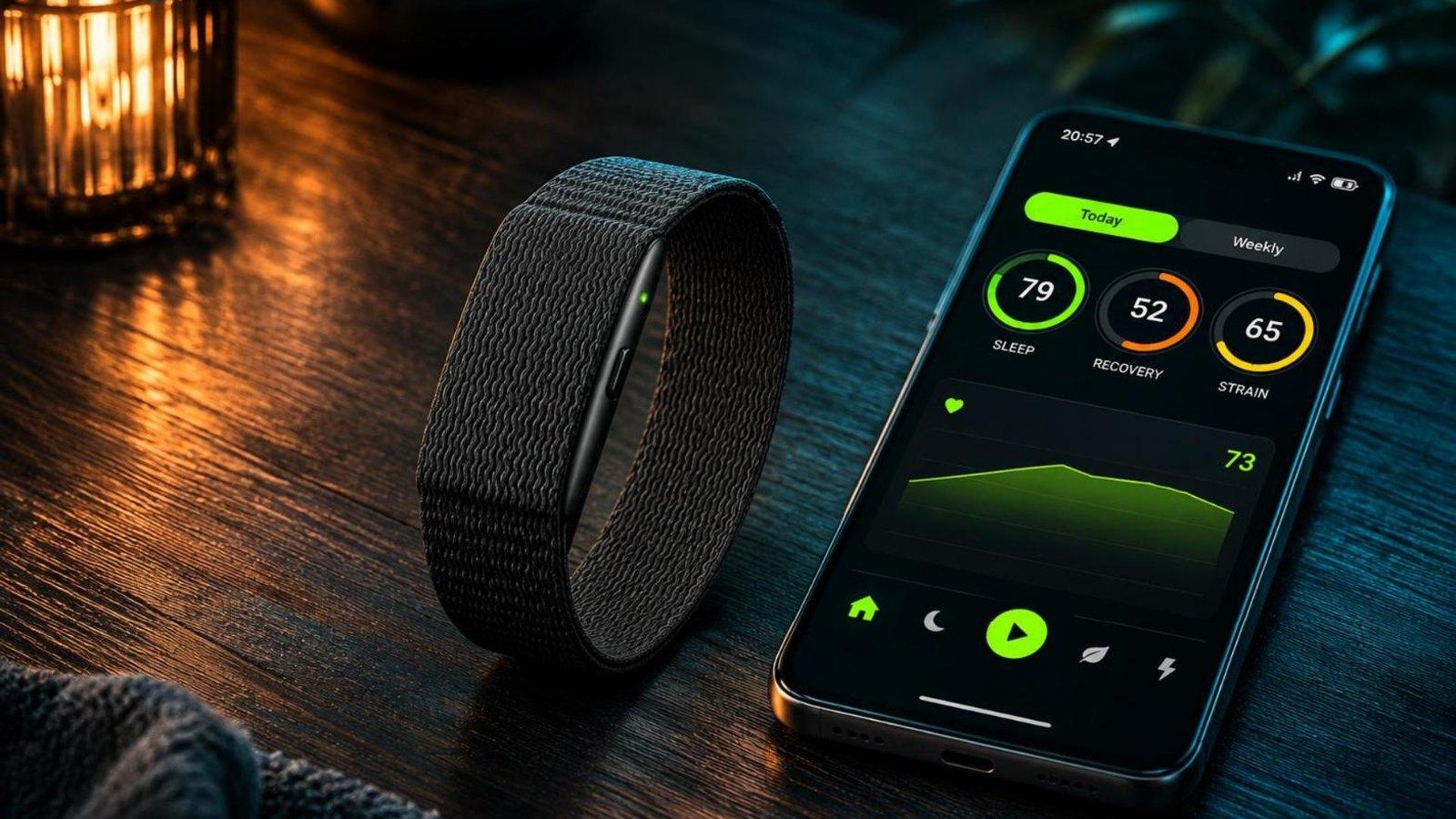
Affordable fitness trackers with heart rate
Bands around 50 to 100 euros now also have an optical heart rate sensor. The purchase price alone says little, though: what matters is whether a subscription is needed for the analysis, how long the battery lasts and whether you need a display. The table shows affordable models from our wearable database with the cost over three years:
| Device | Subscription | Price | Per year | 3 years total* | Battery (claim) |
|---|---|---|---|---|---|
| Xiaomi Smart Band 10 | no subscription | €50 | – | €50 | 21 days |
| Google Fitbit Air | optional subscription | €99.99 | €99 | €396.99 | 7 days |
| Amazfit Helio Strap | no subscription | €100 | – | €100 | 10 days |
| Syrax LEEK Pulse Pro(our product) | no subscription | €136.24 | – | €136.24 | 30 days |
| Polar Loop (2025) | no subscription | €179.90 | – | €179.90 | 8 days |
How accurately cheap and expensive devices measure heart rate can't be read from the price. What studies on wrist-based heart rate show is covered in How accurately do fitness trackers measure heart rate?.
Fitness trackers for iPhone or Android
One point that is often noticed too late: not every device works with every smartphone. Most bands and rings offer apps for iPhone and Android. The exceptions are the Apple Watch, which only works with the iPhone, the Samsung Galaxy Ring, which requires Android 11 or later, and the LEEK Pulse Pro, whose app is currently only available for Android.
| Device | Form | Smartphone | Battery (claim) |
|---|---|---|---|
| Syrax LEEK Pulse Pro(our product) | Band, no display | Android (no iOS at present) | 30 days |
| WHOOP 5.0 / MG | Band, no display | Android and iOS | 14 days |
| Oura Ring 4 | Ring | Android and iOS | 8 days |
| Samsung Galaxy Ring | Ring | Android only (Android 11+) | 7 days |
| Polar Loop (2025) | Band, no display | Android and iOS (Polar Flow) | 8 days |
| Amazfit Helio Strap | Band, no display | Android and iOS (Zepp) | 10 days |
| Google Fitbit Air | Band, no display | Android and iOS (Google Health) | 7 days |
| Xiaomi Smart Band 10 | Band with display | Android and iOS (Mi Fitness) | 21 days |
| Apple Watch Series 11 | Smartwatch | iPhone only | 1 day |
Before you buy, check on the manufacturer's site which app version and operating system are required. If you might switch smartphone systems in the next few years, a device with apps for both is the safer choice.
Waterproof or swim-proof? IP68 and 5 ATM
Many spec sheets list a protection rating such as IP68 or a water resistance such as 5 ATM. They sound similar but do not mean the same thing:
- IP68: The 6 stands for dust-tight, the 8 for protection during continuous immersion – under conditions the manufacturer defines itself. It says nothing about how the device copes with water pressure from swimming strokes, jumps, chlorine or salt water.
- 5 ATM: In testing, the device withstands pressure equivalent to roughly 50 metres of water depth. Many manufacturers rate this as suitable for swimming, but not for diving.
IP68 on its own is not sufficient proof that a device is generally suitable for swimming. What matters is what the manufacturer explicitly says about swimming. If you swim laps regularly, also check whether the device has a dedicated swim mode – a tracker can be water-resistant and still not analyse your swim training. That is why, for the LEEK Pulse Pro, we did not rely on IP68 alone: the manufacturer has confirmed it is suitable for swimming, and we have tested it ourselves. For swimming we recommend the plastic sport band, because the fabric strap takes longer to dry.
Test reports: Stiftung Warentest and others
Independent tests help put manufacturer claims into context. Germany's Stiftung Warentest tests smartwatches and fitness trackers regularly; the current results are on test.de, partly behind a paywall. We don't reproduce test scores here because they change with every test round.
What to look for in test reports:
- Test date: Wearables are replaced quickly. A test winner from two years ago is often no longer on sale.
- What was tested: Heart rate and GPS are easy to check, sleep stages and recovery scores much harder.
- Manufacturer figures are not test results: Battery life in spec sheets – including our table above – comes from the manufacturers.
For context: there are no test reports from major consumer magazines on the LEEK Pulse Pro so far. How accurately wearables measure in general is shown in our overview Fitness tracker accuracy in studies.
Buy online or in a shop?
In an electronics store you can try size, weight and strap directly and take the device home right away. Online, the choice is larger, and many shops offer return rights that let you test a tracker in everyday life at home. Either way, know the return period before you wear the device at night and during training.
We sell the LEEK Pulse Pro online in the Syrax shop, with 30-day returns.
Where the LEEK Pulse Pro fits – and where it doesn't
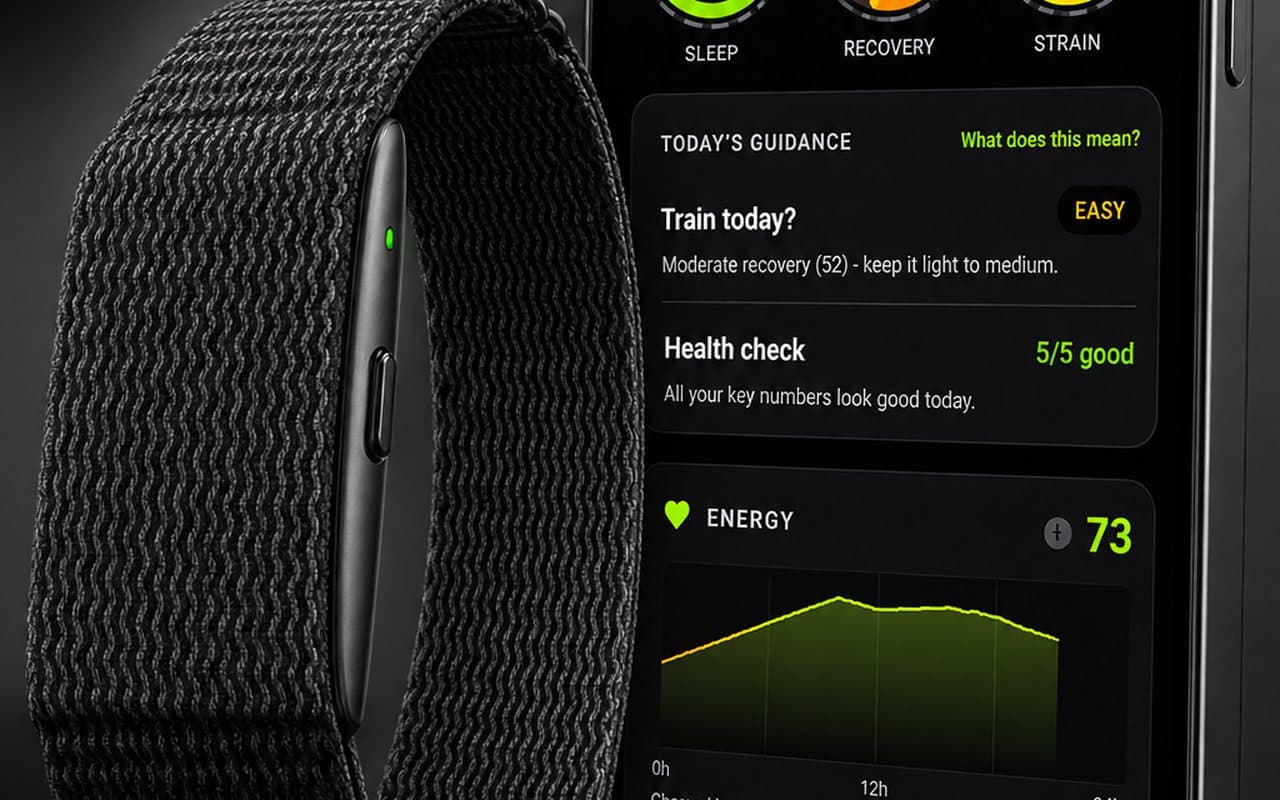
The LEEK Pulse Pro is a fitness band without a display or GPS that focuses on heart rate, HRV, SpO2, stress, sleep stages and activity and calculates sleep, recovery and strain scores from them. It lasts up to 30 days without charging, stores data on your smartphone instead of in a cloud and requires no subscription. That means it particularly meets the criteria of battery life, data privacy and ongoing costs.
To be honest, it doesn't suit everyone: the app currently only runs on Android, and there's no GPS and no display. If you train by pace or want smartwatch features, a sports watch is the better choice. A detailed comparison with Apple Watch, Garmin, Whoop and Fitbit can be found in LEEK Pulse Pro compared.
Typical bad buys
Too many features: If you only want to measure steps and sleep, you don't need an 800-euro smartwatch.
Underestimating battery life: A device that charges every night doesn't measure your sleep.
Overlooking the subscription: A low entry price can become expensive over three years.
Not checking compatibility: Not every app runs on every smartphone operating system – see the table above.
Mistaking IP68 for swim-proof: Waterproof in the spec sheet doesn't automatically mean the device is made for swim training.
Overestimating accuracy: Calorie and sleep stage values are estimates. If you take them as exact numbers, you'll be disappointed.
Conclusion: the question first, then the device
A fitness tracker is only as good as the decisions it makes easier for you. If you first clarify what you want to know and then choose deliberately according to the right criteria, you'll find a device you enjoy wearing and really use. For runners, that's often a GPS watch; for anyone wanting to understand sleep and recovery, an unobtrusive band with long battery life.
Frequently asked questions
Which fitness tracker is the best?
That depends on what you'll use it for. Runners focused on pace need GPS and a display; anyone wanting to understand sleep and recovery benefits more from long battery life and good overnight measurement. What matters is which questions the tracker should answer.
What should I look for when buying a fitness tracker?
The metrics you'll really use, accuracy, battery life, display and GPS as needed, app quality, data privacy, ongoing costs, comfort and compatibility with your smartphone.
How important is battery life?
Very important if you want to measure sleep and recovery. Every night the device spends charging is missing from the analysis. Devices that last several weeks provide much more complete data.
Do I need a subscription for a fitness tracker?
Not necessarily. Some recovery trackers only work with a membership, others offer advanced analysis for a fee, and others are completely subscription-free. Calculate the costs over two to three years.
How accurate are fitness trackers?
Good devices measure heart rate at rest and during steady exercise fairly accurately. With intervals, strength training, calories and sleep stages, deviations are larger. Trends are more meaningful than individual values.
Which fitness trackers work with iPhone and Android?
Most bands and rings have apps for both systems, for example Oura, Whoop, Polar, Garmin, Amazfit, Fitbit and Xiaomi. The Apple Watch only works with the iPhone, the Samsung Galaxy Ring only with Android 11 or later and the LEEK Pulse Pro currently only with Android. Check compatibility on the manufacturer's site before buying.
Can I swim with an IP68 fitness tracker?
Not automatically. IP68 means dust-tight and protected during continuous immersion under conditions set by the manufacturer. Whether a device is suitable for swimming is stated in the manufacturer's water-resistance rating, often as 5 ATM or an explicit note on swimming. IP68 on its own is not sufficient proof that a device is generally suitable for swimming.
Where can I find independent fitness tracker tests?
Germany's consumer organisation Stiftung Warentest tests smartwatches and fitness trackers regularly and publishes the results on test.de, partly behind a paywall. Check when the test was carried out and whether the model is still on sale. Manufacturer figures such as battery life are not test results.
Tags
- Fitness tracker
- Buying guide
- Wearables
- Battery life
- Data privacy
- LEEK Pulse Pro
About the author
Michael Lohrberg· Founder of Syrax
Michael Lohrberg founded Syrax in 2026. Military service with a deployment abroad, in industry since 2010, shift work and two jobs in parallel – the LEEK Pulse Pro grew out of the question of how much recovery is really left in everyday life. In the magazine he writes about training, sleep and regeneration – practical and grounded in the research.
More about MichaelThis article is for general information and does not replace medical advice. If you have pre-existing conditions, pain or any doubts, talk to your doctor before changing your training or diet.
Also available in: Deutsch
Syrax Magazine
Read next
 Big guide
Wearables & Tracking
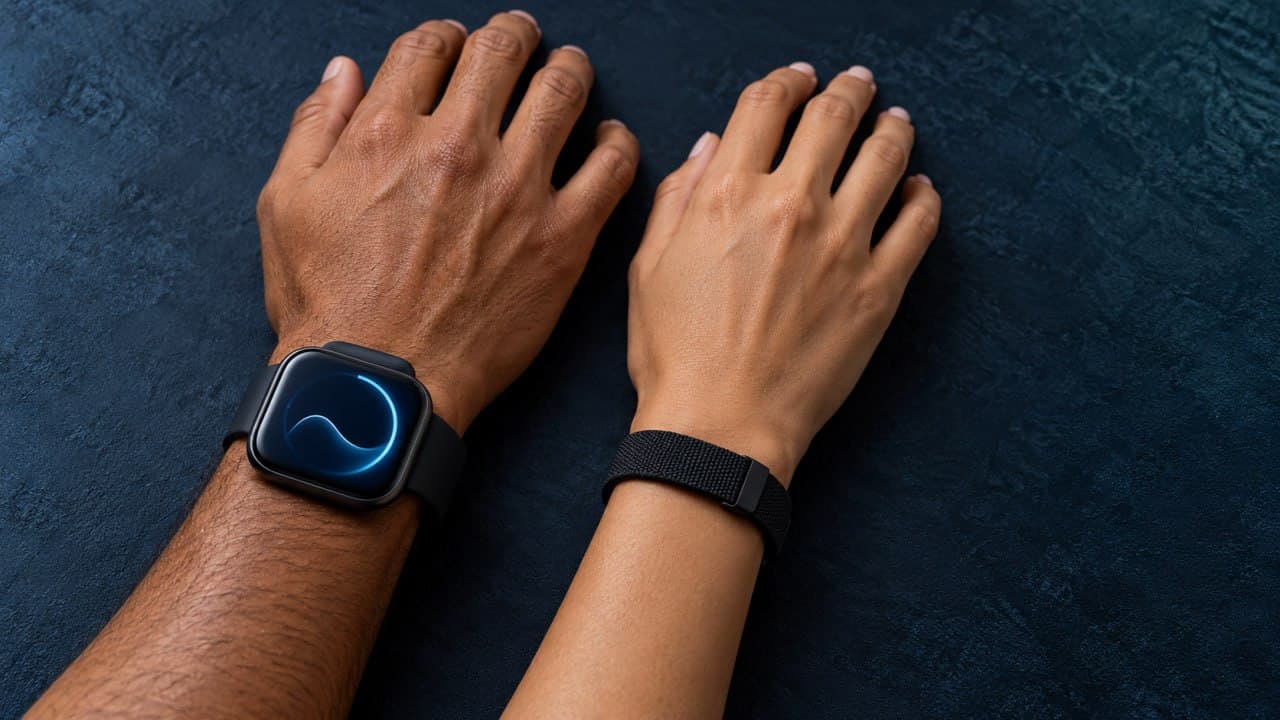
Smartwatch or Fitness Tracker? What Matters for Training
Smartwatch, GPS sports watch or slim fitness band: which device class suits your training, what the sensors can really do, how important battery, subscription and privacy are – with a decision guide for every profile.
8 min read
Wearables & TrackingSyrax
LEEK Pulse Pro in Detail: The Fitness Tracker Without a Display or Subscription
No screen, no cloud, no subscription, up to 30 days of battery: the LEEK Pulse Pro deliberately takes a different path from smartwatches. What the band measures, how the analysis works, where its limits are – and who it is worth it for.
13 min read
Wearables & TrackingSyrax
LEEK Pulse Pro vs. Apple Watch, Garmin, Whoop and Fitbit: The Big Comparison
Five concepts, five philosophies: smartwatch, sports watch, recovery band with membership, fitness tracker with display – and the LEEK Pulse Pro without display, cloud or subscription. Which tracker suits whom? A fair comparison with all strengths and weaknesses.
14 min read