Training with Data: How to Get More Out of Every Workout with the LEEK Pulse Pro
A tracker doesn't make you fitter – the decisions you make from its data do. How to translate the LEEK Pulse Pro's sleep, recovery and strain into your training plan: daily routine, weekly review, sample plans and the most common thinking errors.
 ByMichael Lohrberg
13 min read

Full disclosure: this article covers the LEEK Pulse Pro – a product made by Syrax, the publisher of this magazine.
In short
You get better results with the LEEK Pulse Pro when you translate the data into fixed decisions: check your recovery score in the morning and choose the day's intensity accordingly, keep an eye on strain in the evening, and review trends in sleep, resting heart rate and HRV once a week. The first two to four weeks serve to build your personal normal range. Trends over several days matter, not individual values.
Contents
Most fitness trackers end up in a drawer after a few months. Not because they measure badly, but because their owners don't know what to do with the data. A recovery score of 64 percent – now what? A strain of 12 – is that a lot? An HRV that is lower today than yesterday – should I be worried?
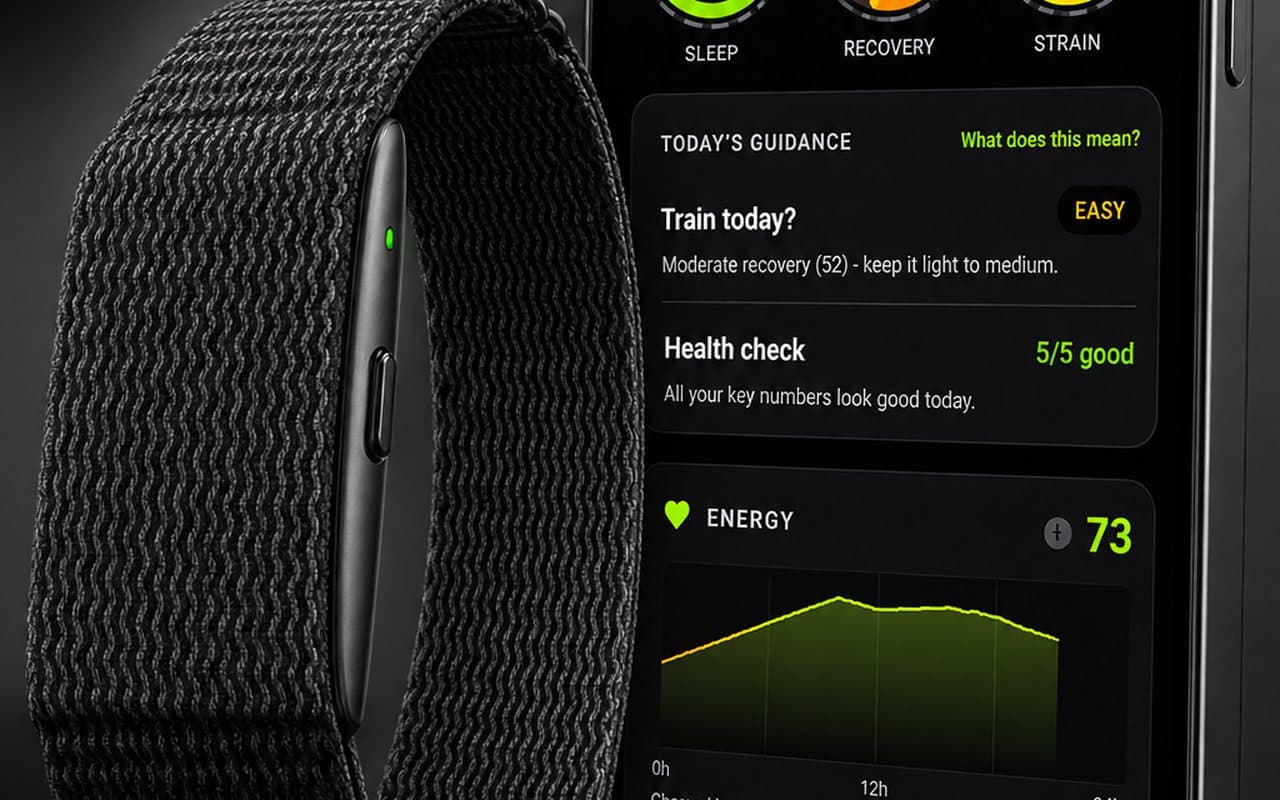
The LEEK Pulse Pro delivers exactly the data that matters for training and recovery: sleep and sleep stages, resting heart rate, heart rate variability, stress and load, condensed into sleep, recovery and strain scores. What the band measures and where its limits lie is described in the detailed product presentation. This article is about the question that comes next: how do you translate this data into better results?
The answer is a system of three building blocks: a short daily routine, a weekly review and clear rules that turn data into training decisions. The article belongs to our Wearables & Tracking topic.
The basic idea: balancing load and recovery
Training progress comes from a simple interplay: load sets the stimulus, recovery turns it into adaptation. Too little load – and nothing happens. Too much load with too little recovery – and you stagnate, get ill or get injured. The goal is to apply as much meaningful load as your body can currently process.
The problem: your capacity to recover is not the same every day. It depends on sleep, work stress, nutrition, alcohol, infections and your previous training load. A rigid training plan ignores this. Recovery tracking makes it visible.
| Value | Question it answers | Typical response |
|---|---|---|
| Sleep | Did you sleep enough and well enough? | adjust sleep habits |
| Recovery | How ready is your body for load today? | choose the day's intensity |
| Strain | How much did you demand of your body today? | match load to recovery |
Phase 1: The first four weeks
The most common mistake with a new tracker: attaching meaning to every value straight away. In the first weeks, the system doesn't know your normal range yet, and neither do you. A structured start prevents misinterpretation.
Your 4-week start with the LEEK Pulse Pro
- 1
Step 1
Week 1: Wear and observe
Wear the band around the clock, including at night. Train as usual and don't make any decisions based on the values yet. Note anything unusual such as alcohol, late meals or stressful days.
- 2
Step 2
Week 2: Get to know your normal range
Look at sleep, resting heart rate, HRV and recovery in the morning. Pay attention to the range your values fall in on normal days and how they react to hard sessions.
- 3
Step 3
Week 3: Apply the first rules
Schedule intense sessions on days with a good recovery score and replace them with easy movement or technique work on clearly worse days. Deliberately keep strain low on recovery days.
- 4
Step 4
Week 4: Introduce the weekly review
Take ten minutes on Sunday: how was your sleep on average, how did resting heart rate and HRV develop, did strain match recovery? Derive one concrete change for the next week.
Two things are especially important in this phase: continuity and context. Wear the band consistently, especially at night – thanks to battery life of up to 30 days, you don't need to plan charging breaks. And note special events: a late evening, a business trip, a hard training block, a scratchy throat. Only context explains the numbers. A step-by-step guide to the very first days is in Setting up the LEEK Pulse Pro: the first 7 days.
Phase 2: The daily 2-minute routine
Once your normal range is established, a short daily routine is enough to manage your training. It consists of two glances at the app.
In the morning: check recovery and plan the day
After getting up, look at three things: the recovery score, your resting heart rate and your sleep duration. Together they give you the traffic light for the day.
| Light | Typical picture | Training decision |
|---|---|---|
| Green | recovery within or above normal range, resting heart rate normal, enough sleep | hard session as planned: heavy sets, intervals, new personal bests |
| Yellow | recovery slightly below normal or sleep clearly too short | train, but reduce volume or intensity by 20–30% |
| Red | recovery clearly below normal, resting heart rate elevated, possibly feeling ill | easy movement, mobility, a walk or a rest day |
Important: the traffic light is a decision aid, not an order. If you feel strong and motivated despite a yellow score, a normal session is usually no problem. If you feel ill despite a green score, your body's signals take priority. The physiology behind the values is explained in our guide Understanding HRV.
In the evening: check strain
In the evening, check whether your actual load matched your morning recovery. On green days strain can be high – that's the day for your hardest session. On yellow and red days it should deliberately stay low. Many people find that their strain on "rest days" is higher than expected because of everyday stress, long commutes or spontaneous activities.
Phase 3: The weekly review
Once a week – say on Sunday evening – take ten minutes to look at the trends. Daily values fluctuate; weekly patterns show the truth.
Four questions for the weekly review:
- How was your sleep on average? Was sleep duration between seven and nine hours? Were there nights with noticeably little deep sleep or many interruptions?
- How did resting heart rate and HRV develop? Stable, rising or falling compared with your normal range?
- Did strain match recovery? Were there hard days with poor recovery?
- What will I change next week? Exactly one concrete measure – not ten.
| Pattern over a week | Probable cause | Action |
|---|---|---|
| resting heart rate rises, HRV falls, performance drops | too much load, too little recovery | deload or 2–3 easy days |
| short sleep, fluctuating recovery | sleep deprivation | fixed bedtime, evening routine |
| good recovery, performance stagnates | training too easy or too one-sided | check progression, adjust volume |
| slump after the weekend | alcohol, late nights | plan Friday/Saturday more consciously |
| recovery suddenly drops sharply, scratchy throat | incipient infection | pause training or keep it very easy |
How to plan deloads is explained in Deload week; how to recognise overtraining early is in Recognising overtraining.
Sample plan 1: strength athlete with four sessions
Tobias trains four times a week on an upper/lower split. His plan includes two heavy and two moderate sessions. With recovery-based management he distributes them flexibly:
| Session | Rule |
|---|---|
| Lower body heavy (squat, deadlift) | only on green days; on yellow, postpone by 1–2 days |
| Upper body heavy (bench press, rows) | green or yellow; on yellow, drop the last set of each exercise |
| Lower body moderate | also on yellow days, focus on technique and medium reps |
| Upper body moderate | flexible, also on yellow days |
| Red days | walk, mobility routine, no strength training |
Tobias deliberately ignores his heart rate during sets – optical wrist sensors are of limited value in strength training. He records his performance in a training log and increases it according to the principle of progressive overload. The recovery data decides the when, the log decides the how much. The matching basic plan is in Upper/lower split.
Sample plan 2: hybrid athlete combining strength and endurance
Jan combines three strength sessions, two easy rides and one interval session per week. For him, heart rate zones and strain are especially important:
- Easy sessions: He manages them via the zones in the app and makes sure he really stays in the easy zone. The most common mistake in endurance training is going too fast on easy days – explained in our Zone 2 guide.
- Interval training: only on green days, at the earliest 24 hours after a heavy leg day. More on dosage in HIIT training.
- Weekly strain: He compares his weekly strain with the average of previous weeks and increases it only gradually at most.
Sample plan 3: little time, lots of stress
Michael does strength training twice a week and runs at the weekend. His biggest challenge is everyday life. For him the value of the band lies mainly in sleep and stress:
- The stress rating shows him on which days his body stays tense until late in the evening. On those days he introduces a fixed wind-down routine: screens off, ten minutes of breathing exercises, reading.
- After two weeks he sees that his recovery scores are clearly worse after nights with alcohol. He cuts it to zero during the week and drinks more consciously at weekends.
- He schedules his two strength sessions on the days with the best recovery score within the week.
We have summarised the best strategies for better sleep in Sleep as a performance booster.
Using heart rate zones in training
For endurance sessions with steady load – walking, easy running, cycling, rowing – heart rate zones are a simple and effective management tool. The app assigns your training time to five zones, from very easy to maximal. This gives two practical applications.
Keep easy sessions truly easy. If you want to build aerobic base fitness, you should spend most of your endurance time in the lower zones. After the session, the zone distribution shows whether you managed it. Many find that their supposedly easy run took place half in the middle zone – too hard for lots of volume, too easy for a strong intensity stimulus.
Check the weekly distribution. As a rough guide for health and hybrid athletes: about 80 percent of endurance time easy, about 20 percent intense. The weekly overview shows whether your training comes close to this distribution.
Important: the zones are based on your maximum heart rate. If you enter your age in the app, it uses an estimate. If you know your actual maximum heart rate from a test, you get more accurate zones. How to calculate zones and which methods exist is explained in Calculating and using heart rate zones; everyday application is described in Managing heart rate zones with the LEEK Pulse Pro.
Understanding and using stress values
The stress rating is derived from heart rate and heart rate variability. It shows when your autonomic nervous system was in activation mode – regardless of whether the cause was physical or psychological. That makes it an honest mirror of your everyday life.
Three patterns are particularly revealing:
- High stress until late in the evening: The body does not wind down. Common consequences are poor sleep and low recovery scores the next morning. A fixed wind-down routine can make a big difference here.
- Stress peaks at recurring times: The daily meeting, the commute, the afternoon coffee. If you know the triggers, you can counteract them deliberately – for example with short breathing exercises before the meeting.
- Few recovery phases throughout the day: Healthy days contain phases of relaxation as well as stress. If they are permanently missing, it is worth looking at breaks, movement and screen time.
How wearables measure stress and where the limits of this rating lie is explained in Measuring stress with a wearable; practical counter-strategies are in Breathing exercises for athletes.
Spotting infections early
One of the most practical applications of recovery data initially has little to do with training: many users notice that resting heart rate and HRV change one to two days before the first cold symptoms – resting heart rate rises, HRV drops well below the normal range. If you recognise this pattern and reduce training on those days, you often get through an infection more lightly. For training with incipient symptoms, the rule of thumb from Training with a cold applies: with fever, aching limbs or symptoms below the neck, you pause.
Long-term trends: what shows up over months
The most valuable insights don't emerge within a week but over months. If you wear your band consistently, after three months you will see developments that remain invisible in everyday life: a resting heart rate that slowly falls through regular endurance training; an HRV that stays lower during stressful project phases; sleep that is longer in winter and shorter in summer.
Use these long-term trends for bigger decisions: when do I plan a hard training block? When is a deload week sensible? When is it time to change something at work or in private life because the body is permanently running in stress mode? The data doesn't deliver ready-made answers – but it asks the right questions.
Optimising sleep with data
Sleep is the biggest lever for recovery – and the area in which data most quickly leads to behaviour change. Three experiments you can test with the band over two weeks each:
- A fixed wake-up time, even at weekends. Watch whether sleep duration and recovery stabilise.
- A caffeine deadline eight hours before going to bed. Pay attention to how long it takes you to fall asleep and your share of deep sleep.
- No large meals two to three hours before sleeping. Watch your resting heart rate in the first half of the night.
Only ever change one thing at a time – otherwise you won't know what worked. And give each experiment at least two weeks: sleep responds quickly, but individual nights fluctuate strongly. Only comparing weekly averages shows whether a change really made a difference. How to interpret sleep stages correctly is explained in Sleep stages explained.
Nutrition, dieting and recovery
Nutrition is reflected in recovery data too. A large calorie deficit, too few carbohydrates before intense training days or a late, heavy meal often show up as an elevated nighttime resting heart rate and weaker recovery scores. During a diet, it is therefore normal for values to be somewhat lower than in a building phase.
Use the data during a diet as an early warning system: if recovery and performance drop significantly for more than a week, the deficit may be too large or sleep too short. A short diet break at maintenance calories can then make more sense than stubbornly carrying on. The basics are in Lose fat, keep muscle.
The privacy advantage in everyday life
Because the LEEK Pulse Pro's data stays on your smartphone, there is no account with a cloud service, no synchronisation via third-party servers and no analysis of your health data by others. For many, this is more than a theoretical argument: if you know that nobody but you sees your sleep patterns, stress values and resting heart rate, you wear the band more comfortably – even in phases when the values don't look good. Background on the topic is in Privacy and fitness trackers.
The eight most common thinking errors
1. Taking every daily value seriously. Daily values fluctuate. Trends over three to seven days are what matter.
2. Comparing values with others. HRV and resting heart rate are highly individual. Your yardstick is your own normal range.
3. Putting data above how you feel. The data complements your feeling; it does not replace it. If they contradict each other: look more closely.
4. Using recovery as an excuse. A yellow score is not a free pass for the sofa. Easy movement often promotes recovery more than complete rest.
5. Only measuring, never acting. Without decision rules, data remains entertainment.
6. Using calorie values as an exact number. Energy expenditure is an estimate on all wearables. For nutrition planning it is only useful as a rough trend – more in Measuring calorie burn.
7. Over-interpreting heart rate in strength training. Optical wrist sensors often underestimate the load of strength exercises. For strength athletes, the recovery data is what counts.
8. Too many goals at once. If you try to optimise sleep, stress, steps, strain and nutrition all at once, you end up optimising nothing. Choose one focus per month.
Motivation through visibility
An underestimated effect of recovery tracking is psychological: progress becomes visible long before it shows up in the mirror. A resting heart rate that falls by a few beats over two months, more stable sleep duration, fewer stress peaks in the evening – these are small wins that motivate. People who track their habits with data are more likely to stick with them. How to use this deliberately is explained in Tracking habits and Stick with it instead of starting over.
When the data is a warning sign
A fitness tracker is not a medical device. Nevertheless, certain patterns can be a reason to look more closely: an unusually high resting heart rate for weeks without an explainable reason, conspicuously low oxygen saturation values during sleep, or sleep data that fits complaints such as loud snoring, breathing pauses or severe daytime sleepiness. In such cases, see a doctor. What SpO₂ values during sleep can tell you is explained in SpO₂ during sleep.
Conclusion: data is the beginning, not the goal
The LEEK Pulse Pro gives you the raw materials for better training – sleep, recovery, strain, resting heart rate and HRV. You make the difference by deriving decisions from them: putting the hard session on the right day, lowering intensity on poor days, testing sleep habits and taking honest stock once a week. If you do this consistently, you won't necessarily train more, but you will train smarter – and that is exactly what pays off over months.
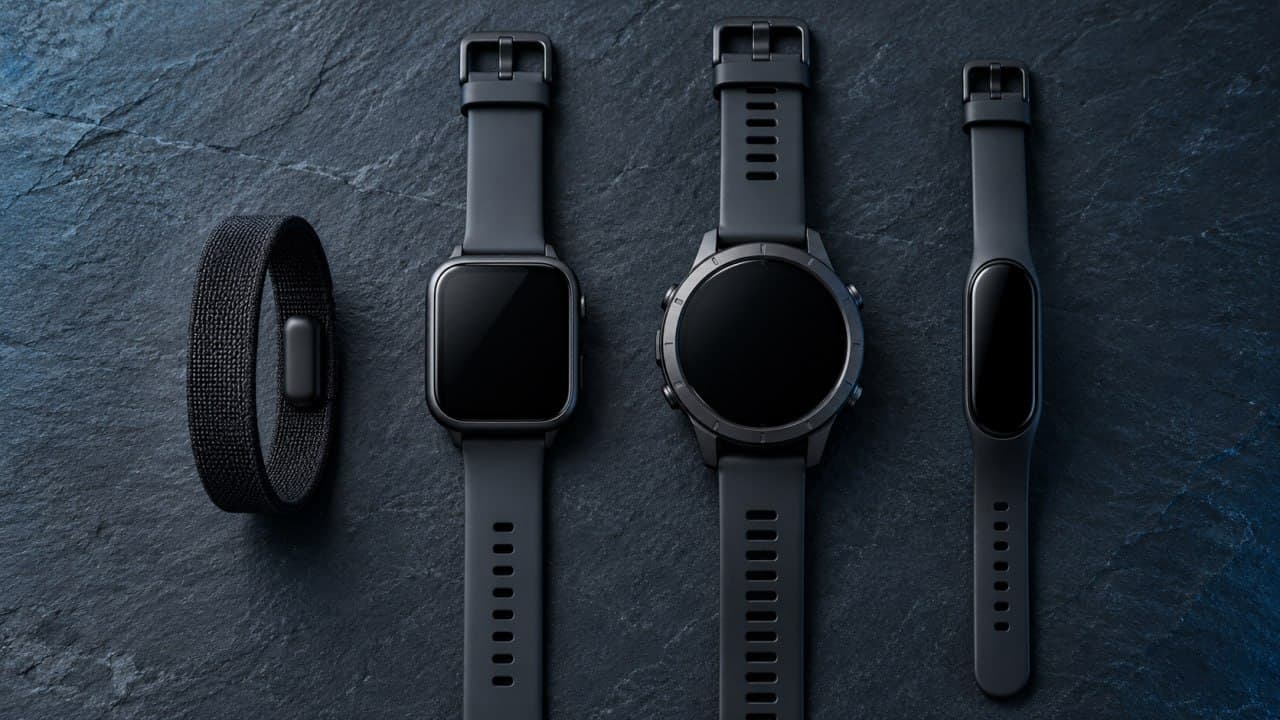
If you are still deciding whether the band suits you, the big comparison with Apple Watch, Garmin, Whoop and Fitbit will help. And if you want to dive deeper into the basics of recovery measurement, Understanding HRV is the right next step.
Frequently asked questions
How long does it take for recovery scores to become meaningful?
Most recovery systems need two to four weeks of continuous data to reliably capture your personal normal range. During this phase you should interpret individual values cautiously.
Should I skip training entirely when my recovery score is poor?
Not necessarily. A poor score is a signal to adjust intensity, not a training ban. Instead of hard interval training, easy endurance work, technique practice, mobility or a walk are good options. If you have several poor days in a row along with symptoms of illness, rest is the right choice.
How do I use the LEEK Pulse Pro for strength training?
For strength training, sleep, resting heart rate, HRV and recovery are the most valuable, because they show whether you are ready for heavy sessions. An optical wrist sensor measures heart rate during sets only with limited accuracy – your performance in each set is best recorded in a training log.
What is the strain score?
The strain score reflects the cardiovascular load of a day from training and everyday life. It helps you match your actual load to your recovery: on days with a good recovery score strain can be higher; on poor days you should deliberately keep it low.
Do I need to wear the band at night?
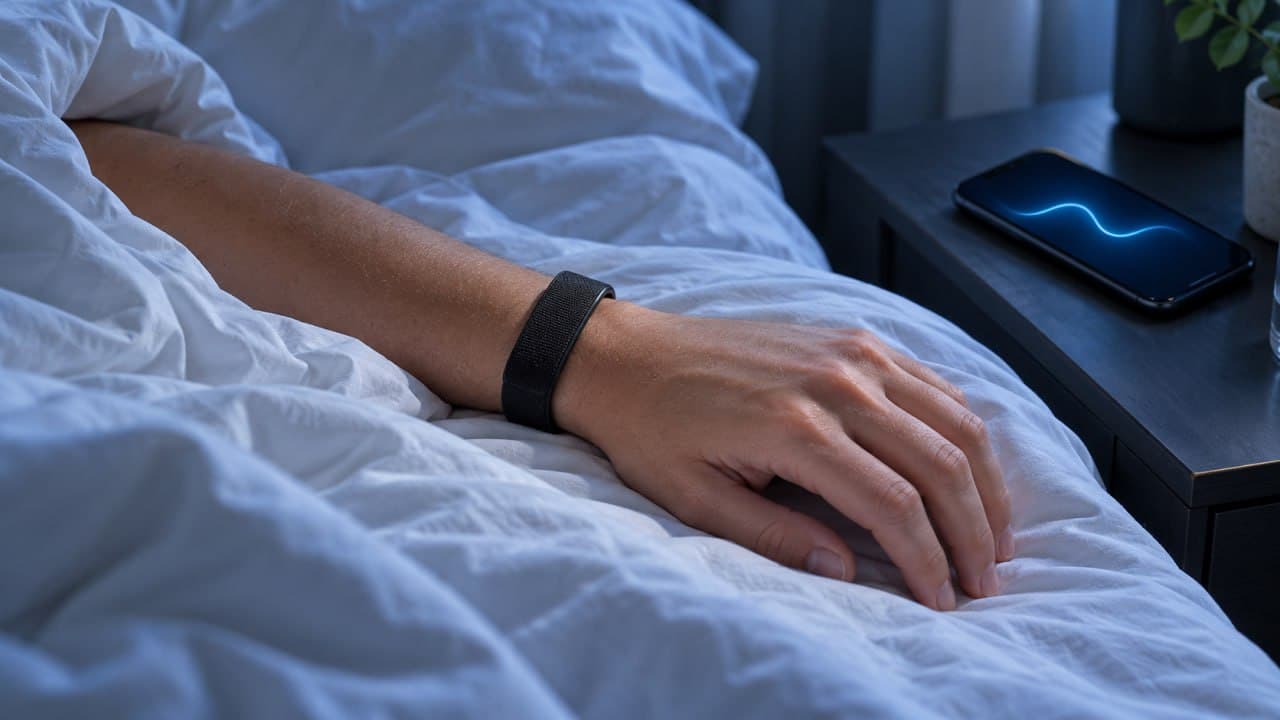
Yes, absolutely. The most important recovery data – resting heart rate, HRV and sleep stages – is generated during sleep. Thanks to the long battery life, you don't need to take the band off for that.
Tags
- LEEK Pulse Pro
- Syrax
- Recovery
- Training management
- HRV
- Sleep
- Strain
About the author
Michael Lohrberg· Founder of Syrax
Michael Lohrberg founded Syrax in 2026. Military service with a deployment abroad, in industry since 2010, shift work and two jobs in parallel – the LEEK Pulse Pro grew out of the question of how much recovery is really left in everyday life. In the magazine he writes about training, sleep and regeneration – practical and grounded in the research.
More about MichaelThis article is for general information and does not replace medical advice. If you have pre-existing conditions, pain or any doubts, talk to your doctor before changing your training or diet.
Also available in: Deutsch
Syrax Magazine