
Electrolyte Powders Compared: Why There Is No Honest Test Winner – and How to Compare Them Yourself in 2 Minutes
Powder, tablets, effervescent tablets or home-made? Werner Ludmann shows the six criteria he uses to compare electrolyte products, works out sodium per litre and price per litre openly and has built a label check so you can test any product yourself – ours included.
 KirjoittajaWerner Ludmann
6 min lukuaika
Tätä artikkelia ei ole vielä saatavilla suomeksi. Se näytetään kielellä: English.
Lyhyesti
There is no universal electrolyte test winner, because your needs depend on duration, heat and your sweat. Compare by six criteria: sodium per litre of finished drink (for long sessions the American College of Sports Medicine recommends 20–30 mmol, about 460–690 mg), the ratio of sodium to potassium, carbohydrates and sugar, sweeteners and additives, price per litre and a lab report for the batch. Powder suits the bottle during sport, swallowable tablets are more of an everyday mineral base, effervescent tablets sit in between. A home-made drink of water, juice and a pinch of salt often meets the sodium recommendation more cheaply than a bought powder. Our Syrax powder sits at the lower edge of the recommendation with about 465 mg sodium per litre and is potassium-heavy – a mineral drink, not a sodium replacement for a long tournament day.
Sisältö
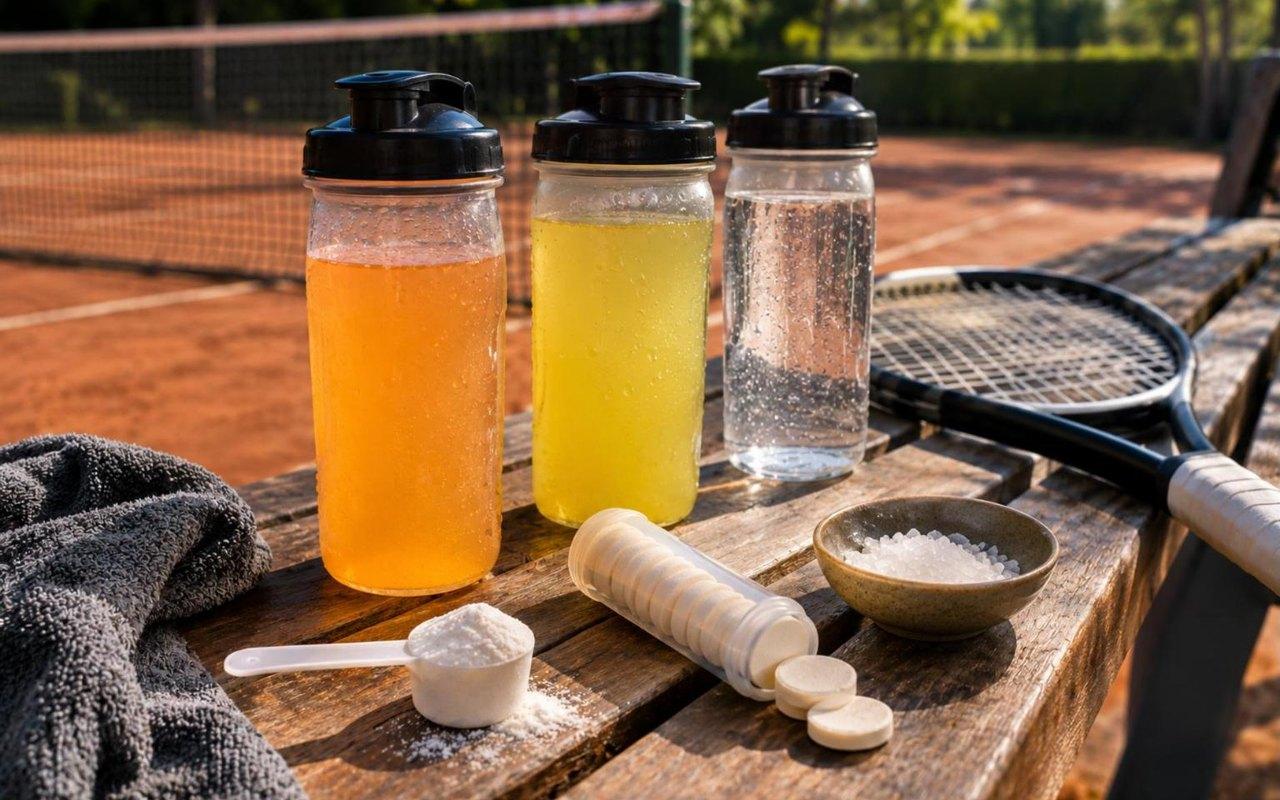
If you search online for an electrolyte powder test, you end up on lists of "test winners" whose criteria you can't follow. On the benches during long league matches in summer you see everything: effervescent tablets, powders, ready-made drinks, water with salt. Which of them is right depends on what you are drinking for.
So there is no test winner here, but something more useful: the six criteria I compare by, a label check that lets you work through any product yourself in two minutes – and an honest assessment of our own two products. When you need electrolytes at all is covered in detail in Electrolytes in sport.
The short answer
- For training under 60 to 90 minutes you usually don't need an electrolyte product at all – water is enough.
- For long, hot, sweaty sessions what matters most is sodium per litre of finished drink: the target is about 460 to 690 mg.
- Powder is the tool for the bottle, tablets more of an everyday mineral base.
- Home-made is often the cheapest solution that meets the sodium recommendation.
Why there is no honest test winner
An electrolyte product can only be as good as its fit for the situation. A powder that is perfectly adequate for an hour's jog in autumn is too low in sodium for four hours of tennis in July. Conversely, a very salty drink is unnecessary for an office day. On top of that, people lose very different amounts of sodium per litre of sweat – according to a review by Baker about 10 to 90 mmol, i.e. about 230 to 2,070 mg.
A serious comparison therefore separates by purpose and converts everything to the same reference: one litre of finished drink. Only then are powders, tablets and ready-made drinks comparable.
The six criteria I compare by
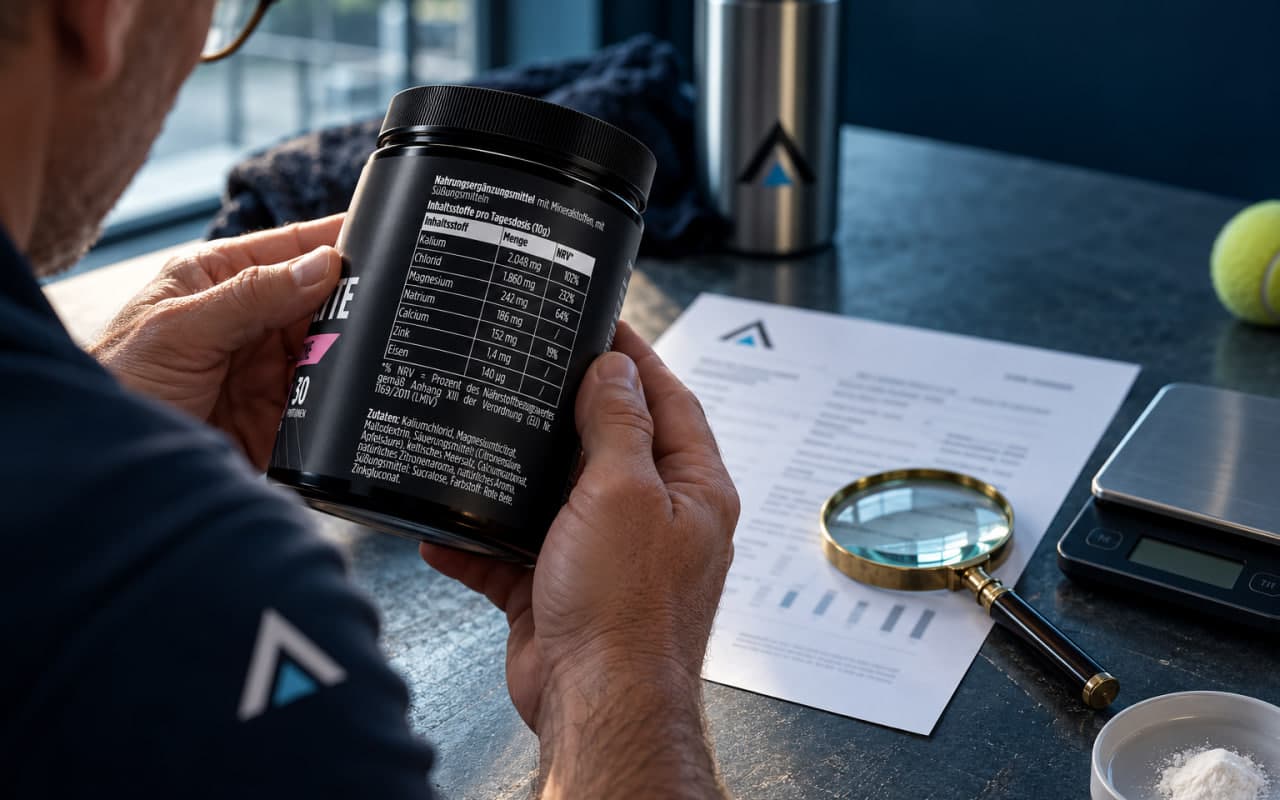
The label check: your product worked through in two minutes
Enter the values from the label: sodium per serving and the amount of water the manufacturer says to dissolve it in. Carbohydrates and price are optional. The check converts everything to one litre and shows where the product sits relative to the ACSM recommendation. Two templates are already included: our own powder and the home-made drink I describe below.
Label check
How much sodium is in a litre?
Enter the values from the label – the check converts them to one litre of finished drink.
If the label only lists salt: salt in g × 400 = sodium in mg.
Sodium per litre
465mg
≈ 20.2 mmol/L
Within the ACSM recommendation for sessions over 60–90 minutes.
Carbohydrates
–
Price per litre
€2.00
For long sessions the ACSM recommends drinks with 6–8 % carbohydrate.
Calculation aid based on label values. With high blood pressure, heart or kidney disease, agree sodium and potassium with your doctor.
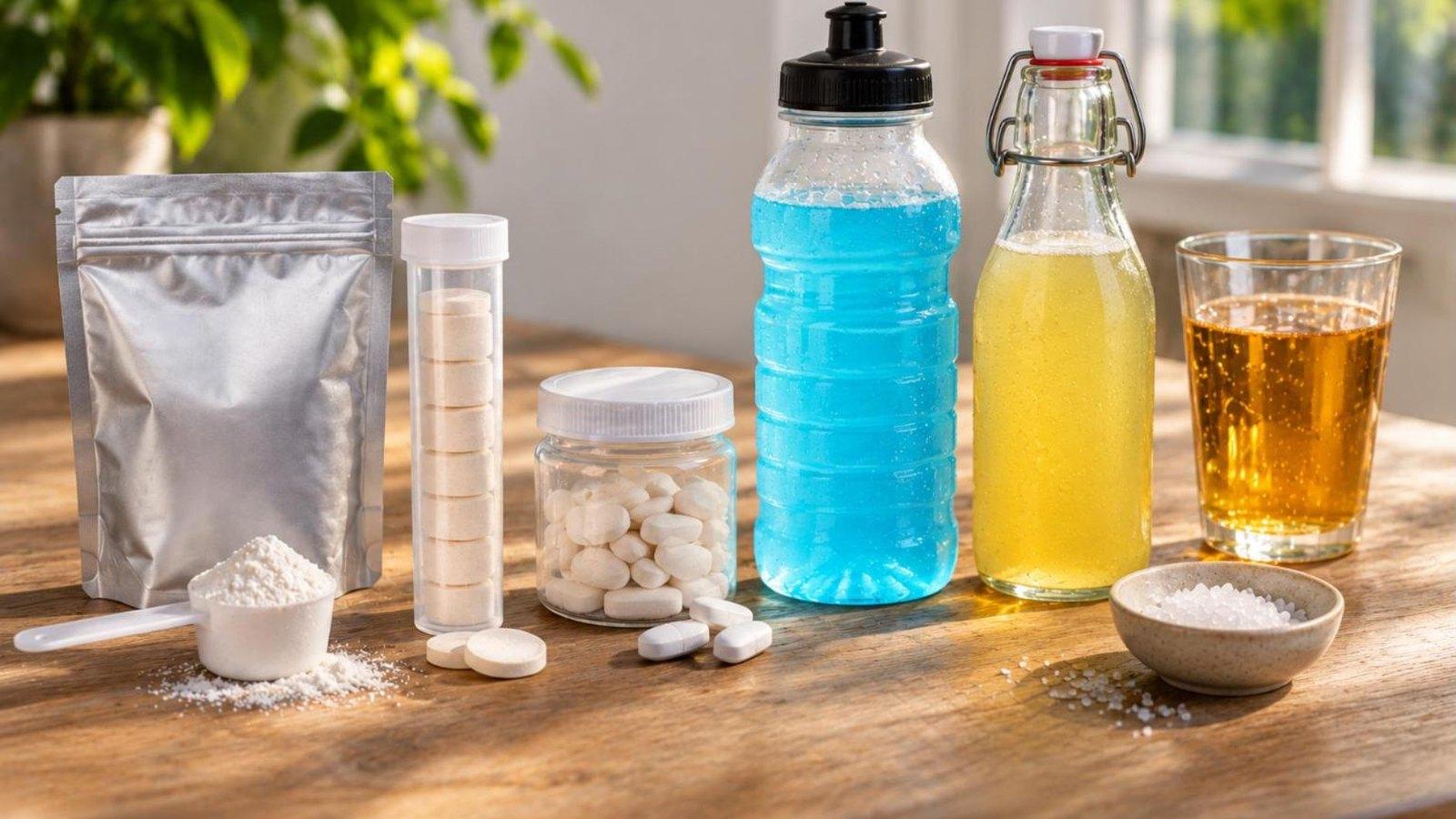
Powder, tablets, effervescent tablets, ready-made drink or home-made?
| Form | Typical use | Strengths | Weaknesses |
|---|---|---|---|
| Powder (sachet or tub) | bottle during sport, long sessions | dose adjustable to the amount of water, often with carbohydrates | sodium content varies widely, often with flavourings and sweeteners |
| Effervescent tablets | water bottle on the go | handy, low in calories | often little sodium per tablet, usually contain acidifiers and sweeteners |
| Swallowable tablets | daily mineral base | dosed, tasteless | not a drink, doesn't replace sodium on a large scale during sport |
| Ready-made isotonic drink | competition, when there's nothing to mix | ready to drink, usually with carbohydrates | expensive per litre, often a lot of sugar for short sessions |
| Home-made | long training days, tournaments | cheap, sodium precisely adjustable | needs preparing, taste takes getting used to |
Our two products in the check
I measure our own products by the same criteria. The values come from the label, the prices from the shop (October 2026).
| Criterion | Syrax Electrolyte Powder | Syrax Electrolyte Complex Tablets |
|---|---|---|
| Serving per label | 10 g in 400 ml water | 2 tablets with 250 ml water |
| Sodium per litre of finished drink | approx. 465 mg (lower edge of the ACSM recommendation) | – (to swallow, not a drink) |
| Sodium : potassium | 186 mg : 2,048 mg – strongly potassium-heavy | 103 mg : 300 mg |
| Magnesium per serving | 242 mg | 75 mg |
| Carbohydrates | with maltodextrin | – |
| Price per serving | approx. €0.80 | approx. €0.42 |
| Price per litre of finished drink | approx. €2.00 | – |
| Lab report | March 2026, no objections | March 2026, no objections |
Sodium per litre compared with the recommendation
Sodium per litre of finished drink. The ACSM recommendation for longer sessions is about 460 to 690 mg per litre.
- ACSM recommendation (middle of the range)460–690 mg
- Home-made (recipe below)approx. 570 mg
- Syrax Electrolyte Powder (10 g in 400 ml)approx. 465 mg
Näytä tiedot taulukkona
| Luokka | mg sodium per litre |
|---|---|
| ACSM recommendation (middle of the range) | 460–690 mg |
| Home-made (recipe below) | approx. 570 mg |
| Syrax Electrolyte Powder (10 g in 400 ml) | approx. 465 mg |
My verdict on our powder: it is a potassium-heavy mineral drink, not a classic sports drink. For sodium it just reaches the lower limit of the recommendation; for potassium it provides far more than is lost in sweat, at about 2 g per serving – so one serving a day at most, and no additional magnesium supplement that day. For the long tournament day in the heat I combine it with something salty or reach for the home-made drink. With kidney disease or medicines such as ACE inhibitors, sartans and potassium-sparing diuretics, potassium in this amount should be cleared with your doctor first.
The tablets are a moderate everyday mineral base with B vitamins, for example after training with a glass of water. They aren't meant for the bottle.
Home-made: the cheapest sports drink
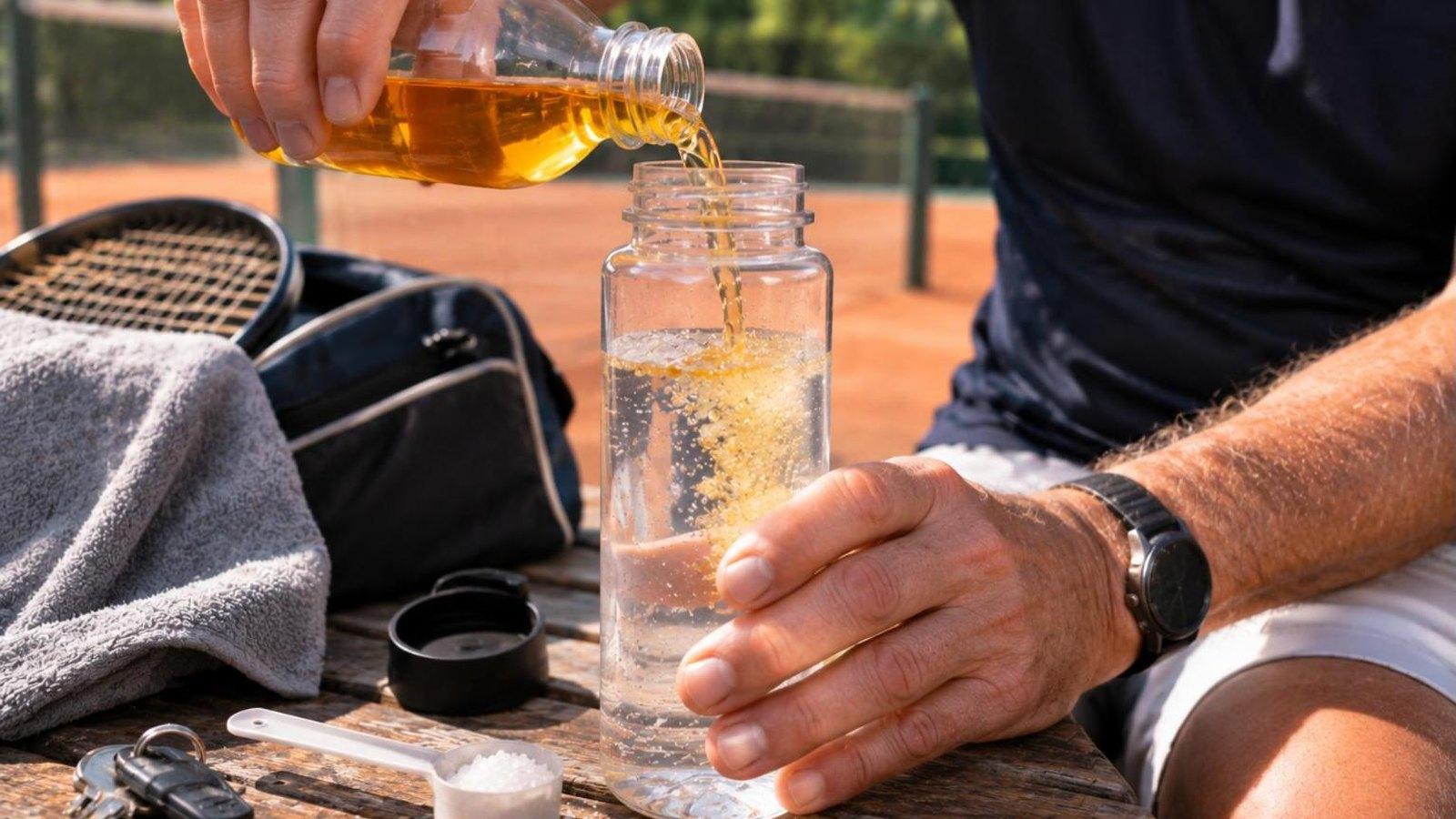
For long training days and tournaments I mix my own drink. The recipe is simple:
- 750 ml water
- 300 ml apple juice (or another juice)
- a scant quarter teaspoon of salt (about 1.5 g, that is about 600 mg of sodium)
That gives just over a litre with about 570 mg of sodium – right in the middle of the ACSM recommendation – and about 3 per cent carbohydrate. If you need more energy for very long sessions, use more juice or add a tablespoon of sugar; for 6 per cent carbohydrate it would be about 600 ml of juice to 450 ml of water. The cost is a few tens of cents per litre.
Low-sugar electrolytes: when that makes sense
"Sugar-free" isn't a quality feature in itself. For sessions over 60 to 90 minutes, carbohydrates in the drink are useful because they provide energy – lack of energy often limits performance more than lack of sodium. For short sessions, everyday use or when you're eating anyway, electrolytes without sugar are enough. With sugar-free products, check which sweeteners are used; sugar alcohols can have a laxative effect in larger amounts.
Common mistakes when comparing
Comparing per serving instead of per litre. A sachet for 500 ml and an effervescent tablet for 250 ml can only be compared if you convert both to one litre.
Thinking magnesium is the most important mineral. Magnesium is often printed large on the pack, but little of it is lost in sweat. For long sessions, sodium counts.
Drinking several servings throughout the day. Potassium-rich products in particular are designed for one serving a day. If you need to drink more, switch to a sodium-focused drink.
Comparing the price per pack. What matters is the price per litre of finished drink.
Conclusion
A good electrolyte comparison doesn't need a trophy but a calculator. Convert sodium and price to one litre, ask yourself whether you need carbohydrates for the purpose and look for a lab report. With the label check above that takes two minutes. For most training sessions you'll find that water is enough. And for the long, hot days a home-made drink is often the best choice.
Sources: American College of Sports Medicine: Exercise and Fluid Replacement (Sawka et al., 2007) · Baker: Sweating Rate and Sweat Sodium Concentration in Athletes (Sports Medicine, 2017) · BfR: Proposed maximum levels for potassium (German) · Labels and lab reports of the Syrax products (as of October 2026)
Usein kysytyt kysymykset
Which electrolyte powder is the best?
That depends on what you need it for. For long, sweaty sessions the best powder is one with about 460 to 690 mg of sodium per litre of finished drink and some carbohydrate. For everyday use a mineral product with moderate amounts is enough. A blanket test winner without this distinction says little.
Electrolyte tablets or powder – which is better?
You dissolve powder in your bottle and drink it during sport; the dose can be matched to the amount of water. Swallowable tablets are better suited as a daily mineral supplement. Effervescent tablets dissolve in water but often provide less sodium per tablet than a powder sachet.
How much sodium should an electrolyte drink contain?
For sessions over 60 to 90 minutes the American College of Sports Medicine recommends about 20 to 30 mmol of sodium per litre, which is about 460 to 690 mg. Always convert the per-serving value to the amount of water stated on the label.
Do I need electrolytes with sugar?
For sessions longer than about 60 to 90 minutes, carbohydrates provide energy and help maintain performance; the ACSM names 6 to 8 per cent in the drink. For short sessions or as an everyday drink, sugar-free electrolytes are perfectly sufficient.
Can I make electrolytes myself?
Yes. A simple sports drink consists of 750 ml water, 300 ml apple juice and a scant quarter teaspoon of salt (about 1.5 g). That gives about 570 mg of sodium per litre and about 3 per cent carbohydrate. For longer sessions you can use more juice.
How do I convert salt into sodium?
Table salt is about 40 per cent sodium. Salt in grams times 400 gives sodium in milligrams: 1.5 g of salt contains about 600 mg of sodium.
Avainsanat
- Electrolytes
- Sodium
- Comparison
- Sports drink
- Supplements
- Tennis
Kirjoittajasta
Werner Ludmann· Kirjoittaja: harjoittelu, seuraurheilu ja ravintolisät käytännössä
Werner Ludmann on intohimoinen tenniksenpelaaja ja ollut mukana seuraurheilussa jo monta vuotta. Juoksusta hän löytää myös urheilullisen tasapainonsa. Syrax-lehdessä hän jakaa kokemuksiaan ja innostustaan liikuntaan, kuntoiluun ja aktiiviseen elämäntapaan – käytännön harrastajan näkökulmasta: mitä ravintolisä oikeasti tuo arjen harjoitteluun?
Lisää WerneristaArtikkeli on yleistä tietoa eikä korvaa lääkärin neuvoja. Jos sinulla on sairauksia, kipuja tai epäilyksiä, keskustele lääkärin kanssa ennen kuin muutat treeniä tai ruokavaliota.
Syrax Magazine
Lue seuraavaksi

Lisäravinteet
Electrolytes in Sport: When You Really Need Them – the Situation Matrix for Tennis, Running & Co.
Water, electrolytes or a sports drink? Werner Ludmann shows when sodium, potassium and magnesium really need replacing during training – with a situation matrix by duration and heat, a DIY sweat test, amounts per litre and an honest assessment of the Syrax electrolyte products.
9 min lukuaikaEnglish
 Suuri opas
Lisäravinteet
How to Assess Supplements: Reading the Label, Dose, Upper Limits and Lab Report
How good is a dietary supplement really? Eduard Boehm shows step by step how to read labels, check the dose against reference values and BfR maximum levels, understand lab reports, assess additives and calculate the price per effective serving – explained using real labels and analyses of Syrax products.
14 min lukuaikaEnglish
Lisäravinteet
Dosing Magnesium Correctly in Sport: Requirements, Upper Limit, Cramps – and Which Product Fits
How much magnesium do athletes really need, when is it too much and does it help with cramps or poor sleep? Eduard Boehm explains elemental magnesium, reference values and the BfR upper limit and compares tablets, capsules, shots and gummies by dose, tolerance and price per 100 mg.
10 min lukuaikaEnglish