Creatine: Powder, Tablets or Gummies? An Honest Comparison with Lab Results
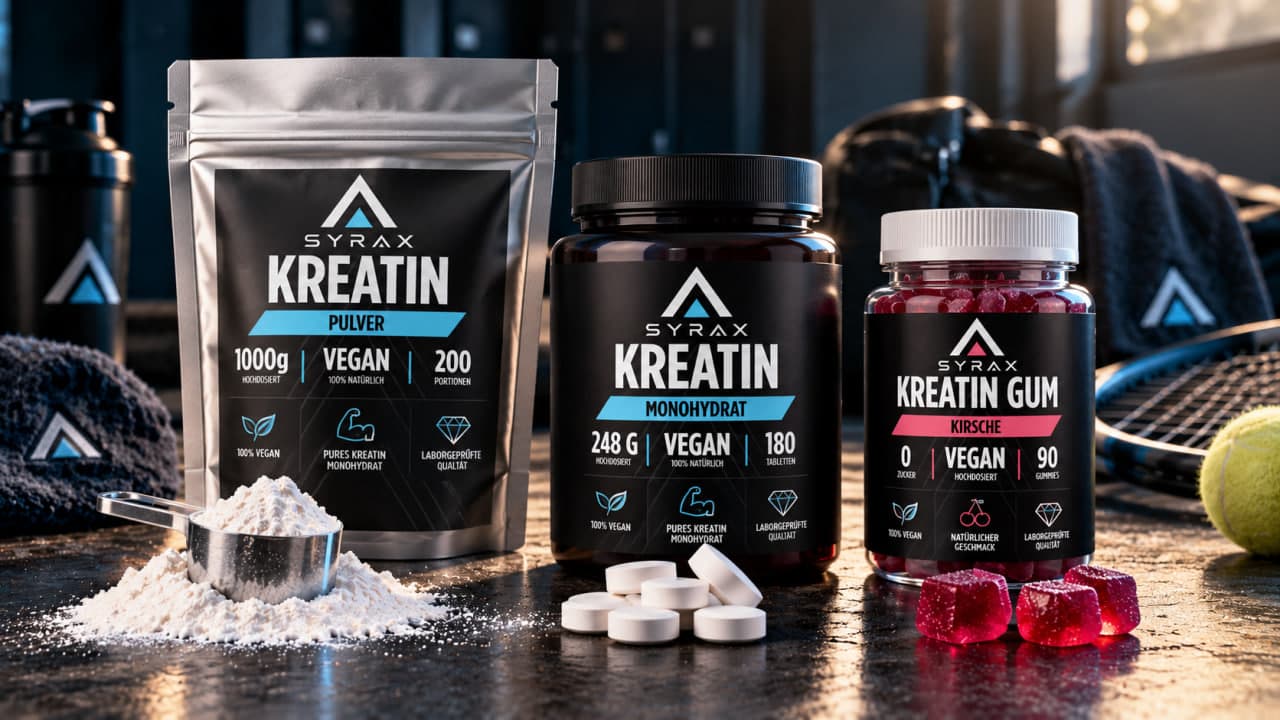
Creatine powder, creatine tablets or creatine gummies: Werner Ludmann compares the three forms by active ingredient per serving, cost per 3 g of creatine, additives, everyday practicality and lab results – with label evidence for every Syrax product.
 ByWerner Ludmann
10 min read
In short
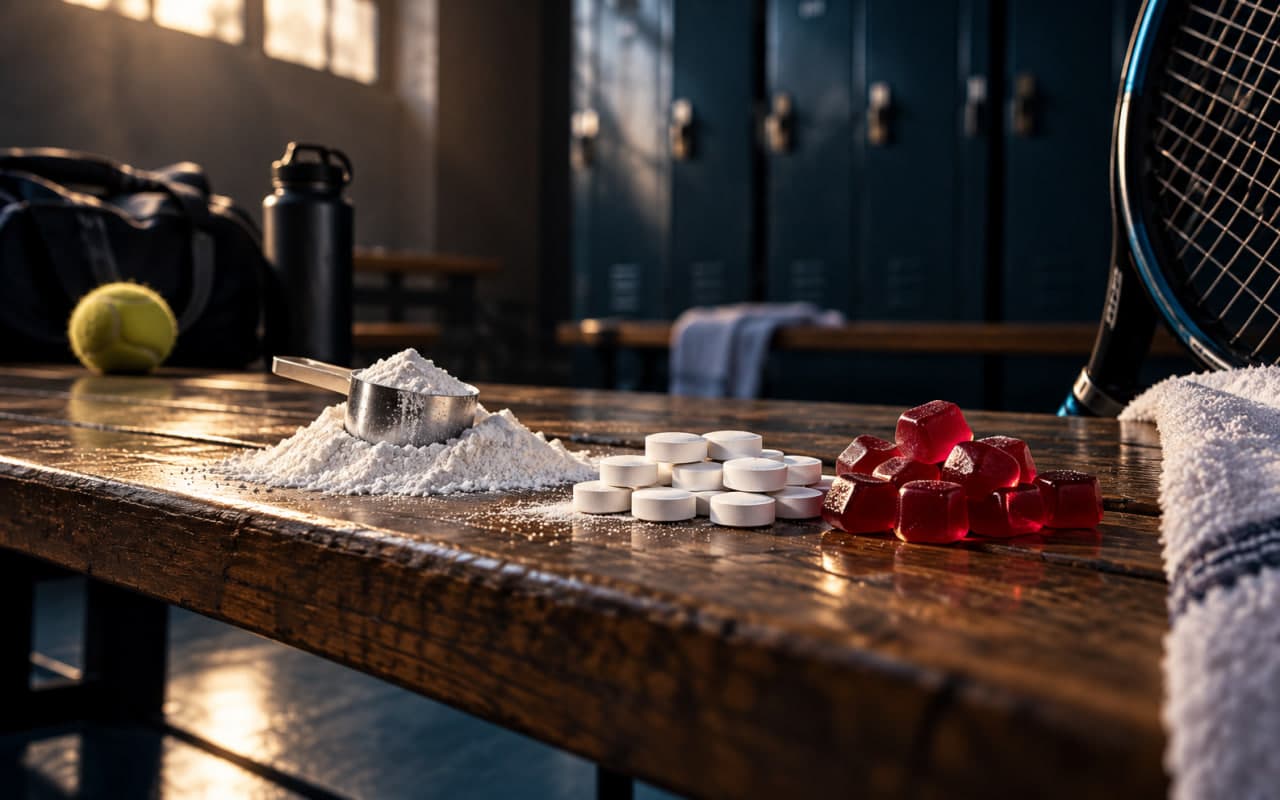
All three forms deliver the same active ingredient: creatine monohydrate. What matters is whether you reach at least 3 g of creatine a day – the amount for which the EU permits a performance claim. Powder is the cheapest and purest form at around €0.17 per 3 g of creatine (Syrax doypack: 100% monohydrate, lab-tested purity 99.18%). Tablets cost about three times as much but are practical on the go; for our tablets the lab measured 3,909 mg of creatine per daily serving against 3,960 mg declared. Gummies are the most expensive at around €1 per 3 g and contain sugar alcohols, but they taste good and don't get forgotten – according to the analysis, our apple batch contained 3.07 g of creatine per 3 pieces. If you want cheap, flexible dosing, choose powder; if your routine needs convenience, choose tablets or gummies.
Contents
Years of club sport have taught me one thing: the best training idea is useless if it doesn't fit into everyday life. Creatine is no different. Whether it works was settled long ago – you can read all about that in our big creatine guide. The question I hear far more often is: powder, tablets or gummies – which is better?
The honest answer: the active ingredient is the same in all three cases. The differences lie in the amount per serving, the price, the additives and whether you actually manage to take it every day. Because the Syrax shop stocks all three forms, I took a close look at the labels and the lab reports. Here is the comparison – including the points where a form performs worse.
The short answer
- Powder is the cheapest and purest form. If you eat breakfast at home or drink a shake anyway, it is your best option.
- Tablets are practical for travel, tournaments and people who don't want to mix anything – but they cost about three times as much.
- Gummies are the most expensive form and contain sugar alcohols. Their advantage: people like taking them. For many, that is exactly why creatine works for them at all.
Whichever form you choose: count grams of creatine per day, not pieces or scoops.
What all three forms have in common
The active ingredient: creatine monohydrate
All Syrax creatine products contain creatine monohydrate – the form used in practically every study. In its position stand, the International Society of Sports Nutrition calls it the most effective and best-researched form. More expensive variants such as creatine HCl or "buffered" creatine have shown no proven advantage in head-to-head comparisons.
The dose that counts: 3 grams of creatine
The EU allows exactly one performance claim for creatine: creatine increases physical performance in successive bursts of short-term, high-intensity exercise. The condition is a daily intake of 3 g of creatine. For adults over 55 there is an additional claim about enhancing the effect of resistance training, also from 3 g a day.
These 3 g are therefore the benchmark for this comparison. If you are heavier or train a lot, you can go up to 5 g of monohydrate – more brings no benefit.
Creatine or monohydrate? The most common label mistake
Creatine monohydrate consists of around 88 percent creatine; the rest is bound water. That matters for the comparison:
| Stated on the label | equals roughly |
|---|---|
| 5 g creatine monohydrate | 4.4 g creatine |
| 4.5 g creatine monohydrate | 3.96 g creatine |
| 3.4 g creatine monohydrate | 3.0 g creatine |
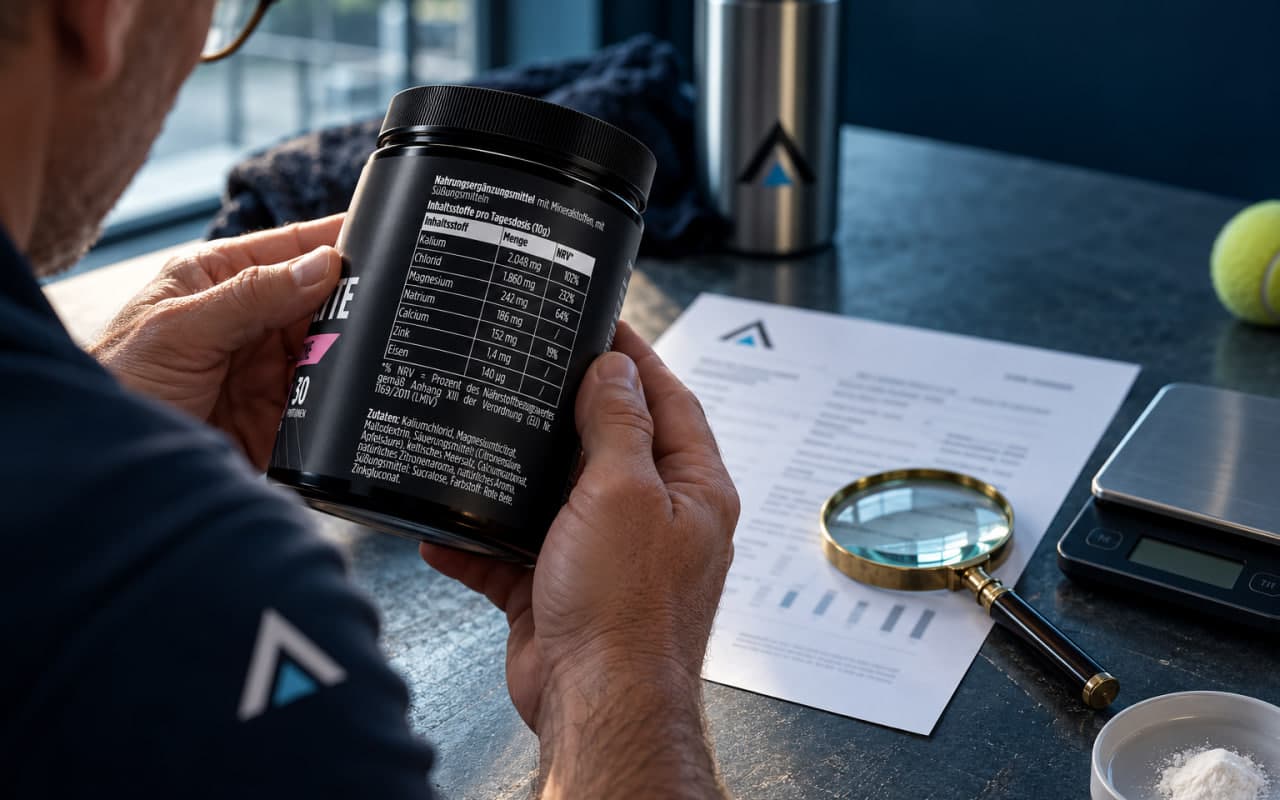
A good label states both values – our tablets, for example, say "4,500 mg creatine monohydrate, of which creatine 3,960 mg". If the label only says "creatine complex" or lists a blend without amounts, the dose can't be checked.
The three forms head to head
All details come from the labels and product specifications of the Syrax products; prices are shop prices as of October 2026.
| Powder (doypack 1,000 g) | Tablets (180) | Gummies cherry (90) | |
|---|---|---|---|
| Daily serving per label | 5 g monohydrate (approx. 4.4 g creatine) | 6 tablets = 3.96 g creatine | 3 gummies = 3 g creatine |
| Ingredients | 100% creatine monohydrate | Monohydrate (52%), cellulose, dicalcium phosphate, magnesium stearate | Maltitol syrup, monohydrate (25%), maltitol, pectin, flavouring and more |
| Cost per 3 g creatine | approx. €0.17 | approx. €0.50 | approx. €1.00 |
| Lasts | around 200 days at 5 g | 30 days | 30 days |
| Vegan | yes | yes | yes |
| Lab result (active ingredient) | Purity 99.18% | 3,909 mg creatine per 6 tablets | 3.07 g creatine per 3 gummies (apple batch) |
| Best for | Everyday use, shakes, low cost | Travel, tournaments | Routine-skippers, taste |
Cost per 3 g of creatine
Calculated from the shop price and the declared creatine content of Syrax products, as of October 2026. 3 g is the daily amount from which the EU performance claim applies.
- Powder doypack 1,000 g€0.17
- Powder unflavoured 500 g€0.20
- Tablets 180€0.50
- Gummies 90€1.00
Show data as table
| Category | Price per 3 g of creatine |
|---|---|
| Powder doypack 1,000 g | €0.17 |
| Powder unflavoured 500 g | €0.20 |
| Tablets 180 | €0.50 |
| Gummies 90 | €1.00 |
Over a year, that means: with the doypack you pay around €62 for 3 g of creatine a day, with tablets around €184 and with gummies around €365. The difference is not a detail – it's a question of priorities.
Creatine powder: cheap, pure, flexible
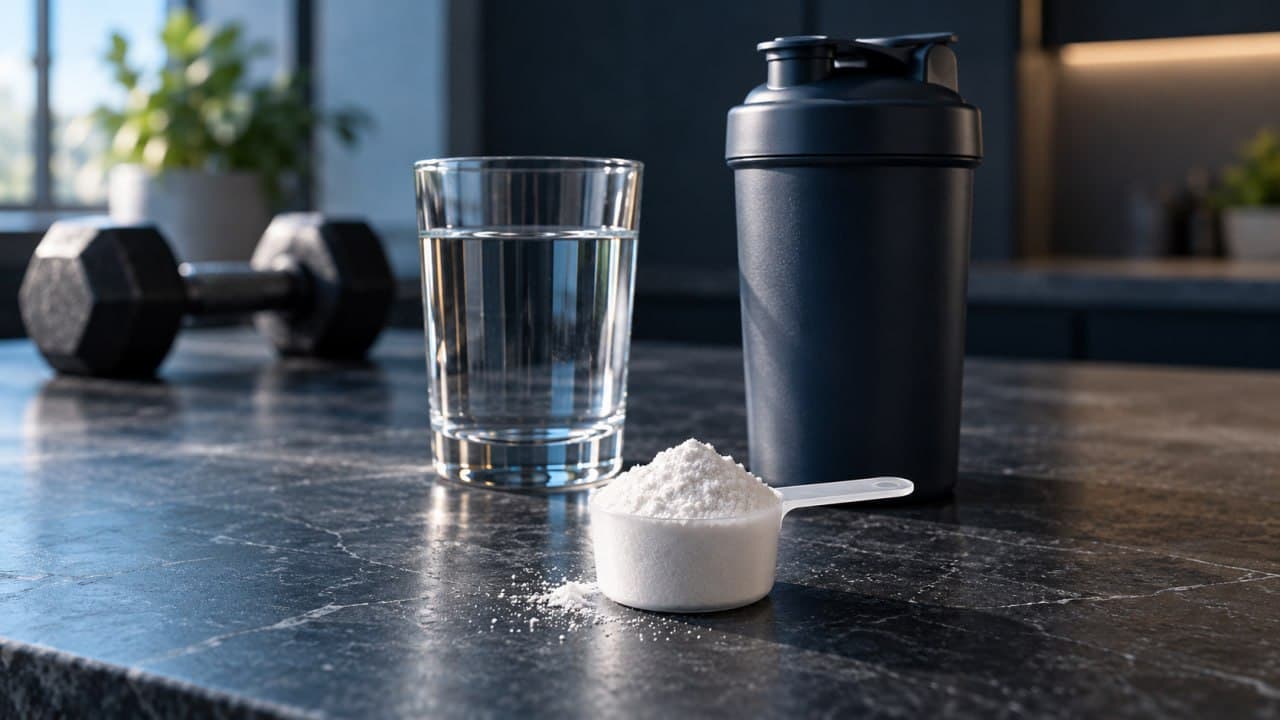
According to its specification, the Syrax creatine doypack contains 100% creatine monohydrate with no additives, micronised to a fineness of 200 mesh. The recommended intake: 5 g a day, which is roughly one heaped 5 ml scoop, in 250 ml of water.
What the lab report shows
Two analyses from a German laboratory are available for the current batch (A20250222C):
- Purity 99.18%, measured by UPLC-UV. In other words, just under 99.2 percent of the powder is actually creatine monohydrate.
- Heavy metals and microbiology without objection: lead, cadmium and mercury were below the limits tested, and no salmonella or E. coli were found.
To put it honestly: 99.18 percent is a good value, but not a record – some branded raw materials advertise 99.9 percent and more. The report also gives no individual values for typical by-products such as creatinine or dicyandiamide. That is normal for standard analyses, but it's exactly what I would ask about next. Eduard explains how to read lab reports in general in How to assess supplements: label, dose, lab report.
Making it work every day
Creatine dissolves only moderately in cold water – about 14 g per litre at room temperature. For 5 g you therefore need a good 300 ml or warm water, otherwise some sediment remains. That's not a quality defect; it's chemistry. What helps:
- In a shaker with whey or water: shake hard and drink straight away.
- Stirred into yoghurt, muesli or porridge – no taste and no sediment.
- Don't leave it standing in acidic juice for hours. In solution, creatine slowly breaks down into creatinine, faster in acidic conditions. Mix it fresh, then drink.
Strengths
- Cheapest form, around €0.17 per 3 g of creatine
- No additives, vegan
- Freely adjustable dose from 3 to 5 g
- Works in shakes, yoghurt or water
Limitations
- Has to be measured and mixed
- Dissolves only moderately in cold water
- Less practical on the go
Creatine tablets: precisely dosed, clean, travel-friendly
According to the label, a daily serving of 6 Syrax creatine tablets provides 4,500 mg of creatine monohydrate, of which 3,960 mg is creatine. Monohydrate makes up 52 percent of each tablet; the rest is fillers (microcrystalline cellulose, dicalcium phosphate) and an anti-caking agent. That's normal for tablets – creatine can't be pressed without them.
What the lab report shows
Here you'll find something you rarely see: an active ingredient analysis. For batch A0101BODKRE the lab measured the creatine content per daily serving – 3,909 mg of creatine per 6 tablets. That is 98.7 percent of the declared amount and within the usual tolerances. Heavy metals and microbiology were unremarkable too.
Who tablets suit
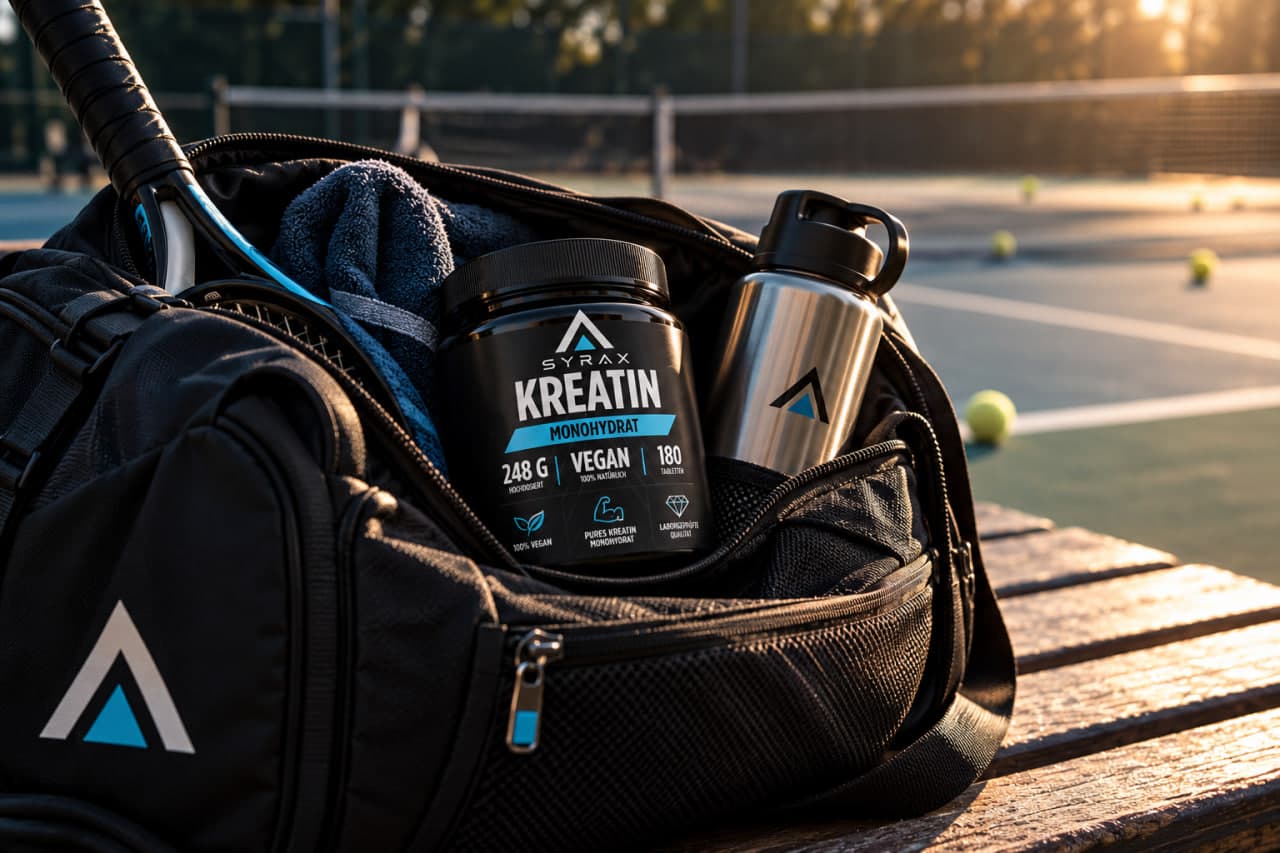
For me, tablets are the solution for tournament weekends and travel: no powder in the wash bag, no scoop, no discussion at security. The catch is the number: six tablets a day is a handful, and the label recommends 400 ml of water with them. If you don't like swallowing tablets, split them between breakfast and dinner.
Strengths
- Exact dose without measuring
- Active content confirmed by the lab
- Ideal for travel, tournaments, the office
- Vegan, neutral taste
Limitations
- About three times the price of powder
- 6 tablets a day
- Contains fillers and anti-caking agents
Creatine gummies: expensive, popular – and a market with problems
Gummies are the newest form of creatine and at the same time the most controversial. In tests on the US market, the manufacturer NOW reported in 2024 that 5 out of 12 creatine gummy brands tested contained little or no creatine. These tests came from a competitor and were not independently repeated – but they show why proof of the active content matters more for gummies than for any other form. Creatine is more sensitive in moist, acidic surroundings, and gummy mass is processed warm.
What's in our gummies
According to the label, Syrax creatine gummies cherry provide 3 g of creatine per 3 gummies. The main ingredient is maltitol syrup, a sugar alcohol; creatine monohydrate makes up 25 percent. For the apple variant (same product line, now sold out) the lab measured the active ingredient: 3.07 g of creatine per 10.5 g of product, i.e. per 3 gummies – 102 percent of the declared amount.
What you should know
- Sugar alcohols: maltitol, maltitol syrup and the like have fewer calories than sugar but have a laxative effect in larger amounts. The label points this out. Most people tolerate three gummies a day without problems.
- No loading phase with gummies: for 20 g of creatine a day you would need around 20 pieces. That's expensive and hard on the gut. Loading is optional anyway.
- Storage: after opening, keep cool and dry and use up promptly.
Strengths
- Tastes good, doesn't get forgotten
- No mixing, no big tablets to swallow
- Vegan, no added sugar
- Active content of one batch confirmed by the lab
Limitations
- Most expensive form, around €1 per 3 g of creatine
- Contains sugar alcohols (laxative in large amounts)
- Fixed at 3 g per day
- Creatine is more sensitive in gummy form
What about flavoured creatine or creatine in a booster?
Flavoured powder: our Creatine Raspberry (currently sold out) provides 3.5 g of creatine per 4.5 g serving, sweetened with sucralose and coloured with Ponceau 4R. In the EU this azo dye must carry the warning "may have an adverse effect on activity and attention in children". For adults that's not a problem, but if you prefer it neutral, choose pure monohydrate.
Pre-workout booster: our booster contains 1.5 g of creatine monohydrate per serving – a bonus, but not a creatine supply. If you take creatine seriously, you still need your 3 to 5 g from one of the three forms above. What else is in boosters is explained in Pre-workout boosters.
Which form suits you? Five typical situations
| Situation | My recommendation | Why |
|---|---|---|
| You drink a shake after training anyway | Powder | 5 g into the shaker, done – and the cheapest |
| Breakfast at home, training in the evening | Powder in yoghurt or porridge | No sediment, no taste |
| Lots of travel, tournaments, business trips | Tablets | Exact dose, no preparation |
| You regularly forget supplements | Gummies | If you like taking it, you take it – consistency beats price |
| Combination | Powder at home, tablets in the sports bag | Cheap day to day, flexible on the go |
The last row is my personal favourite, by the way: powder for the normal weekly rhythm and a small pack of tablets for the days when the plan doesn't work out. Creatine works through full stores, and they only stay full if you don't keep interrupting your intake.
Intake: what matters for every form
Daily, including rest days. Creatine works through full stores, not through taking it before training. With 3 to 5 g a day they are full after three to four weeks.
Choose the time by habit. Whether in the morning or after training is secondary. Taken with a meal containing carbohydrates and protein, it is absorbed slightly better.
Drink enough. Creatine draws water into the muscle cell. That's desirable and nothing to worry about, but normal drinking throughout the day is part of it – especially for indoor or summer tennis.
Don't over-interpret the scales. In the first few weeks body weight often rises by one to two kilograms – water in the muscle, not fat.
Talk to your doctor if you have kidney disease or take medication that strains the kidneys. Tell them before a blood test that you take creatine: your creatinine value may rise slightly without your kidneys working any worse.
Common mistakes when comparing forms
- Comparing pieces instead of grams. "90 gummies" and "180 tablets" both sound like three months – in reality both last 30 days.
- Confusing monohydrate with creatine. 5 g of monohydrate is not 5 g of creatine but around 4.4 g.
- Buying underdosed products. A gummy serving with 1 g of creatine sounds like creatine but is below the effective daily amount.
- Ignoring lab reports. Especially with gummies and capsules, proof of the active content is the only way to know what's inside.
- Choosing the cheapest form and then not taking it. The most expensive creatine is the one that stays in the tub.
Conclusion: powder as the standard, the rest for real life
If I could recommend only one creatine, it would be the powder – cheap, pure and cleanly verified in the lab. But training doesn't only happen at home. Tablets make creatine tournament- and travel-ready, and gummies win over those who simply never warm to powder and tablets. All three routes lead to the same goal: full creatine stores and a few percent more in every short, hard effort – whether in the weight room or in the third set on a Saturday afternoon.
In Creatine for endurance and racket sports I look at how creatine works in endurance and racket sports and whether the extra weight is worth it for runners.
Sources: ISSN position stand on creatine (Kreider et al., 2017) · ISSN: Common questions and misconceptions about creatine (Antonio et al., 2021) · EU Register of nutrition and health claims · Verbraucherzentrale: Creatine – effects, risks and what to look for when buying (German) · Labels, product specifications and lab reports of the Syrax products (as of October 2026)
Frequently asked questions
Do creatine tablets work as well as creatine powder?
Yes, as long as the daily amount of creatine is the same. In both cases the active ingredient is creatine monohydrate. Tablets also contain fillers and anti-caking agents and are considerably more expensive per gram of creatine. Six Syrax tablets provide 3.96 g of creatine; the lab measured 3.909 g.
Do creatine gummies make sense?
They can if you don't take powder or tablets regularly. However, they are the most expensive form and contain sugar alcohols such as maltitol, which have a laxative effect in larger amounts. Proof of the active content is important: in tests on the US market, several gummy brands contained hardly any creatine.
How many creatine tablets do I need per day?
Enough to reach at least 3 g of creatine. According to the label, that is 6 Syrax tablets with a total of 4.5 g of creatine monohydrate or 3.96 g of creatine, taken with plenty of water.
What is the difference between creatine and creatine monohydrate on the label?
Creatine monohydrate is creatine with bound water. It consists of roughly 88 percent creatine. 5 g of monohydrate therefore equals about 4.4 g of creatine, and 4.5 g of monohydrate about 3.96 g of creatine. Reputable labels state both values.
Can I do a loading phase with creatine gummies?
We advise against it. For 20 g of creatine a day you would need around 20 gummies – that is expensive and delivers large amounts of sugar alcohol. Loading is optional anyway; with 3 to 5 g a day your stores are just as full after three to four weeks.
Which form of creatine is the cheapest?
Powder. With the Syrax creatine doypack (1,000 g), 3 g of creatine costs around €0.17, compared with around €0.50 for tablets and around €1.00 for gummies (shop prices as of October 2026).
Tags
- Creatine
- Creatine monohydrate
- Creatine tablets
- Creatine gummies
- Supplements
- Product comparison
About the author
Werner Ludmann· Writer on training, club sport & supplements in practice
Werner Ludmann is a passionate tennis player and has been active in club sport for many years. Running is where he finds his athletic balance. In the Syrax Magazine he shares his experience and his enthusiasm for exercise, fitness and an active lifestyle – from a practitioner's point of view: what does a supplement actually do in real-life training?
More about WernerThis article is for general information and does not replace medical advice. If you have pre-existing conditions, pain or any doubts, talk to your doctor before changing your training or diet.
Also available in: Deutsch
Syrax Magazine