
Dosing Magnesium Correctly in Sport: Requirements, Upper Limit, Cramps – and Which Product Fits
How much magnesium do athletes really need, when is it too much and does it help with cramps or poor sleep? Eduard Boehm explains elemental magnesium, reference values and the BfR upper limit and compares tablets, capsules, shots and gummies by dose, tolerance and price per 100 mg.
 ByEduard Boehm
10 min read

In short
According to the German Nutrition Society (DGE), adults need around 300 mg (women) to 350 mg (men) of magnesium a day, and athletes usually need hardly any more – a varied diet with wholegrains, nuts, seeds and pulses often covers this. A supplement makes sense if your diet leaves gaps, during long, sweaty sessions or in dieting phases. What matters is the elemental magnesium per daily dose, not the weight of the compound. Germany's Federal Institute for Risk Assessment (BfR) recommends no more than 250 mg a day from supplements, split into two servings – more brings no extra benefit but makes diarrhoea more likely. According to current evidence, magnesium hardly helps against typical exercise cramps without a deficiency, and there is no EU-authorised claim about sleep. Among Syrax products, the 4-fold Complex with 200 mg per tablet provides the cheapest magnesium (around €0.14 per 100 mg) and stays below the BfR recommendation.
Contents
Calf cramp in extra time? Magnesium. Restless night? Magnesium. Hardly any mineral is recommended so reflexively – and hardly any is taken so often without looking at the dose. Yet magnesium is a good example of how much you can gain from reading the label carefully: in effect, in tolerance and in money.
In this article I explain how much magnesium you actually need, how to read the dose on the label correctly, when it becomes too much and what research says about cramps and sleep. At the end I compare the four magnesium products in our range. Which compounds exist and how they differ is described in detail by Selina Karl in Magnesium compounds compared – here the focus is on dosage.

What the body needs magnesium for
Magnesium is involved in more than 300 enzymatic reactions. For athletes, the following functions – for which the EU has authorised health claims – are particularly relevant:
| Function | Relevance in training |
|---|---|
| Normal muscle function | Magnesium is involved in contraction and relaxation of the muscles |
| Normal energy-yielding metabolism | Cofactor in energy supply from ATP |
| Reduction of tiredness and fatigue | Relevant if intake is inadequate |
| Electrolyte balance | Together with sodium, potassium and calcium |
| Normal protein synthesis | Part of muscle recovery |
| Normal functioning of the nervous system | Signal transmission between nerve and muscle |
Around 60 percent of the body's magnesium is stored in the skeleton, most of the rest in muscles and organs. Only about one percent is in the blood. That's why a normal blood value says little about the stores – and a low blood value is usually already a clear signal.
How much do you really need?
The German Nutrition Society gives an estimated value for adults of 300 mg a day for women and 350 mg for men. The EU nutrient reference value (NRV) on labels is 375 mg. There is no officially higher value for athletes. Minerals are lost through sweat, but only small amounts of magnesium – far less than sodium. And people who train a lot usually eat more and therefore automatically take in more magnesium.
Magnesium from food
With a varied diet, getting enough from food is quite achievable:
| Food | Serving | Magnesium (approx.) |
|---|---|---|
| Pumpkin seeds | 30 g | 150–170 mg |
| Spinach, cooked | 150 g | 80–90 mg |
| Oats | 60 g | 80 mg |
| Cashews | 30 g | 80 mg |
| Almonds | 30 g | 75–80 mg |
| White beans, cooked | 150 g | 70–80 mg |
| Wholegrain bread | 2 slices | 50–80 mg |
| Dark chocolate (70%+) | 20 g | 40–45 mg |
| Magnesium-rich mineral water | 1 litre | 50 to over 100 mg depending on brand |
Magnesium per serving
Approximate values, mid-point for ranges. Just 30 g of pumpkin seeds covers around half of daily requirements.
- Pumpkin seeds, 30 g150–170 mg
- Spinach cooked, 150 g80–90 mg
- Oats, 60 g80 mg
- Cashews, 30 g80 mg
- Almonds, 30 g75–80 mg
- White beans, 150 g70–80 mg
- Wholegrain bread, 2 slices50–80 mg
- Dark chocolate, 20 g40–45 mg
Show data as table
| Category | Magnesium per serving |
|---|---|
| Pumpkin seeds, 30 g | 150–170 mg |
| Spinach cooked, 150 g | 80–90 mg |
| Oats, 60 g | 80 mg |
| Cashews, 30 g | 80 mg |
| Almonds, 30 g | 75–80 mg |
| White beans, 150 g | 70–80 mg |
| Wholegrain bread, 2 slices | 50–80 mg |
| Dark chocolate, 20 g | 40–45 mg |
A day with oats for breakfast, wholegrain bread, a handful of seeds and a serving of pulses or green vegetables usually reaches 350 mg and more. On the other hand, if you eat a lot of white flour, ready meals and few vegetables, you quickly fall short.
When a supplement can make sense
- Your diet contains few wholegrains, nuts, seeds, pulses and green vegetables.
- You are on a calorie-reduced diet and eat less overall.
- You train for long periods and sweat a lot, for example in endurance sessions in the heat or on tournament days.
- A doctor has found a low value or recommends magnesium, for example with certain medicines that flush out magnesium.
If, on the other hand, you eat well and have no symptoms, you don't need a magnesium supplement.
Elemental magnesium: the number that counts
Magnesium is always present in supplements as a compound – as citrate, bisglycinate, malate, taurate, gluconate or oxide. These compounds contain different amounts of the actual mineral:
| Compound | Magnesium content (approx.) | Amount of compound for 100 mg of magnesium |
|---|---|---|
| Magnesium oxide | 55–60% | approx. 170–180 mg |
| Magnesium citrate | 11–16% | approx. 630–900 mg |
| Magnesium malate | 15% | approx. 650 mg |
| Magnesium bisglycinate | 14% (buffered up to 20%) | approx. 500–700 mg |
| Magnesium taurate | 9% | approx. 1,100 mg |
| Magnesium gluconate | 5–6% | approx. 1,700–1,900 mg |
The values vary with water content and manufacturing process. For you as a buyer this means: never calculate with the weight of the compound. What matters is the "magnesium" value in the nutrition table with its NRV percentage. Reputable labels also break down how much magnesium comes from which compound – our 4-fold Complex does so down to the milligram, for example.
How much is too much?
Germany's Federal Institute for Risk Assessment recommends no more than 250 mg of magnesium a day for food supplements, split into at least two servings. The European Food Safety Authority sets the same value as the tolerable upper limit for additional magnesium from supplements. The reason: above it, the risk of diarrhoea and gastrointestinal complaints increases, because unabsorbed magnesium draws water into the gut.
This limit doesn't apply to magnesium from food – pumpkin seeds don't cause diarrhoea. It matters for the total of all supplements: if you take a magnesium supplement plus an electrolyte drink or a multivitamin with magnesium, add them up.
Caution is needed with impaired kidney function, because excess magnesium is excreted via the kidneys. Magnesium can also reduce the absorption of certain antibiotics (tetracyclines, fluoroquinolones), osteoporosis drugs (bisphosphonates), iron and zinc. Two to three hours apart is a good rule of thumb; check with your doctor beforehand if you take medication.
Does magnesium help with cramps?
This is the most common question – and the answer is more sober than the advertising. Cramps during exercise, for instance in the calf in the third set or in the last kilometres of a run, are now thought to be caused mainly by fatigue of neuromuscular control: the muscle receives too many excitatory and too few inhibitory signals. Fluid and electrolyte losses can play a role but are rarely the sole cause.
A Cochrane review found no clinically relevant benefit of magnesium over placebo for typical muscle cramps in older people. There are hardly any good studies in athletes. The German consumer advice centre also points out that no effect against cramps should be expected without a deficiency.
What is more likely to help against exercise cramps:
- Adjust the load: cramps tend to occur when intensity is above your trained level.
- Train the muscles affected, especially strength and endurance of the calves and thighs.
- Stretch during an acute cramp – this usually breaks the reflex loop quickly.
- Drink enough and replace sodium in long sessions. What that looks like depending on duration and heat is covered in Electrolytes in sport.
Magnesium can still make sense if your intake really is low. It just isn't a cramp remedy.
Does magnesium help you sleep?
Here, too, the advertising is louder than the data. There are a few smaller studies, mainly in older people with low magnesium intake, showing slight improvements in sleep quality. For well-supplied, healthy athletes no effect has been demonstrated. The EU has not authorised any health claim about magnesium and sleep.
Many people still take magnesium in the evening because they tolerate it better with a meal. That's fine – just don't expect a sleep effect. What has been shown to help is covered in Sleep hygiene.
The Syrax magnesium products compared
We stock four magnesium products. They differ less in the "quality" of the compounds than in the dose, the form and the additives. All values come from the labels; prices are shop prices as of October 2026.
| 4-fold Complex | 5x Complex + B6 | Magnesium Shots | Mg + Zinc + B6 Gummies | |
|---|---|---|---|---|
| Form | 1 vegan tablet | 2 vegan capsules | 15 ml shot | 2 gummies |
| Magnesium per daily dose | 200 mg (53% NRV) | 250 mg (67% NRV) | 400 mg (106% NRV) | 200 mg (53% NRV) |
| Compounds | Bisglycinate, citrate, malate, taurate | Bisglycinate, gluconate, malate, taurate, citrate | Gluconate, bisglycinate | Citrate |
| Other ingredients | – | Vitamin B6 1.4 mg | Vitamin C 80 mg, D3 15 µg, L-tryptophan 500 mg, L-tyrosine 500 mg, L-theanine 200 mg | Zinc 10 mg, vitamin B6 1.4 mg |
| Relative to the BfR recommendation (250 mg) | below | exactly at the limit | above | below |
| Additives | Coating, magnesium stearate | Capsule shell (HPMC) | Sweeteners, preservatives | Sugar alcohols (maltitol etc.) |
| Lasts | 60 days | 60 days | approx. 33 days | 30 days |
| Price per day | approx. €0.28 | approx. €0.42 | approx. €0.60 | approx. €0.67 |
| Price per 100 mg magnesium | approx. €0.14 | approx. €0.17 | approx. €0.15 | approx. €0.33 |
| Lab report | Batch SS4442, March 2026 | Batch A0101BODMA6, March 2026 | Batch MS140825A, Dec. 2025 | Batch C852507005, March 2026 |
All four reports test heavy metals and microbiology – each without objection. An analysis of the actual magnesium content is not part of these standard tests.
Price per 100 mg of magnesium
Calculated from the shop price (October 2026) and the magnesium content according to the Syrax product labels.
- 4-fold Complex (tablet)€0.14
- Magnesium Shots€0.15
- 5x Complex + B6 (capsules)€0.17
- Mg + Zinc + B6 Gummies€0.33
Show data as table
| Category | Price per 100 mg of magnesium |
|---|---|
| 4-fold Complex (tablet) | €0.14 |
| Magnesium Shots | €0.15 |
| 5x Complex + B6 (capsules) | €0.17 |
| Mg + Zinc + B6 Gummies | €0.33 |
My assessment
Magnesium 4-fold Complex – the standard. 200 mg mainly from well-tolerated bisglycinate, clearly declared, below the BfR recommendation and the cheapest product per milligram. For most athletes who want to supplement their diet, this is the first choice.
Magnesium 5x Complex + B6 – for split dosing. Two capsules with 250 mg in total – ideal for taking one capsule in the morning and one in the evening, as the BfR recommends. The vitamin B6 it contains (1.4 mg) corresponds to the daily requirement. To be honest: in 2024 the BfR lowered its proposal for B6 in supplements to 0.9 mg. The EFSA upper limit for total intake is considerably higher at 12 mg, so 1.4 mg is unproblematic for healthy adults – but if you also take a multivitamin with B6, add them up.
Magnesium Shots – the evening ritual with extras. Liquid, pleasant to take and combined with amino acids and vitamins. However, the 400 mg of magnesium per 15 ml is above the BfR recommendation, and 15 µg of vitamin D3 comes on top. My advice: if you take the shot long term, you can halve the serving or split it between two times of day – and you shouldn't take any other magnesium or vitamin D supplement in parallel. Because of the L-tryptophan, people taking antidepressants should seek medical advice first.
Magnesium + Zinc + B6 Gummies – for taste and routine. 200 mg of magnesium plus 10 mg of zinc. The most expensive per milligram of magnesium, but no swallowing and people like taking them. The zinc content is above the BfR proposal of 6.5 mg – not a problem for time-limited use, but a reason not to take zinc tablets at the same time. Sugar alcohols have a laxative effect in larger amounts; at the recommended two gummies, most people tolerate them well.
Who takes what? A decision guide
| Starting point | Recommendation |
|---|---|
| Diet mostly good, a little short in hard training weeks | 4-fold Complex, 1 tablet on training days |
| Diet often patchy, dieting phase | 4-fold Complex daily or 5x Complex split into two servings |
| Sensitive stomach | 5x Complex, one capsule in the morning, one in the evening, each with food |
| Tablets get forgotten | Gummies or shots (half a shot if appropriate) |
| Electrolyte drink anyway on long days | Count the magnesium from the drink; possibly skip the supplement on those days |
| Kidney disease, medication | Only after consulting a doctor |
Intake: how magnesium is well tolerated
- Take it with a meal. That improves tolerance.
- Split larger amounts. Two smaller servings are gentler on the stomach than one large one and in line with the BfR recommendation.
- Keep a gap to iron, zinc and medication. Two to three hours.
- Don't double up to stock up. Magnesium isn't "stored" if you take extra once – the excess ends up in the gut.
- Soft stools are a signal. Then the single dose is too high or the compound doesn't suit you.
Conclusion: magnesium is a basic, not a miracle cure
Magnesium is an unspectacular but important building block. If you cover it well through your diet, you don't need a supplement. If you have gaps, a moderate dose of around 200 mg a day from well-tolerated compounds serves you well – ideally with a meal and split for larger amounts. Anything beyond that is no improvement for most people, just a risk for the stomach. And if you want to get rid of cramps, look at training load and sodium first, not in the magnesium tub.
How to assess supplements in general – from the label to the lab report – is explained in How to assess supplements. What is lost in sweat during long sessions is described by Werner in Electrolytes in sport.
Sources: DGE: FAQ magnesium – estimated intake values (German) · Verbraucherzentrale: Magnesium – what to consider (German) · Verbraucherzentrale: BfR maximum level proposals (statement 006/2024, German) · Cochrane Review: Magnesium for muscle cramps (Garrison et al., 2020) · EU Register of nutrition and health claims · Labels and lab reports of the Syrax products (as of October 2026)
Frequently asked questions
How much magnesium should I take a day as an athlete?
Total requirements for adults are around 300 to 350 mg a day; no officially higher value has been set for athletes. From supplements, the BfR recommends no more than 250 mg a day, split into at least two servings – in addition to your diet.
Does magnesium help with muscle cramps during exercise?
Hardly, in people without a magnesium deficiency. Cramps during exercise are mostly caused by fatigue of the neuromuscular control. A Cochrane review found no clinically relevant benefit of magnesium for typical muscle cramps. Exceptions may be a proven deficiency or special situations such as pregnancy.
Does magnesium help you fall asleep?
The evidence is thin and inconsistent, and there is no authorised EU health claim about magnesium and sleep. If you tolerate magnesium better in the evening, you can take it in the evening – but you shouldn't expect a proven effect on sleep.
What does elemental magnesium mean?
The amount of the pure mineral in a compound. 500 mg of magnesium bisglycinate, for example, contains only around 70 mg of elemental magnesium. For dosing, what always counts is the elemental value stated in the nutrition table on the label.
Is more than 250 mg of magnesium a day dangerous?
For healthy adults, the most common consequence of excessive amounts is diarrhoea. The 250 mg is a cautious proposal for supplements. People with impaired kidney function should only take magnesium after consulting a doctor, because the kidneys have to excrete the excess.
When should I take magnesium?
The time of day is secondary. It is usually better tolerated with a meal. Splitting larger amounts between morning and evening is gentler on the stomach and in line with the BfR recommendation.
Can I combine magnesium with iron, zinc or medication?
With a gap. Magnesium can reduce the absorption of iron, zinc and some medicines such as certain antibiotics or osteoporosis drugs. Two to three hours apart is a good rule of thumb; check with your doctor beforehand if you take medication.
Magnesium 200 mg – is that a lot?
200 mg of elemental magnesium a day is a moderate supplement. The estimated adequate total intake is 300 mg for women and 350 mg for men, most of which comes from food. The German BfR recommends no more than 250 mg a day from supplements, split into at least two servings.
Which magnesium compound is best?
What matters first is the amount of elemental magnesium and how well you tolerate it. Organic compounds such as citrate and bisglycinate dissolve well; bisglycinate is considered gentle on the stomach. A detailed comparison of the compounds is available in a separate article.
Tags
- Magnesium
- Magnesium dosage
- Muscle cramps
- Minerals
- Supplements
- Product comparison
About the author
Eduard Boehm· Writer on nutrition, nutrients & supplements
Eduard Boehm has been studying nutrition, dietary supplements and their effects on the body intensively for decades. In the Syrax Magazine he combines his long experience with current findings on supplements, nutrients and mindful eating – with a close eye on the label, the dose and the evidence.
More about EduardThis article is for general information and does not replace medical advice. If you have pre-existing conditions, pain or any doubts, talk to your doctor before changing your training or diet.
Also available in: Deutsch
Syrax Magazine
Read next
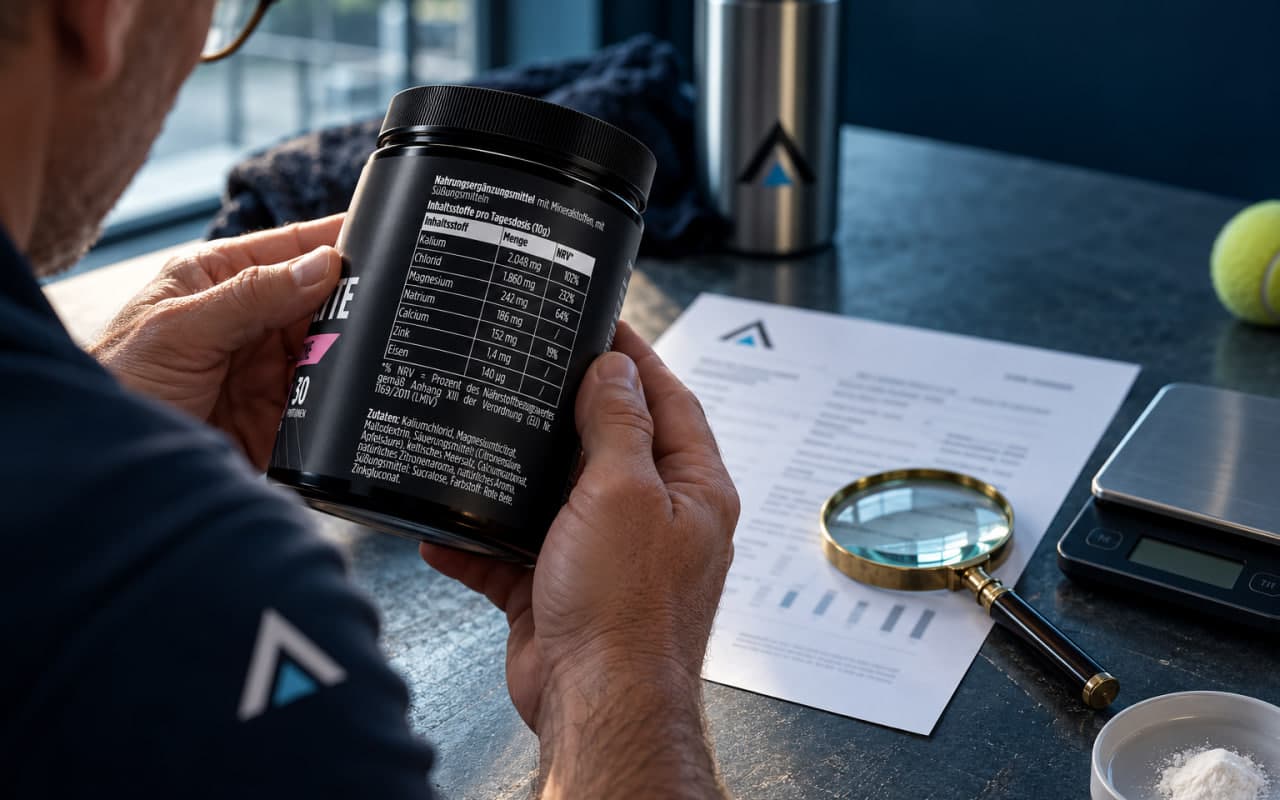 Big guide
Supplements
How to Assess Supplements: Reading the Label, Dose, Upper Limits and Lab Report
How good is a dietary supplement really? Eduard Boehm shows step by step how to read labels, check the dose against reference values and BfR maximum levels, understand lab reports, assess additives and calculate the price per effective serving – explained using real labels and analyses of Syrax products.
14 min read

Supplements
Electrolytes in Sport: When You Really Need Them – the Situation Matrix for Tennis, Running & Co.
Water, electrolytes or a sports drink? Werner Ludmann shows when sodium, potassium and magnesium really need replacing during training – with a situation matrix by duration and heat, a DIY sweat test, amounts per litre and an honest assessment of the Syrax electrolyte products.
9 min read

Supplements
Omega-3 for Athletes: Reading EPA and DHA per Capsule – 18/12 or High-Strength?
How much EPA and DHA do you need, when do omega-3 capsules make sense and how do you recognise good fish oil? Eduard Boehm explains requirements, approved health claims, triglyceride form, oxidation and lab values, and compares Syrax Omega 3 18/12 and Omega 3 Max 35/25 by content and price per gram of EPA + DHA.
9 min read