
Tracking Strength Training: What a Fitness Tracker Can – and Can't – Do
Which data really matter in strength training, why wrist heart rate is inaccurate when lifting, what belongs in your training log and how sleep, HRV and recovery data improve your training decisions – using the LEEK Pulse Pro as an example.
 ByMichael Lohrberg
5 min read
Full disclosure: this article covers the LEEK Pulse Pro – a product made by Syrax, the publisher of this magazine.
In short
Strength training is best tracked on two levels: performance – exercise, weight, reps and reserve – belongs in a training log or app, because it shows directly whether you are getting stronger. A fitness tracker adds recovery: sleep, resting heart rate and heart rate variability show when you can train heavy and when a lighter session is wiser. Optical wrist sensors, however, measure heart rate during heavy sets with limited accuracy, and calorie values in strength training are rough estimates.
Contents
Anyone in the weight room usually has two devices: a smartphone for the training app and a wearable on the wrist. Both collect data – but not all of it is equally useful. A fitness tracker that tells you "412 kcal" and "heart rate 128" after leg day says little about whether you are getting stronger. What it does very well, however, is at the bottom of most rankings: showing how well you recover.
This article explains what you should really measure in strength training – and where technology helps. It belongs to the Muscle Building & Strength topic. As we make a tracker ourselves, the LEEK Pulse Pro, this article is marked as a disclosure piece; we name the limits of our product just as clearly as those of others.
Two levels: performance and recovery
Progress in strength training comes from two things: a rising training stimulus and sufficient recovery. Both can be measured – but with different tools.
| Level | What you measure | Best tool |
|---|---|---|
| Performance | exercise, weight, reps, sets, reserve (RIR) | training log, app |
| Recovery | sleep, resting heart rate, HRV, load over the day | fitness tracker that is also worn at night |
| Body | weight, circumferences, photos | scales, tape measure, camera |
The most common mix-up: people expect the tracker to measure performance and the log to do nothing. It is the other way round.
Level 1: performance – the training log
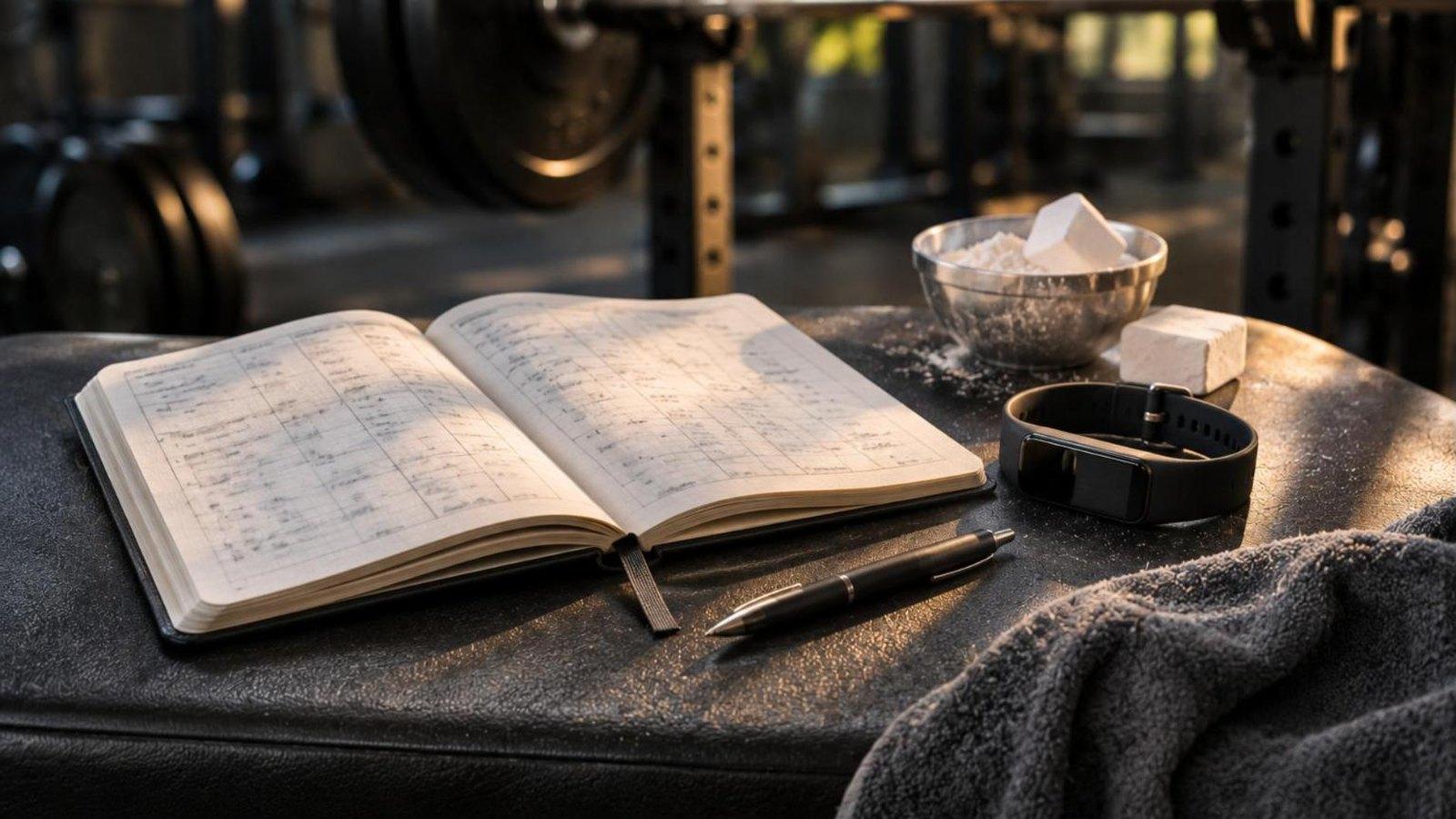
Only one thing shows you whether you are getting stronger: whether the numbers on the same exercise rise over weeks. After every working set, record:
- Exercise (always the same name, so comparisons are possible)
- Weight
- Reps
- Reserve – how many more clean reps would have been possible. How to estimate this is explained in RIR and RPE.
- Note if anything stands out: little sleep, pain, new technique.
From this data you can see immediately whether your progression is working. The system behind it is described in Progressive overload; how to keep a useful log in Keeping a training log.
What the tracker can (not) do when lifting
Optical heart rate sensors measure changes in blood flow under the skin. In strength training they reach their limits:
- Gripping and wrist flexion change blood flow at the sensor.
- Breath-holding and short, maximal effort make heart rate jump up and down.
- Arm movement shifts the sensor.
The result: heart rate curves in strength training are often delayed or inaccurate on the wrist. If you really want to know your heart rate during training, use a chest strap – more in Chest strap or wrist? and How accurately do fitness trackers measure heart rate?.
Automatic rep counting on some watches also works only moderately for compound lifts. And calorie burn in strength training is a rough estimate, because heart rate is only loosely related to energy use here.
Level 2: recovery – where the tracker shines
The most valuable data for strength athletes is generated not in the gym but at night:
- Sleep duration: lack of sleep measurably slows strength gains and muscle growth.
- Resting heart rate: a resting heart rate elevated over several days suggests incomplete recovery, stress or an incipient infection.
- Heart rate variability (HRV): if it drops below your normal range over several days, that is a signal to dose your load. Basics in Understanding HRV.
Together, these values form a picture that complements how you feel: are you ready for heavy sets today – or is a technique session wiser?
How to use recovery data in strength training
| Recovery signal in the morning | Decision for the day |
|---|---|
| within the normal range or better | heavy session as planned, personal bests allowed |
| slightly below normal | train as planned, drop the last set per exercise or reduce weight by 5–10% |
| clearly below normal, resting heart rate elevated | light session, technique, mobility or rest day |
| clearly below normal for several days | consider a deload week |
Important: this traffic light is a decision aid. How you feel and your performance in the warm-up are part of it. How to plan deloads with data specifically is explained in Deload with data: reading recovery values correctly.
Example: a week with data
Lena trains four times a week on an upper/lower split. Heavy lower-body training is planned for Tuesday. After a short night, her recovery score is clearly below her normal range and her resting heart rate five beats higher than usual. She swaps: moderate upper body on Tuesday, heavy legs on Wednesday, when her values are back in the normal range. Result: on Wednesday she manages one more squat rep than the previous week.
This simple rule – put the hardest session on the best day – brings many trainees more than any other use of data. Described in detail in Training with data.
Where the LEEK Pulse Pro fits – and where it doesn't
A good fit if you:
- do strength training and want to manage your recovery,
- want to wear your band at night without charging it every day,
- don't want a subscription or a cloud for your health data,
- use an Android smartphone.
A poorer fit if you:
- want live values and notifications on your wrist – the band deliberately has no display,
- want to record GPS routes when running or cycling,
- use an iPhone – the app is currently available for Android,
- need an exact heart rate in every set – a chest strap is the better choice for that.
All details are in LEEK Pulse Pro in detail, the comparison with other device classes in the big comparison.
Common tracking mistakes
Calorie values as a training goal. "600 kcal burned" is not a meaningful goal in strength training. Weight and reps are.
Overrating individual daily values. Recovery values fluctuate. Trends over three to seven days are what matter.
Taking the band off at night. Without overnight data, the most valuable information is missing.
Not recording performance. A tracker doesn't replace a training log.
Conclusion: two tools, one strategy
You don't track strength training with a single device but with a simple system: the training log shows whether you are getting stronger. The tracker shows whether you are recovering enough to keep getting stronger. If you bring both together, you won't necessarily train more, but you will train smarter. How to plan training in the long term is covered in Periodisation explained simply.
Frequently asked questions
Can a fitness tracker measure strength training?
Partly. It can estimate training duration, heart rate trends and the load on the cardiovascular system, but not reliably weights, reps or the load on individual muscles. Strength training performance is best recorded manually in a training log.
Why is heart rate inaccurate during strength training?
Optical sensors measure blood flow under the skin. When you grip heavy weights, the forearm muscles tense, the wrist flexes and blood flow changes quickly – this disrupts the measurement. A chest strap measures the heart's electrical activity and is much more accurate here.
Which tracker data help with building muscle?
Recovery data are the most valuable: sleep duration, resting heart rate and heart rate variability. They show trends in whether you are recovering from your training and help you place heavy sessions on good days and plan deloads in time.
How accurate is calorie burn during strength training?
Not very. Trackers derive energy expenditure mainly from heart rate, which is only loosely related to energy use in strength training. These values are only suitable as a rough guide for nutrition planning.
Do I need a tracker with a display for strength training?
Not necessarily. You record performance in a notebook or app anyway. For recovery data, what matters more is that the device is reliably worn at night and has long battery life. A band without a display gets in the way less when lifting and sleeping.
Tags
- Strength training tracking
- Fitness tracker
- Training log
- Recovery
- HRV
- LEEK Pulse Pro
About the author
Michael Lohrberg· Founder of Syrax
Michael Lohrberg founded Syrax in 2026. Military service with a deployment abroad, in industry since 2010, shift work and two jobs in parallel – the LEEK Pulse Pro grew out of the question of how much recovery is really left in everyday life. In the magazine he writes about training, sleep and regeneration – practical and grounded in the research.
More about MichaelThis article is for general information and does not replace medical advice. If you have pre-existing conditions, pain or any doubts, talk to your doctor before changing your training or diet.
Also available in: Deutsch
Syrax Magazine
Read next
Wearables & TrackingSyrax
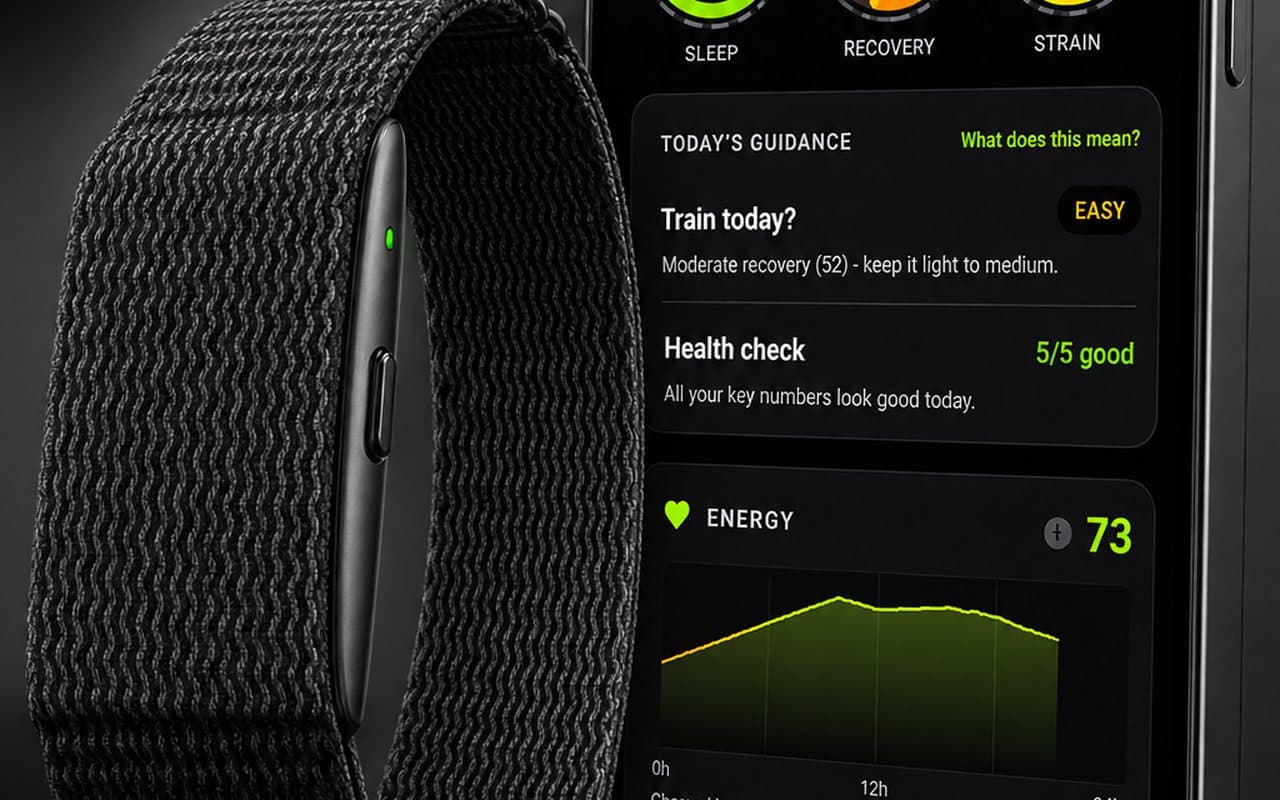
LEEK Pulse Pro in Detail: The Fitness Tracker Without a Display or Subscription
No screen, no cloud, no subscription, up to 30 days of battery: the LEEK Pulse Pro deliberately takes a different path from smartwatches. What the band measures, how the analysis works, where its limits are – and who it is worth it for.
13 min read
Muscle Building & Strength
Progressive Overload: The Most Important Principle for Strength and Muscle
No progression, no progress – but progression does not just mean "more weight". The seven ways to apply progressive overload, the best progression models for beginners and intermediates, and what to do when nothing moves any more.
13 min read
 Big guide
Muscle Building & Strength
Building Muscle: The Complete Guide
How muscles really grow – and what you need to do about it: training, volume, intensity, progression, nutrition, sleep and realistic expectations. The fundamentals guide you will keep coming back to.
14 min read