
Improving Hip Mobility: The Best Exercises
Stiff hips hold back squats, deadlifts and running and often strain the lower back. With these tests and eight exercises for flexion, extension, internal and external rotation, you can make your hips noticeably more mobile within a few weeks.
 ByMichael Lohrberg
5 min read
In short
The hip moves in six directions: flexion, extension, abduction, adduction and internal and external rotation. Lots of sitting mainly restricts extension and rotation. The most effective exercises are the half-kneeling hip flexor stretch, 90/90 hip rotation, the world's greatest stretch, pigeon pose, hip CARs (controlled circles), the Cossack squat, glute bridges and the deep squat. Ten to twelve minutes on four to six days a week usually improve mobility noticeably within two to four weeks.
Contents
Hardly any joint suffers as much from modern life as the hip. Eight hours at the office, one in the car, three on the sofa – the hip spends most of the day in the same flexed position. That doesn't come without consequences: squats get shallower, the back rounds during deadlifts, the running stride gets shorter, and the lower back takes over work the hip should be doing.
This article shows you how to test your hip mobility and improve it in a targeted way. It belongs to the Mobility & Prevention topic. A routine for the whole body is the 10-minute mobility routine.
How the hip moves
The hip is a ball-and-socket joint and can move in six directions:
| Movement | Example in daily life and training | Often restricted by |
|---|---|---|
| Flexion | sitting down, squats, deadlifts | stiff hamstrings |
| Extension | walking, running, hip thrusts | hip flexors shortened by sitting |
| Abduction | side steps, wide squats | weak, stiff abductors |
| Adduction | crossing your legs | rarely restricted |
| External rotation | cross-legged sitting, knees out in the squat | stiff glutes and rotators |
| Internal rotation | running, changes of direction, deep squats | hardly used in daily life |
Hip extension and internal rotation in particular are lost in many adults, because they practically never occur in a sitting lifestyle.
Three simple self-tests
1. Thomas test (hip extension). Lie with your bottom at the edge of a table, pull one knee to your chest and let the other leg hang. If the thigh of the hanging leg stays above the table edge, your hip flexors are probably shortened.
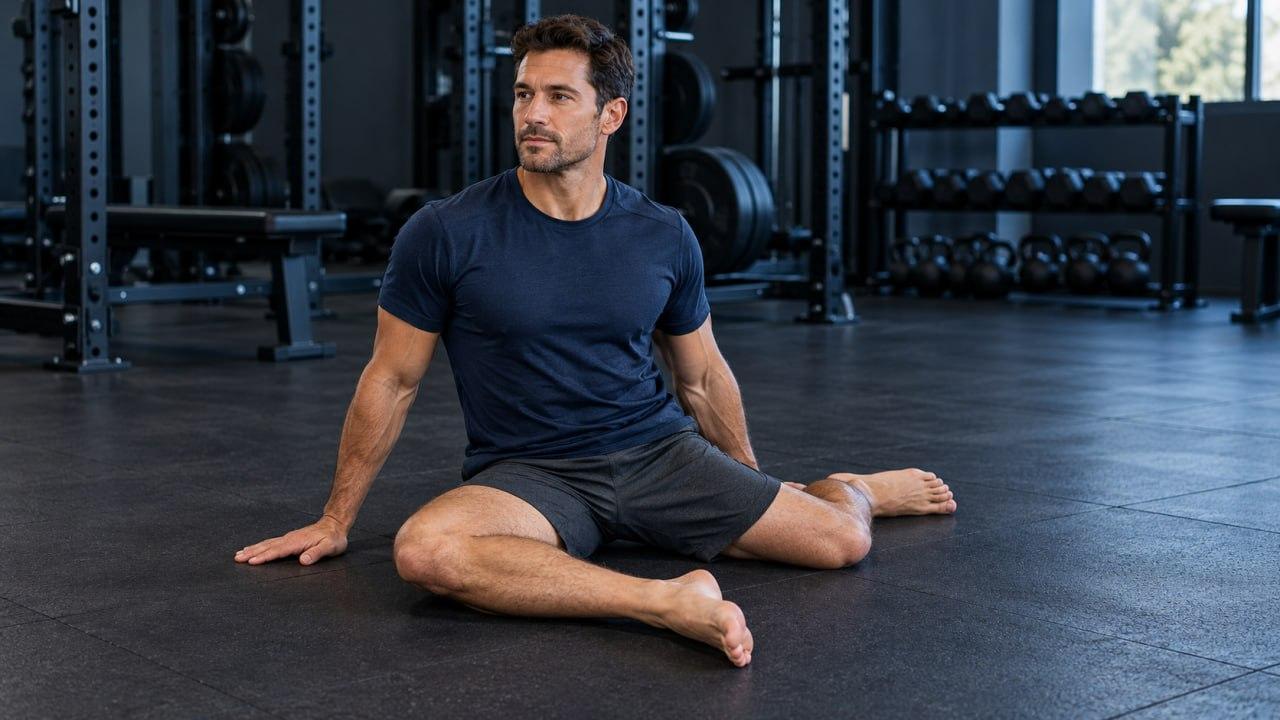
2. 90/90 sit (rotation). Sit in the 90/90 position. Can you sit upright without supporting yourself with your hands and bring both knees towards the floor? If not, you lack rotation.
3. Deep squat. Can you stay in your deepest squat for 30 seconds with flat heels and a neutral back? If your heels lift, it is often the ankle too – more in Ankle mobility.
The 8 best exercises
1. Hip CARs (controlled articular rotations). Slow, maximal circles with the knee on all fours. They train active control over the full range of motion – ideal as daily "joint maintenance".
2. 90/90 hip rotation. Trains internal and external rotation on both sides at once. Beginners support themselves with their hands behind them; advanced trainees stay upright hands-free.
3. Half-kneeling hip flexor stretch. The direct counterbalance to sitting. The key is squeezed glutes and a tucked pelvis – don't fall into an arched back.
4. World's greatest stretch. Hip flexors, groin, hamstrings and thoracic spine in one movement. Perfect for the warm-up.
5. Pigeon pose. Stretches the outer hip and glutes. If you have knee problems, do the version lying on your back ("figure four").
6. Cossack squat. Combines abduction, flexion and strength. Start slowly, holding a door frame at first.
7. Glute bridge. Strengthens the hip extensors. Mobility is of little use if your muscles can't control the new position.
8. Deep squat. The natural resting position that many adults have forgotten. A few minutes in a squat every day – while on the phone or brushing your teeth – works wonders.
12-minute routine for mobile hips
- 1
Step 1
Hip CARs (2 minutes)
On all fours, move one knee slowly in the biggest circle you can – forward, to the side, back. The rest of the body stays still. 3 circles per direction and side.
- 2
Step 2
90/90 hip rotation (2 minutes)
Sit with both knees bent at 90 degrees, one leg in front, one to the side. Slowly tip your knees to the other side. 8–10 switches, torso as upright as possible.
- 3
Step 3
Half-kneeling hip flexor stretch (2 minutes)
In a half-kneeling position, squeeze your glutes, tuck your pelvis and push slightly forward. 45 seconds per side, reach the arm on the back-leg side overhead.
- 4
Step 4
Pigeon pose (2 minutes)
One leg bent in front of the body, the other extended behind. Keep your torso upright or lower it forward. 45–60 seconds per side.
- 5
Step 5
Cossack squat (2 minutes)
Wide stance, shift your weight onto one leg and bend deeply while the other leg stays straight with the toes pointing up. 6–8 reps per side.
- 6
Step 6
Deep squat with glute bridge (2 minutes)
Sink into a deep squat for 30 seconds, then do 10 glute bridges with a 2-second hold at the top. Repeat twice.
When and how often?
| Use | Exercises | Duration |
|---|---|---|
| Daily as a habit | routine above | 10–12 minutes |
| Before leg training | hip CARs, world's greatest stretch, Cossack squat | 5 minutes |
| Office break | standing hip flexor stretch, deep squat | 3 minutes per hour of sitting |
| Rest day | routine plus a longer pigeon pose | 20 minutes |
Regularity beats duration: ten minutes on five days bring more than an hour on Sunday. How to turn the routine into a habit is described in Stick with it instead of starting over.
Hips and back pain
When the hips move little, the lumbar spine often compensates: when bending, the back rounds instead of the hips flexing; when walking and running, the lower back rotates and extends more than necessary. Mobile, strong hips can therefore noticeably relieve the back. More on the interplay in Back pain and strength training. Mobilising the upper back is also worthwhile: Mobilising the thoracic spine.
Common hip training mistakes
Compensating with an arched back. In the hip flexor stretch, the pelvis tips forward and the stretch ends up in the lower back instead of the hip. Squeeze your glutes and tuck your pelvis.
Only stretching, never strengthening. Passive stretching alone brings little mobility you can use in training. Combine it with glute bridges, Cossack squats and full-range training.
Too fast, too much momentum. Mobility thrives on slow control in the end position.
Forgetting rotation. Many people only stretch the hip flexors and hamstrings. Internal and external rotation are often the real problem.
When you need medical advice
Mobility exercises may pull but should not cause stabbing pain. Get examined if:
- pain occurs deep in the groin inside the joint, especially when flexing and rotating,
- the hip locks or "clicks" painfully,
- pain occurs at night or at rest,
- symptoms increase over weeks despite the exercises.
Structural causes such as impingement or osteoarthritis can't be stretched away and need targeted treatment.
Tools
A foam roller can briefly improve the feeling of mobility before training and works well for glutes and thighs – more in Using a foam roller properly. A resistance band helps with hip stretches and as traction during mobilisations. For an office break, a sturdy chair is enough: many exercises from the chair workout for working from home mobilise the hips along the way.
Conclusion: the hip wants to move
Stiff hips are not fate but usually the result of too little movement variety. With three short tests, a daily twelve-minute routine and full-range strength training, you can win back your range of motion – for deeper squats, cleaner deadlifts and a more relaxed back.
Frequently asked questions
Why are my hips so stiff?
The most common reason is prolonged sitting: the hips spend many hours in the same flexed position, and hip extension and rotation are barely used. One-sided training, little movement variety and stress also play a role. Less often, structural causes are behind it, which should be checked by a doctor.
How long does it take to improve hip mobility?
Most people notice first improvements after two to four weeks of regular practice, mainly due to better stretch tolerance. Structural adaptations of muscles and connective tissue take several months.
Does hip mobility help with back pain?
With non-specific back pain, mobile hips can relieve the lower back, because movements then come from the hips rather than the lumbar spine. A combination of mobility and strengthening is usually most effective. Severe, radiating or persistent pain should be checked by a doctor.
Should you stretch your hips before training?
Before training, dynamic exercises such as hip CARs, the world's greatest stretch or Cossack squats are best. Longer static stretching is better placed after training or in separate sessions.
Is it normal for one hip to feel stiffer than the other?
Slight side-to-side differences are very common, for example due to sitting habits, your standing leg or your sport. Train the stiffer side a little more often. Clear differences with pain should be assessed by a doctor or physiotherapist.
Tags
- Hip mobility
- Mobility
- Flexibility
- Hip flexors
- Squat
- Back pain
About the author
Michael Lohrberg· Founder of Syrax
Michael Lohrberg founded Syrax in 2026. Military service with a deployment abroad, in industry since 2010, shift work and two jobs in parallel – the LEEK Pulse Pro grew out of the question of how much recovery is really left in everyday life. In the magazine he writes about training, sleep and regeneration – practical and grounded in the research.
More about MichaelThis article is for general information and does not replace medical advice. If you have pre-existing conditions, pain or any doubts, talk to your doctor before changing your training or diet.
Also available in: Deutsch
Syrax Magazine
Read next
 Big guide
Mobility & Prevention
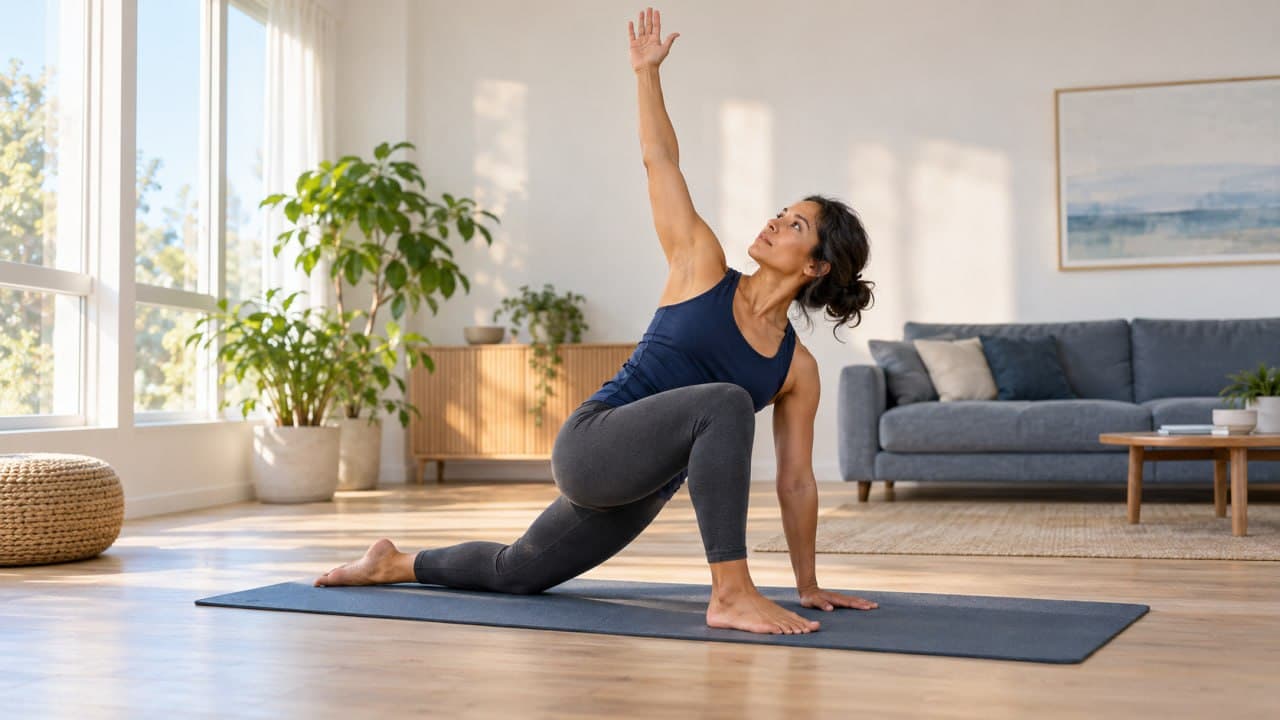
Mobility Routine: 10 Minutes a Day for Mobile Joints
Stiff hips, a tense neck, a rounded back from the desk? This 10-minute routine mobilises the joints that suffer most in everyday life – for deeper squats, pain-free pressing and a body that still feels good at 50.
13 min read
 Big guide
Exercises & Muscle Groups
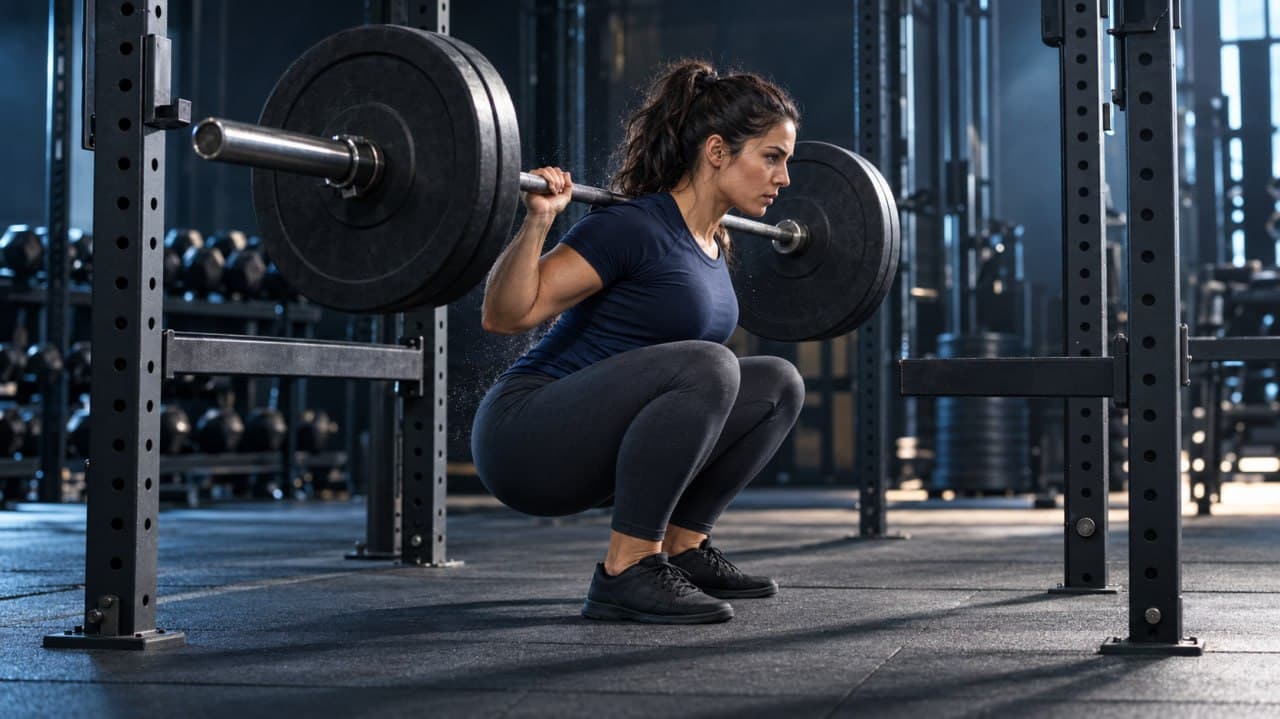
How to Squat Properly: Technique, Mistakes, Variations
The squat is the king of exercises – and the one most often performed badly. Step by step to perfect technique: stance, breathing, depth, knees, back, common mistakes and the right variation for your body.
13 min read
Training Plans
12-Week Workout Plan: How Your Plan Is Built – With Deloads, Volume Check and Log
How a good workout plan is built and how our free workout plan generator calculates: split by your days, exercises by equipment and aches, volume per muscle, time per session, 12 weeks with deloads, a log with progression tips and a link to your supplement stack.
8 min read